
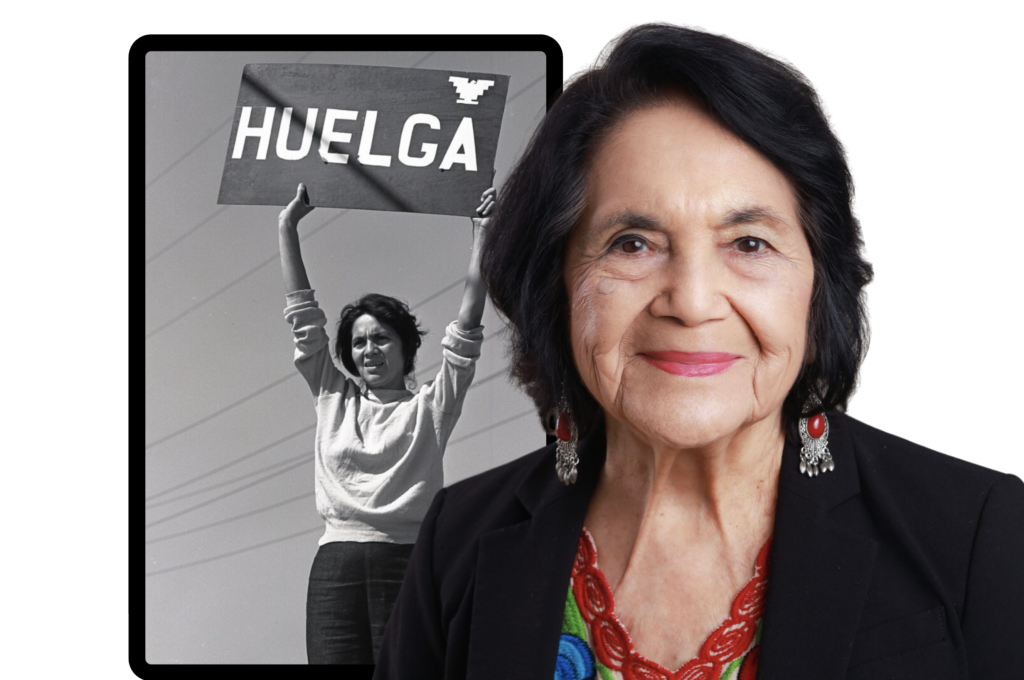
The co-founder of the movement that gave rise to United Farm Workers died on October 28, 2026 in California. Her labor achievements and the slogan “Sí se puede” marked generations of activists.
Dolores Huerta died on Wednesday, October 28, 2026, at the age of 96, at her home in Bakersfield, California. The historic labor leader devoted more than six decades to organizing agricultural workers, negotiating better working conditions, and defending civil rights, women’s rights, and the political participation of historically marginalized communities in the United States.
Her family confirmed the death via a statement released by the Dolores Huerta Foundation. The family asked for privacy during the mourning period and noted that they would later announce plans to celebrate her life and legacy.
Huerta was one of the chief architects of the modern farmworker movement. She helped secure collective bargaining contracts, pushed legislative changes, and created the slogan «Sí se puede», which transcended agricultural strikes and became an expression used by social movements in various countries.
Dolores Huerta Left Teaching to Organize Farm Workers
Dolores Clara Fernández was born on April 10, 1930, in Dawson, New Mexico, and grew up in Stockton, California. Her mother, Alicia Chávez, actively participated in community life and influenced her commitment to working families.
Huerta trained as a teacher and began working with children from farming families. The poverty she observed among her students led her to become involved in community organizing and in defending rights.
During the 1950s she participated in the Community Service Organization (CSO), which promoted voter registration and fought discrimination. There she met César Chávez, with whom she would share the goal of organizing farm workers.
In 1960, Huerta founded the Agricultural Workers Association. Two years later she participated in the creation of the National Farm Workers Association (NFWA), which would later merge with an organization led by Filipino workers to form the labor movement known as the United Farm Workers (UFW).
Her Leadership Helped Secure Higher Wages and Collective Bargaining Agreements
In September 1965, Filipino farm workers began a strike in the Delano vineyards, California. Huerta and Chávez’s organization joined the protest, which became one of the country’s most significant labor mobilizations.
The strike gave way to marches and a national boycott of table grapes. Huerta coordinated campaigns, sought support from consumers and unions, and participated directly in negotiations with agricultural producers.
These mobilizations contributed to securing collective bargaining agreements that improved wages, health benefits, and working conditions. They also demonstrated the power of organizing among workers from diverse backgrounds, including Filipino leaders Larry Itliong and other members of the Agricultural Workers Organizing Committee.
Huerta also propelled California labor legislation. In 1975, the state passed the Agricultural Labor Relations Act, which established mechanisms for farm workers to exercise their rights to organize and bargain collectively.
Her role as a negotiator was especially important in a movement where female leadership faced obstacles. For decades she argued that women should participate directly in union and political decision-making.
“Sí se puede” Was Born During a Union Campaign in Arizona
Huerta coined the slogan «Sí se puede» in 1972, during a campaign to organize farm workers in Arizona. Faced with the difficulties imposed by the political and legal environment, she maintained that collective mobilization could achieve change.
The expression spread among farm workers and was subsequently adopted by campaigns defending civil rights, voting participation, and immigrant rights.
Decades later, the slogan took on a new dimension when Barack Obama used its English counterpart, “Yes, we can,” during his 2008 presidential campaign.
In 2012, Obama presented Huerta with the Presidential Medal of Freedom, the highest civilian honor in the United States. The activist also received the Eleanor Roosevelt Human Rights Award in 1998 and was inducted into the National Women’s Hall of Fame in 1993.
Dolores Huerta Maintained Her Activism Through Her Final Years
After decades of work with the United Farm Workers, Huerta expanded her involvement in campaigns for women’s rights, against discrimination, and for greater political representation of Latino communities.
In 2003 she founded the Dolores Huerta Foundation, dedicated to community organizing, leadership training, and civic participation, primarily in California’s Central Valley.
Her activism continued even after turning 90. She took part in protests, community gatherings, and voter registration campaigns, keeping grassroots organization as one of the central tenets of her work.
In March 2026 She Revealed Abuses She Had Kept Silent
In March 2026, Huerta publicly alleged that César Chávez had sexually abused her during the 1960s. Her testimony emerged after a New York Times investigation into allegations of sexual abuse against the late union leader, including reports by women who were underage at the time the events occurred.
Huerta recounted that on one occasion she had been pressured to have sexual relations and that on another she was forced against her will. She explained that she had remained silent for about six decades because she feared harming the farmworker movement to which she had devoted much of her life.
In her statements, she insisted that the labor achievements belonged to thousands of workers, families, and organizers, and that her story should not be reduced to the figure of a single leader.
The revelations prompted a review of monuments, celebrations, and public spaces dedicated to Chávez, who died in 1993. Huerta maintained her defense of the farmworker movement and the people who participated in its struggles.
Houston Honored Her Legacy with an Exhibition and Public Gatherings
Dolores Huerta’s legacy also appeared in Houston. Between November 2019 and February 2020, the Holocaust Museum Houston presented the bilingual exhibition Dolores Huerta: Revolution in the Fields / Revolución en los Campos, organized by the Smithsonian.
The exhibition explored her role in farmworker strikes, contract negotiations, and the fight for civil rights. It also included historical photographs, audiovisual material, and artifacts related to the farmworker movement.
Huerta visited the museum on December 5, 2019 to participate in a public discussion about her life, her work, and the future of social justice. Her career was part of the institution’s human rights programming.
On March 6, 2024, Huerta participated, together with Cheech Marin and artist Vincent Valdez, in a gathering on Chicano art and activism organized by the Rothko Chapel at The Astorian, Houston.
Houston Considered Naming a Street in Her Honor During 2026
Huerta’s name re-emerged in a public discussion in Houston after the allegations against César Chávez.
U.S. Representative Sylvia Garcia proposed that César Chávez Boulevard, in the East End, be renamed Dolores Huerta Boulevard. On April 1, 2026, the city formally began the process to consider the change to Dolores Huerta Boulevard and to receive input from property owners and residents.
Huerta had expressed that she would prefer spaces formerly dedicated to Chávez to recognize the workers and organizers who made the farmworker movement possible.
After hearing the views of Magnolia Park residents, the Houston City Council unanimously approved on May 27 the name MSG Joe E. Ramirez Boulevard, in honor of a Korean War veteran and longtime neighborhood resident.
The Dolores Huerta Boulevard proposal did not end up becoming the approved name for that street.
Related: Houston renames César Chávez Boulevard in honor of Joe E. Ramirez.
The Family Will Announce Dolores Huerta’s Tributes
Huerta’s death closes a path that transformed the working conditions of thousands of farm workers and broadened recognition of women’s leadership within civil rights movements.
Her work was linked to collective bargaining contracts, labor reforms, voter organizing, and the training of new generations of activists. The slogan “Sí se puede” remains one of the most recognized symbols of that history.
As of October 28, 2026, the family had not announced dates or locations for public tributes. The Dolores Huerta Foundation maintains its community organizing programs and will be a major reference for upcoming commemorations.