
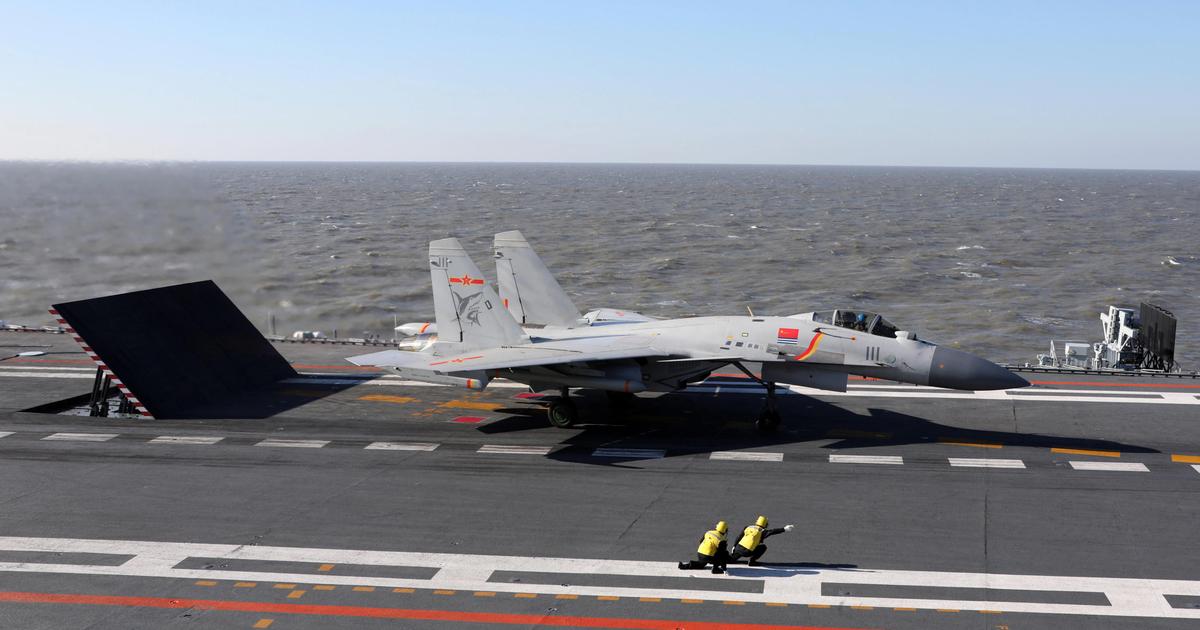
A landmark for naval aviation
With the impending entry into service of the carrier Fujian, China has become the world’s second nation to field a carrier with electromagnetic catapults. The move signals a strategic shift toward sustained, blue‑water operations, elevating the People’s Liberation Army Navy’s ambitions and capabilities. Unlike ski‑jump decks, electromagnetic launch systems enable heavier, more diverse airwings, while placing less stress on aircraft frames and improving sortie tempo.
The Fujian, also known as Type 003, represents a generational leap for Chinese naval aviation. Its deck layout and three catapult tracks point to higher operational throughput, tighter launch‑recovery cycles, and more efficient deck handling. EMALS, long the preserve of the United States, offers precise energy control, supporting both stealth fighters and specialized support aircraft.
Technology that changes the air wing
Electromagnetic catapults allow the Fujian to launch aircraft previously limited by ski‑jump constraints. That includes the carrier‑capable J‑15T, the stealthy J‑35, and the KJ‑600 airborne early warning platform, all reportedly conducting catapult‑assisted takeoffs and arrested recoveries in recent trials. The presence of a fixed‑wing AEW aircraft like the KJ‑600 is particularly significant, extending radar horizons and boosting fleet‑level command and control.
Beyond raw capability, EMALS promises smoother acceleration profiles, reducing wear on landing gear and airframes—an important factor in long‑term sustainment. The system also facilitates launches across a wider weight envelope, from fully fueled strike fighters to lighter drones and training aircraft. Together, these advances point to a more flexible and resilient carrier airwing.
Strategic signals and regional implications
The Fujian’s progress is not just a technical story; it is a strategic one. Trials reported near Taiwan and in the South China Sea send a clear signal about presence, readiness, and deterrence. A carrier capable of sustained, high‑tempo operations can support patrols, exercises, and crisis responses far from home waters, reinforcing Beijing’s maritime posture.
For regional actors, the development will likely accelerate investments in maritime surveillance, anti‑ship missiles, and undersea warfare. It also adds urgency to multilateral training among allies and partners focused on air defense, sea control, and joint logistics. As one analyst quipped, “A more capable Chinese carrier force doesn’t just affect tomorrow’s battles; it reshapes today’s planning.”
How it compares internationally
Until now, only the United States operated electromagnetic catapults, fielded on the USS Gerald R. Ford. American experience shows that such systems can be powerful but complex, requiring years of incremental improvement. China will face a similar learning curve, from refining power management to optimizing deck procedures. Notably, other major carrier navies—the United Kingdom and India—currently operate ski‑jump decks, while France plans EMALS integration on its next‑generation carrier in the 2030s.
China’s continued investment suggests that Fujian may be a stepping stone rather than an endpoint. Analysts anticipate future hulls with refined power plants, upgraded sensors, and enhanced command‑and‑control suites. Whether or not those ships arrive quickly, the Fujian places China in a very small club of navies mastering the hardest tasks in maritime aviation.
Why EMALS matters
- Higher launch cadence and improved deck efficiency, enabling more sorties per day.
- Support for heavier aircraft, including fixed‑wing AEW and fully fueled strike loads.
- Reduced stress on airframes thanks to smoother acceleration profiles.
- Better scalability for lighter drones and future unmanned systems.
- Increased reliability potential with fewer steam‑era mechanical constraints.
Challenges still ahead
Electromagnetic launch is demanding, both electrically and logistically. It requires robust power generation, advanced control software, and meticulous maintenance cycles to keep availability high. Integrating new aircraft types—especially stealth jets and AEW planes—adds complexity in pilot training, deck choreography, and mission planning.
China’s navy must also harmonize the Fujian’s capabilities with broader fleet operations. That includes escort doctrine, replenishment at sea, and long‑range targeting networks linking satellites, patrol aircraft, and over‑the‑horizon sensors. Success will depend as much on people, processes, and doctrine as on the ship’s core technology.
The bigger picture
“The debut of an electromagnetic‑catapult carrier is not merely about a new ship; it is about writing a new manual for power projection,” goes a pithy observation often heard in defense circles. By pairing EMALS with a growing arsenal of long‑range missiles, submarines, and advanced fighters, China is constructing a layered maritime posture with global reach.
For now, the Fujian stands as a symbol of accelerating naval modernization. Its tests, early qualifications, and iterative improvements will shape the trajectory of Chinese carrier aviation for years to come. If the ship meets its promise, it will alter day‑to‑day calculations across the Indo‑Pacific—and underscore that the age of electromagnetic launch has truly arrived.