
A landmark for a rare disease community
A French laboratory has been honored for developing a potential treatment for a rare neurological condition, bringing cautious optimism to families long told to “wait and see.” The condition, Charcot–Marie–Tooth (CMT) disease, is not fatal, but it is profoundly disabling, slowly eroding mobility and independence. In France alone, an estimated 25,000 people live with CMT, facing progressive weakness in the limbs, impaired balance, and chronic pain.
At the center of this breakthrough is CURLIM, a research-driven startup from Limoges, born from collaboration between the Faculty of Sciences and the Faculty of Medicine. The team has secured the prestigious i‑Lab Innovation Prize, a national recognition that validates both scientific rigor and potential impact. The award, coupled with targeted funding, gives the project a springboard toward the next crucial milestones.
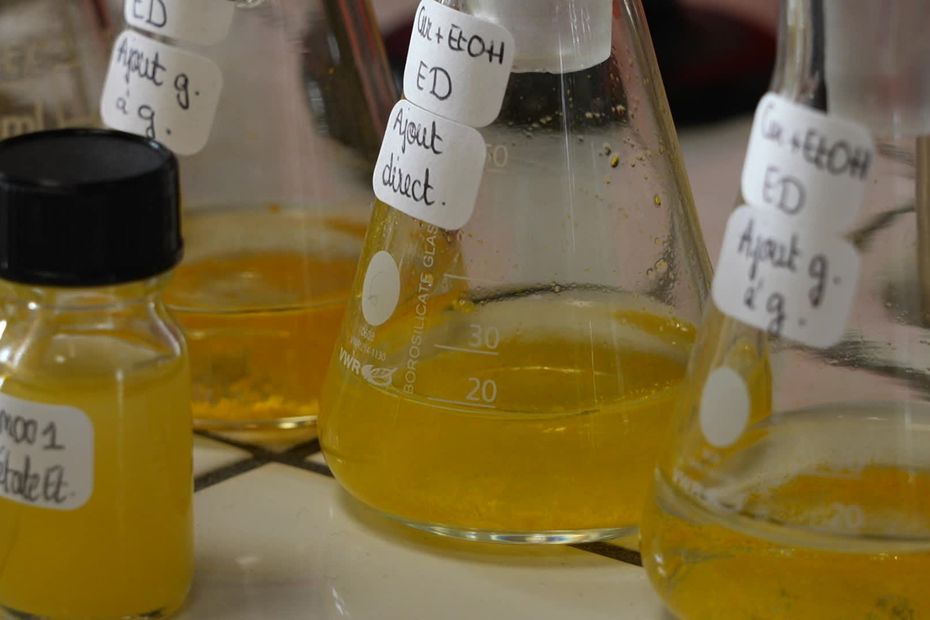
A startup in Limoges honored for innovation — © FTV – Frédérique Bordes
From turmeric to targeted therapy
The CURLIM approach centers on curcumin, the bioactive compound found in turmeric, reformulated to make it soluble and injectable. In preclinical work, this enhanced curcumin is combined with other components to target the cellular dysfunctions characteristic of CMT. Early laboratory models have shown encouraging signals, with researchers reporting correction of key biological anomalies linked to the disease.
While curcumin is often associated with wellness trends, this program is about rigorous pharmacology: optimizing delivery, improving bioavailability, and establishing repeatable outcomes across validated models. The i‑Lab prize, accompanied by €370,000 in support, is designed to convert promising data into a robust development plan, from formulation to regulatory strategy.
“Science moves from ‘interesting’ to ‘impactful’ when careful translation meets clinical reality,” the team emphasizes, capturing both the urgency and the discipline required to cross the bench‑to‑bedside divide.
- Key next steps include scaling up manufacturing under quality standards.
- Designing early‑phase trials to evaluate safety and dosing strategies.
- Building hospital and patient partnerships for meaningful endpoints.
- Mapping regulatory pathways to accelerate approvals while ensuring rigor.
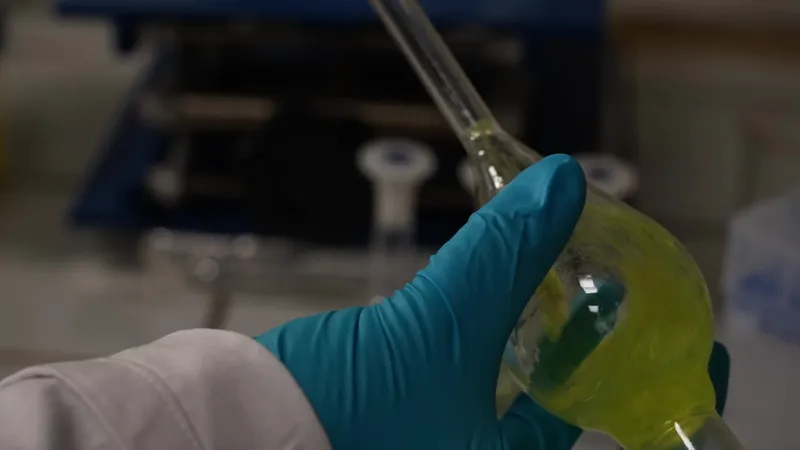
A potential future medication for CMT — © FTV – Frédérique Bordes
Incubation, funding, and the long road to patients
Behind the science stands a seasoned ecosystem. CURLIM has been guided by the Limoges university incubator, AVRUL, through what the sector calls “maturation” — bridging lab‑proven technologies to market‑ready products. That includes team building, technology transfer, and day‑to‑day strategic advice so founders can navigate both scientific and business risks.
The company now aims to raise around €15 million to power toxicology packages, clinical readiness, and initial human studies. Even under optimal conditions, experts estimate a six‑to‑seven‑year path to potential market authorization. Such timelines reflect the reality of drug development, where patient safety, reproducibility, and careful trial design come before speed.
Investors increasingly look for programs that unite deep biology with a clear plan for real‑world access. For a rare disease community, that means trial designs that fit patient lives, measurable functional endpoints, and transparent risk‑benefit communication. The CURLIM roadmap emphasizes collaboration with clinicians and advocates, a critical ingredient for trust and uptake.
Why it matters
CMT is a hereditary peripheral neuropathy: it damages the long nerves that connect the brain and spine to the limbs. Over time, patients may develop foot drop, muscle wasting, and balance problems that complicate daily activities like walking, buttoning shirts, or climbing stairs. The condition is often confused with ALS, but unlike ALS it typically spares breathing and core vital functions; nevertheless, its impact on independence can be profound.
Today, care focuses on symptom management — orthoses, physiotherapy, pain control, and surgery in select cases — but no approved therapy addresses the underlying neurodegeneration. That is why controlled, mechanism‑based treatments matter: they offer a path from coping to course modification, even if the gains are incremental at first. For health systems, an effective therapy could reduce long‑term complications, lower assistive device needs, and preserve productivity for patients and caregivers.
There is also broader scientific significance. If an optimized curcumin‑based platform can restore cellular balance in CMT, similar strategies might extend to other peripheral neuropathies. Translational success in one rare condition often seeds a family of innovations, multiplying benefits beyond the first indication.
In the measured, methodical world of biomedicine, hope is strongest when tied to evidence, transparency, and time. With a validated plan, committed partners, and a community ready to engage, the path from promising molecule to meaningful medicine looks clearer — and, for many families, closer than it has ever been.