Colorado.— Thousands of workers at the world’s largest meat-packing company began a two-week strike, threatening to make beef even more expensive for American consumers.
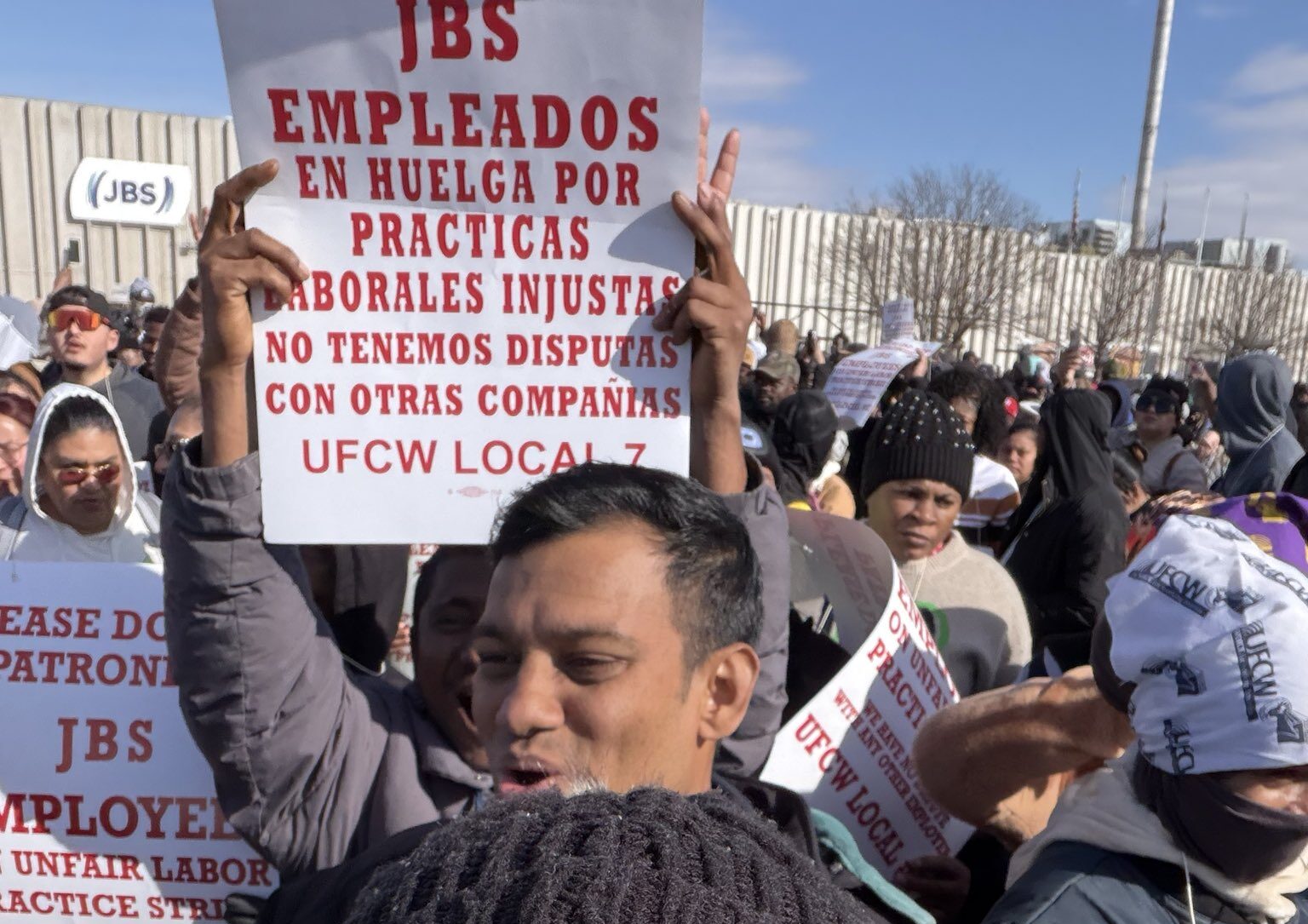
On Monday, March 16, employees began a picket line in front of the Swift Beef Co. plant in Greeley, one of the country’s largest slaughterhouses owned by JBS USA. They walked back and forth in the morning chill, wrapped in blankets. Some shouted in Spanish “Strike!”. Others waved signs urging people not to buy from JBS.
The first strike at a U.S. cattle slaughterhouse in four decades comes after union leaders accused the company of retaliating against workers and engaging in other unfair labor practices. They said the company offered wage increases of less than 2% annually, below Colorado’s inflation rate.
Union representatives said that 99% of the plant’s 3,800 unionized workers voted in favor of the strike. More than 2,600 had shown up on the picket line by Monday afternoon, and others were expected to sign up in the coming days, said Claire Poundstone, a lawyer for the United Food and Commercial Union Local 7.
Poundstone said the strike could recur if unfair labor practices persist.
A spokesperson for JBS USA denied any violations of labor laws and stated that its offer is fair. Both sides blamed each other for a deadlock before the contract expired on Sunday night.
“They don’t really value their workers, and we are the ones helping them to get all their profits,” said Leticia Avalos, a union delegate and a native of Greeley who has worked at the plant since 2020. She depends on the job to support her family, including a six-month-old baby, but said she is willing to make sacrifices to get the company to listen.
The union said its workers “perform some of the most difficult and dangerous jobs in the country” and deserve higher wages and better health care. It added that JBS has been charging many workers $1,100 or more to offset the company’s costs for personal protective equipment.
On Monday, smoke was seen rising from the plant, but it was unclear whether it was operating at full capacity. JBS spokesperson Nikki Richardson said that “many team members” showed up to work, but did not provide a precise figure.
“Our team members want stability, they want to support their families, and they deserved the opportunity to vote on the company’s historic offer, an opportunity that union leadership has denied them,” Richardson wrote in an email.
Richardson stated that any employee who does not wish to strike will have work and will be paid. The company has also said it will relocate production, as needed, to other JBS facilities.
The strike comes at a time when the number of cattle in the United States is at its lowest in 75 years, with an inventory of 86.2 million head as of January 1, down 1% from the previous year. The decline has been driven in part by drought and the low prices paid to ranchers. Meanwhile, consumer beef prices have spiked to record levels.
President Donald Trump’s tariffs on Brazil, a major beef exporter, have also slowed meat imports.