
The Kemp’s Ridley Sea Turtle Rescued in Galveston Remains in Critical Condition, but Is Showing Improvement Under GCSTR Care and Houston Zoo Support
A sea turtle of the world’s most endangered species was found off the coast of Galveston and is now receiving treatment at a local rehabilitation hospital. The case has mobilized the Gulf Center for Sea Turtle Research and the Houston Zoo in the lead-up to the nesting season.
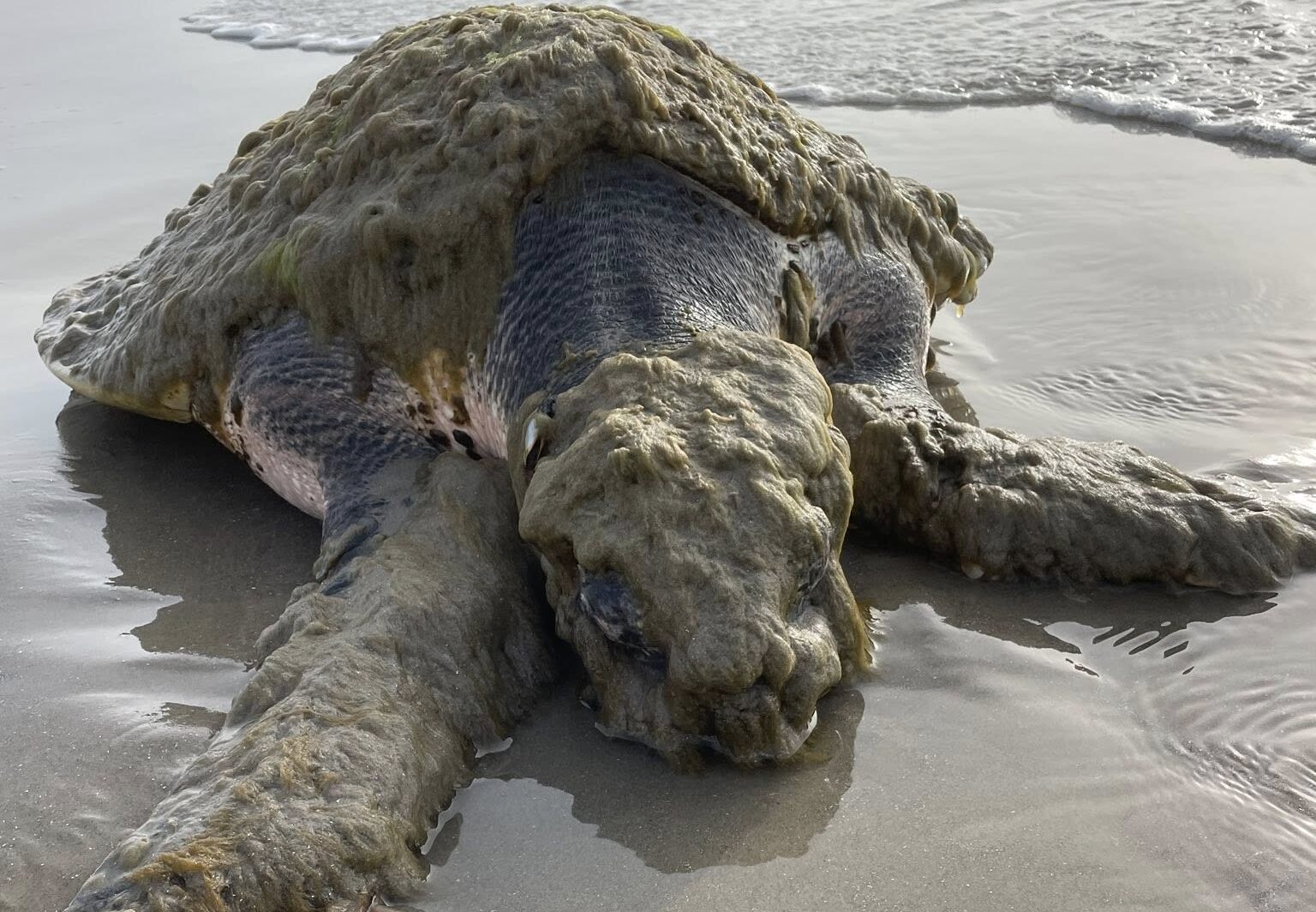
The Kemp’s ridley sea turtle rescued in Galveston remains in critical condition, though it is already showing some signs of recovery, according to specialists treating the case. The animal, an adult female of the Kemp’s ridley species, was found on March 7 on a Galveston beach, with its body covered in barnacles, algae, and sediment, a sign that it had been ill for some time.
The rescue began thanks to a person walking along the beach that morning who saw the turtle was alive, but in poor condition. That person called the marine turtle helpline, which allowed the Gulf Center for Sea Turtle Research team, known as GCSTR, to respond.
Kemp’s Ridley Sea Turtle Rescued in Galveston
Christopher Marshall, director of GCSTR, said that when the team arrived at the site they confirmed the turtle was still alive, although its condition was delicate.
As he explained, when a sea turtle becomes ill, it starts to move more slowly. That deterioration causes organisms such as barnacles and algae to adhere to it, which in turn worsens the problem. In this case, the amount of growth on the shell and body indicated that the turtle had already been in that condition for some time.
The Kemp’s Ridley Sea Turtle Rescued in Galveston was first taken to emergency veterinary care with GCSTR’s clinical partners at the Houston Zoo. After that initial assessment, it was admitted to the rehabilitation hospital at the center itself, where it remains under observation and daily treatment.
The animal’s condition remains delicate
Marshall noted that, although the picture remains critical, the animal has shown some improvement since arrival. Some of that progress is visible in its level of movement and energy inside the tank.
The center’s director said that the turtle has already spent part of the time back in the water and has begun to move a little more. For the care team, that response is important, even though it does not change the fact that it remains a patient in serious condition.
The care is not minor. Marshall explained that the turtle receives care several times a day, with constant monitoring of its behavior, feeding and overall condition. The tank is kept clean, and staff checks twice daily how it responds to therapies and the environment.
Additionally, the medical plan includes antibiotics and pain medications prescribed by a Houston Zoo veterinarian. This joint management between the zoo and the rehabilitation center has been key since the start of emergency care.
Why This Species Is So Valuable
The turtle found in Galveston does not belong to just any marine species. It is a Kemp’s ridley sea turtle, considered the world’s most endangered sea turtle species, according to information released by the specialists monitoring the case.
Therefore, Marshall stressed that this specimen holds special value for the population. He said the team always pays special attention to all patients, but in this case the biological relevance of the animal makes the effort even more important.
That fact also explains why a Kemp’s ridley rescued in Galveston generates interest beyond the individual rescue. Each adult female of this species is part of a population that remains extremely vulnerable.
For now, specialists hope that the turtle can fully recover and return to the sea. Still, Marshall warned that the process could take quite a long time, as the animal needs to physically recover and gain weight before considering release.
One Call from a Bystander Made the Difference
The case also sent a clear message to those who frequent the beaches along the Texas coast. The GCSTR director urged that any person who sees a marine turtle in trouble should immediately call the helpline 1-866-TURTLE-5.
That call can make the difference between timely intervention and irreversible loss. In this case, the rescue of the Kemp’s ridley sea turtle in Galveston became an opportunity for treatment precisely because someone chose to report it rather than ignore the scene or attempt to move it without specialized support.
Marshall also urged the community to stay alert for nesting signals in the coming weeks. Nesting season is approaching and this year will run from April 1 to July 15. If anyone observes turtle tracks climbing toward the dunes, a turtle near that area, or a turtle nesting on the beach, the center asks that they call the same line so the team can protect the nest.
Citizen surveillance during those months is especially important because nests can be exposed to predators, human traffic, or other threats if not identified in time.
A Recovery That Will Take Patience
The prognosis is not yet certain. The Kemp’s Ridley Sea Turtle rescued in Galveston remains under intensive treatment, and specialists have not set an estimated date for its release. Everything will depend on how it responds in the coming weeks and whether it can regain enough strength and weight.
Meanwhile, GCSTR keeps open the possibility of community support. Marshall said that those who wish to help care for the animal can do so through the center’s Amazon wishlist or through its website.
For now, the story leaves two encouraging signals. The first is that the turtle was found alive and received help in time. The second is that it has already begun to show some energy. In a species so endangered, that small progress is not viewed as a minor detail. It is seen as a real possibility of returning to the sea.