
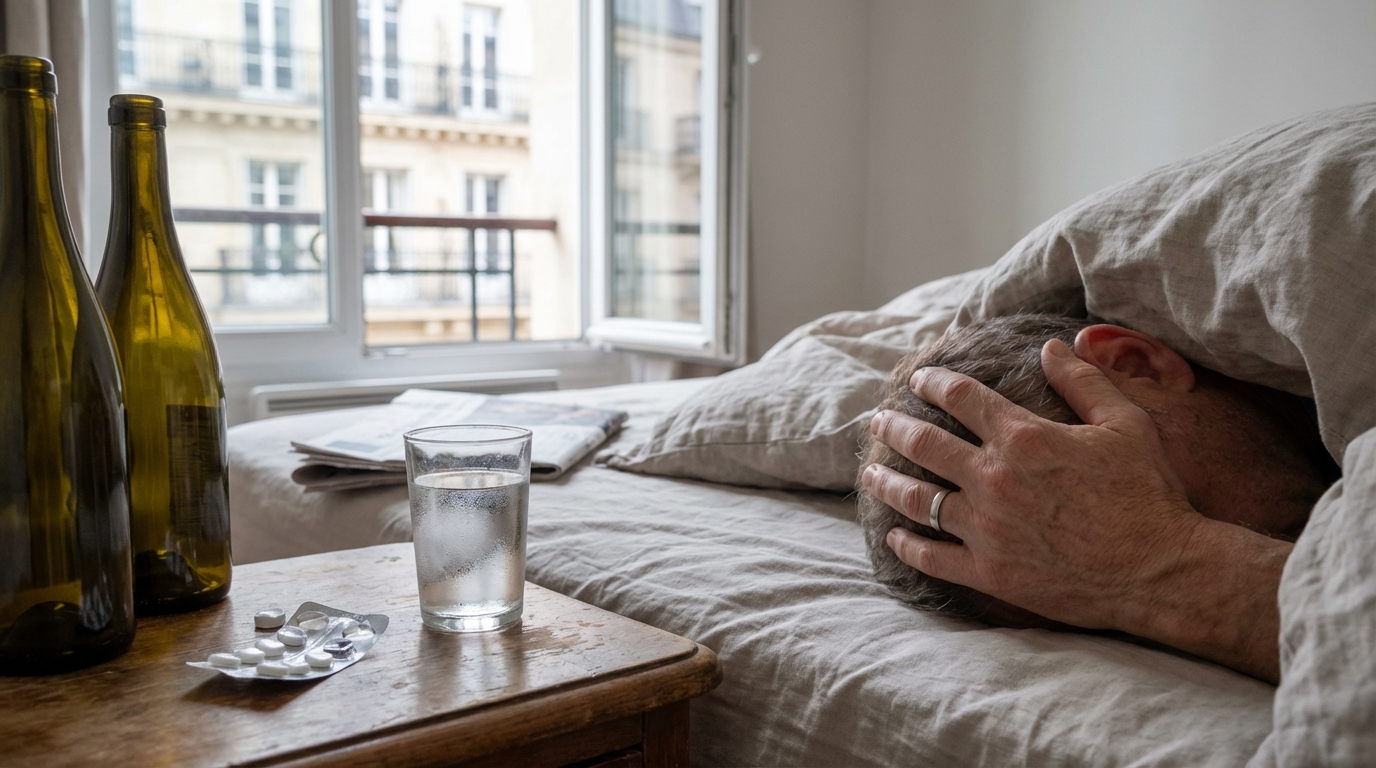
When Hangovers Start Hitting Harder
For many people, there comes an age when the morning after feels distinctly less forgiving, and the ache lasts longer than it used to. The science behind this shift is surprisingly nuanced. Researchers suggest that self-reported severity and underlying physiology don’t always move in lockstep, leaving a gap between what we feel and what our bodies endure. Two turning points emerge across adulthood, reshaping how alcohol affects us over time.
What Large-Scale Data Actually Shows
A major study from Utrecht University, published in Alcohol and Alcoholism in 2021, followed 761 drinkers aged 18 to 94. On a 0–10 scale, participants in their late teens to mid-30s reported the most intense hangovers, while those aged 46–65 described symptoms at roughly half the intensity for comparable amounts of alcohol. Men consistently reported worse after-effects than women at almost every age, an advantage that largely disappeared after 66. Older adults also felt less drunk at similar doses, even when the numbers suggested otherwise.
This apparent paradox underscores a key insight: the perception of a hangover is subjective, influenced by expectations, mood, and drinking context. Meanwhile, the body’s internal handling of alcohol grows less efficient with age, in ways that can quietly magnify physiological stress, even as some people say they feel “not so bad.”
Biology Doesn’t Stand Still
Across adulthood, body composition shifts: total body water declines, meaning a given drink produces a higher blood alcohol concentration. The liver’s main enzymes, alcohol dehydrogenase and aldehyde dehydrogenase, tend to work more slowly with age. As a result, acetaldehyde—the highly toxic intermediate formed as alcohol is broken down—can persist longer, aggravating headaches, nausea, and overall malaise.
“Over time, the body becomes less efficient at clearing alcohol’s first breakdown product,” notes physiologist Mickael Naassila. “When BAC peaks higher and metabolism slows, the burden of acetaldehyde is greater, and the next-day effects become more pronounced.” That mechanistic reality can clash with surveys, which sometimes show older adults reporting milder symptoms.
The First Turning Point: Late 20s to Early 30s
Around ages 25–30, many people notice that the same number of drinks feels different. A modest drop in body water can raise BAC peaks, while changing sleep patterns make late nights costlier. Some studies find that subjective intoxication may grow more intense with age, though not all experts agree. Either way, the internal load—dehydration, inflammation, and metabolic strain—begins edging up, even when outward complaints don’t fully reflect it.
At this stage, recovery can require more deliberate habits: pacing, hydration, and sleep protection. While the hangover may not be “terrible” every time, the margin for error narrows, and back-to-back nights out take a steeper toll.
The Second Shift: After 60, Compounding Factors Emerge
Past 60, several trends converge to intensify the next-day fallout. Lower total body water amplifies alcohol’s diuretic effect, making dehydration set in faster. Sleep already becomes lighter and more fragmented with age; alcohol further reduces deep sleep and REM, delaying recovery. Many older adults also live with low-grade inflammation and take medications that can interact with alcohol, increasing risks from even modest drinking.
Here, each glass “weighs” more: dry mouth, pounding headaches, and lingering fatigue are all more likely. Symptoms may stretch across more of the day, and the sense of being off-kilter—foggy, irritable, or weak—can be more persistent.
Why You Might Feel Better Even If You’re Not
Aging can subtly blunt self-perception of intoxication, making some people feel less drunk at the same dose, despite higher BAC. Expectations also change: older drinkers may plan quieter evenings, eat more consistently, or stop earlier—habits that mitigate damage. Meanwhile, younger adults often stack risk factors—sleep debt, binge patterns, sugary mixers—that magnify hangover pain. The result is a split-screen reality: biological vulnerability edges up with age, even as reported severity sometimes goes down.
Practical Ways to Minimize the Damage
- Favor slower sipping and smaller pours to flatten BAC peaks.
- Alternate alcohol with water or electrolyte drinks to counter diuresis.
- Eat protein and complex carbs before and during drinking to curb spikes.
- Avoid mixing types of alcohol and overly sweet cocktails that speed intake.
- Guard your sleep window and stop earlier in the evening.
- Be medication-aware: check for interactions with common prescriptions.
- The next morning, rehydrate, eat light, and skip “hair of the dog.”
The Takeaway
Hangovers don’t follow a simple, linear timeline. Younger adults often report the harshest symptoms, yet the body’s capacity to handle alcohol gradually diminishes with age—especially after the late 20s, and even more so after 60. Add in lighter sleep, faster dehydration, and medication interactions, and the morning-after burden can quietly intensify, even when it doesn’t feel catastrophic.
The best defense is anticipation: drink a bit less, space it out, protect your sleep, and hydrate deliberately. These small adjustments respect what biology is already telling you—your margin narrows with time, and recovery becomes a skill worth practicing.