
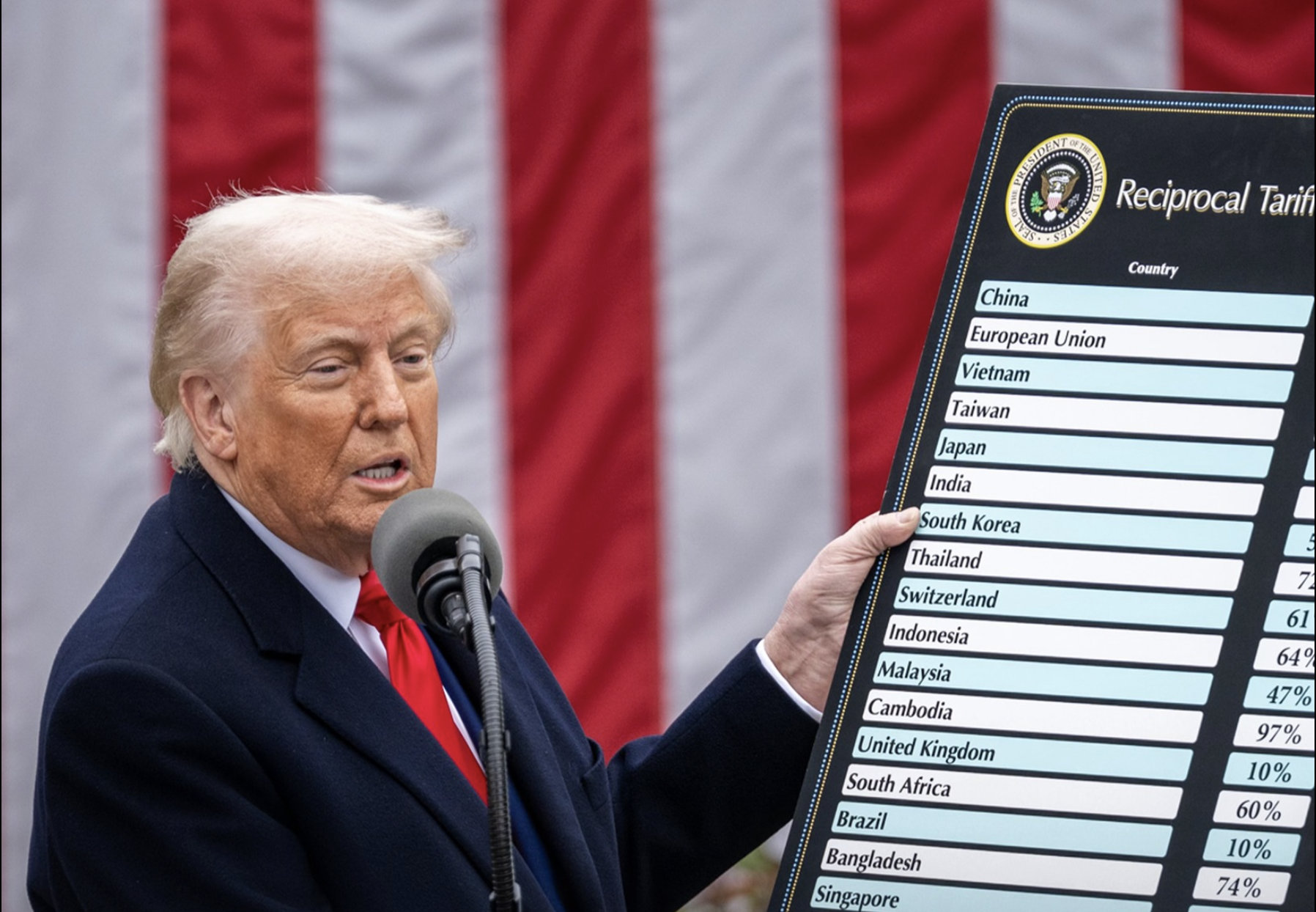
The Tariff Rebate in Texas Still Lacks a Clear Date Despite Court Rulings, While Businesses Face Losses and More Uncertainty.
Texas businesses could wait years to recover tariffs charged under an executive order, even after court decisions ordering their refund. The impact extends to businesses of all sizes, including Houston shops that absorbed cost increases during 2025.
The tariff refunds in Texas still lack a clear date. Although the U.S. Court of International Trade determined last week that the federal administration must return those charges, and the U.S. Supreme Court ruled last month that using the International Emergency Economic Powers Act of 1977 (IEEPA) to impose them was illegal, the government has not yet indicated when it will start paying or whether it will do so without further delays.
The uncertainty matters especially in Texas because the amount of money involved is high. Between February and December 2025, the federal administration collected more than $126 billion in tariffs nationwide under IEEPA. Of that figure, more than $11 billion came from Texas businesses.
What the Courts Resolved
The crux of the case rests on two recent court decisions. The U.S. Supreme Court concluded last month that the use of IEEPA to impose these tariffs was illegal. Subsequently, the U.S. Court of International Trade ordered that the administration must refund the charges collected since February of last year under that same law.
That does not mean the money will return soon to the companies’ accounts. The court order opens the door to refunds, but it did not close the discussion about timing, mechanics, or scope of that process. It also left open the possibility of new legal challenges.
Weston O’Black, a partner in the Houston office of Susman Godfrey, said that the Trump administration could question the authority of the U.S. Court of International Trade to order tariff refunds nationwide. If that happens, the process could be delayed even longer.
In other words, the ruling exists, but the timeline for compliance remains undefined.
Tariff Refunds in Texas and the 45-Day Timeline
U.S. Customs and Border Protection said it is working on a system to begin processing refunds in 45 days. Still, that timeline has not cleared up doubts among lawyers and companies following the case.
Michelle Schulz, a Dallas-based attorney, expressed skepticism about the government’s ability to meet that timeline. She also warned that companies filing lawsuits to compel refunds could face additional scrutiny by customs.
Her concern centers on the same system that would be used to return the money. She explained that this mechanism would also allow Customs to review whether companies made errors in their filings and go back up to five years to examine them.
That scenario has left many businesses in an uncomfortable position. On one hand, there is an order to return the money. On the other hand, the steps to obtain it are not straightforward and could involve new costs or administrative risks.
Therefore, tariff refunds in Texas are not being viewed today as an immediate solution, but as an uncertain process that could drag on.
The Blow Was Hardest on Small Businesses
Although tariffs affected businesses of various sizes, the pressure has been especially strong on small businesses that do not have margins to absorb prolonged losses or extensive resources to litigate.
That is the case of Misfit Toys, a Houston-based toy store. Its owner, Daniel Rivera, explained that the business was caught between higher costs of imported toys and pressure from suppliers and customers to keep prices lower in-store.
Rivera compared his business situation to that of much larger chains. He said that companies like Target and Walmart can operate with smaller margins per product, something an independent store cannot sustain as easily.
According to his estimate, Misfit Toys recorded a $110,000 fall between Q4 2024 and Q4 2025, largely due to the impact of tariffs. He also explained that the business lost money by ordering less inventory than usual and by directly absorbing the tariff costs in-store.
For a small business, that kind of adjustment is not minor. It means selling less, reducing margins, and bearing ongoing pressure on cash flow and inventory.
Houston Also Feels the Weight of the Change
In Houston, the tariff discussion is not abstract. The city hosts port activity, importers, distributors, and small shops that rely on goods brought from abroad.
The image of containers at the Port of Houston captures part of that scenario. The added costs from tariffs affect not only the entry of products but also how businesses calculate purchases, pricing, and sales projections.
The Misfit Toys case illustrates how that effect can reach all the way to the counter. When a business cannot pass the entire increase to the consumer, it ends up absorbing part of the cost. If it also reduces orders to avoid tying up more capital, the pressure shifts to sales volume and available inventory.
That is where tariff refunds in Texas take on more tangible weight. It is not just a legal dispute about international trade, but money many businesses have already paid and that they still do not know if they will recover.
What Comes After the Ruling
The uncertainty does not end with refunds. After the Supreme Court ruling, Trump said he aims to replace tariffs imposed under IEEPA with 15% tariffs under other laws.
That means that even if the earlier charges are refunded, tariff pressure could continue through another path. For many businesses, that reduces the potential relief of a future refund. A late refund does not necessarily compensate for an environment where costs continue to rise due to new measures.
Rivera said he has no expectations of recovering that money. He also explained that his business is too small to pursue legal action that would force him to incur more expenses.
For now, tariff refunds in Texas remain a possibility backed by court rulings, but still far from becoming real relief for many businesses. In Houston and across the state, businesses continue awaiting a clear answer about when that money will arrive and under what conditions.
