

Skoda’s unexpected surge up the value ladder
The Czech carmaker’s momentum is startling, with robust profits and a steadier trajectory than many legacy rivals. While premium peers wrestle with EV transition costs, Skoda’s lean footprint and disciplined pricing are translating into record margins. The brand’s absence from the United States and China has oddly become a shield, limiting exposure to volatile demand swings. For a company once cast as Volkswagen Group’s value fighter, the balance of power is quietly shifting.
The numbers behind the shock
In 2024, Skoda delivered over 720,000 vehicles in Europe, pairing volume with enviable discipline. Operating profit reached roughly €2.3 billion, underpinning an operating margin of 8.6%—a level that outpaced Audi and even widened the gap to Volkswagen. Shared group technologies plus lower Czech labor costs offer a structural advantage in cost of goods. That efficiency lets Skoda maintain customer-facing prices while protecting per‑car profit.
This result would have seemed unthinkable a decade ago, when Audi’s margin leadership looked nearly untouchable. Last year, Audi hovered near a 6% margin, pressured by EV ramp costs and complex global operations. Skoda’s simpler footprint and targeted portfolio are, for now, better matched to Europe’s demand curve. In a tougher macro climate, the quiet operator is the one thriving.
Could it really replace a premium benchmark?
Brand hierarchy inside VW Group is carefully engineered, and Audi still owns clear premium territory. The rings command deep equity, with Audi Sport, RS variants, and high‑margin performance SUVs that cement a luxury‑leaning image. Skoda, by contrast, majors in pragmatic packaging, space efficiency, and rational value. The cabins feel increasingly upmarket, yet the character remains smart, honest, and purposeful rather than overtly luxurious.
Replacing Audi outright would require a wholesale repositioning, from design language to dealer experience and software‑defined prestige touchpoints. What Skoda can plausibly become is Europe’s leading value‑premium play, a space where costs stay disciplined while perceived quality keeps rising. In that lane, the margins can remain healthy, and the brand can court aspirational buyers without alienating its core base.
EV momentum without overreach
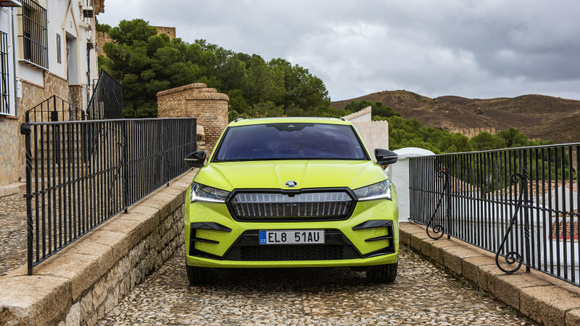
The Enyaq has emerged as the brand’s electric flagship, balancing range, space, and simplicity. Its new sibling, the Elroq, surged to Europe’s best‑selling EV in April, strengthening the order book at launch. Executives acknowledge overlap with Enyaq but say the effect is limited, thanks to pricing and trim‑level discipline. As CEO Klaus Zellmer put it, “Our factories are running at full capacity,” underscoring a production cadence that supports growth.
Skoda’s EV approach feels deliberately measured, prioritizing attainable tech and robust packaging over headline‑grabbing extremes. That steadiness matters as subsidy regimes shift and charging networks remain a patchwork of uneven quality. A controlled rollout keeps inventory balanced and helps protect transaction prices.
Why resilience favors the Czech playbook
- Limited exposure to US and China market volatility, reducing geopolitical and pricing shocks.
- Lower cost base with high parts commonality, protecting margins without alienating buyers.
- Pragmatic EVs that suit European budgets, fleets, and infrastructure realities.
- A tighter model mix that simplifies manufacturing and accelerates feature‑set learning.
Risks that could test the thesis
Expansion into India and Vietnam brings fresh opportunity, but also execution and supply‑chain risk. Rapid scaling can strain perceived quality, dealer readiness, and aftersales care. Inside VW Group, managing cannibalization with Volkswagen brand remains a delicate calibration, especially in overlapping segments. Meanwhile, aggressive Chinese entrants pressure European price points, particularly in compact EV and PHEV classes.
Regulation is another swing factor: emissions targets, tariff policy, and software compliance can alter model economics quickly. If battery costs stall or incentives wane, margins could narrow unless product content stays ruthlessly optimized.
The 2030 target and what “new Audi” would mean
Management is openly chasing Europe’s number‑three sales spot by 2030, closing a narrow gap to BMW. “We aim for third place,” Zellmer has said, a goal that fits Skoda’s current trajectory if execution remains tight. To truly become a “new Audi,” the brand would need sustained double‑digit margins, premium‑grade software experiences, and unmistakable design authority—a tall order without diluting value DNA.
The more credible path is to out‑execute on value‑premium: keep costs low, keep quality rising, and keep EVs attainable while adding selective high‑margin trims. Do that, and Skoda won’t need to mimic Audi to feel just as indispensable to the Group’s profit engine. In a market that rewards clarity and discipline, the Czech upstart already looks like the segment’s most methodical climber.