
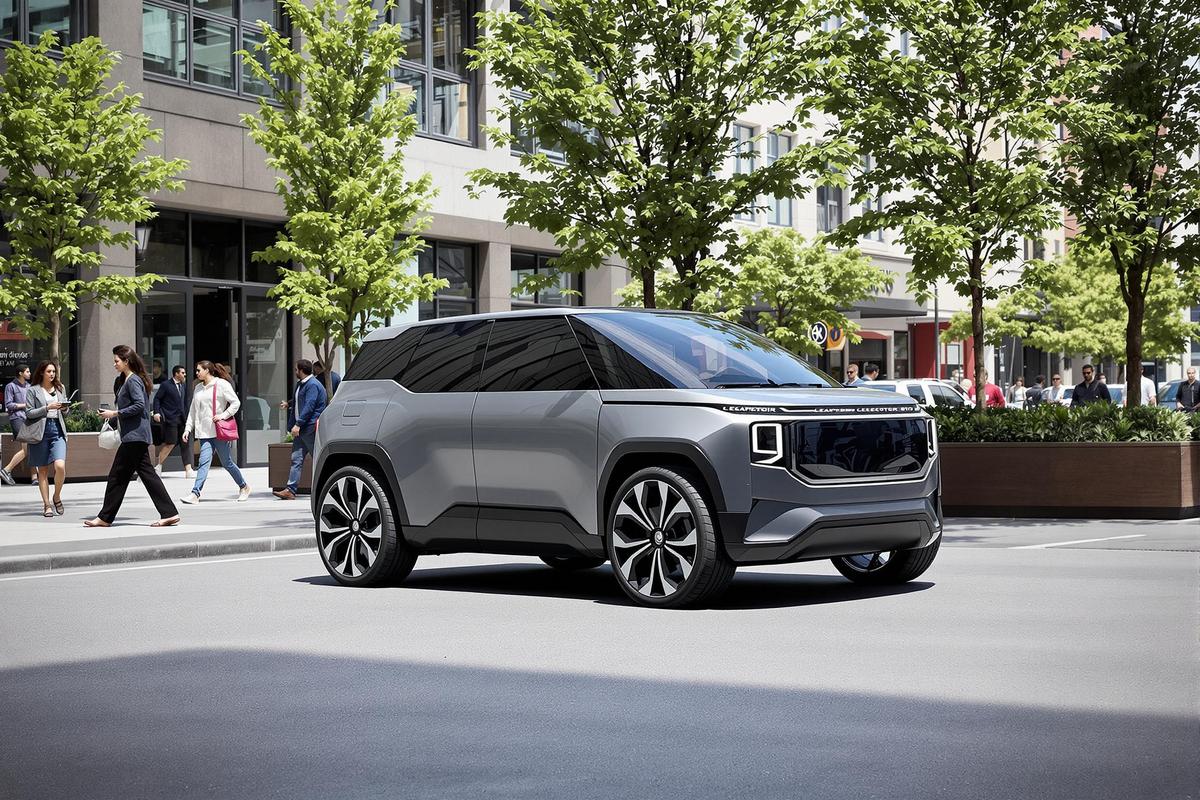
Europe’s compact electric-SUV arena is bracing for a new arrival backed by a familiar powerhouse. Under the Stellantis umbrella, a Chinese-built contender is poised to test entrenched assumptions on price, range, and value. The formula is simple yet disruptive: credible performance, long-legged efficiency, and a strategic distribution push designed to scale quickly across the continent.
Momentum built in China
In its home market, the compact SUV has already racked up impressive preorders, propelled by a clear value proposition. Two electric powertrains anchor the lineup: one rated at 179 horsepower for city-savvy commuting, and another at 219 horsepower tuned for livelier motorway pace. This dual-offer approach targets both daily utility and road-trip confidence, widening its appeal among urban drivers and long-distance travellers.
The product’s rise was not a fluke but the payoff of a disciplined spec sheet and aggressive pricing. Consumers saw usable range, accessible performance, and a cabin pitched at tech-forward comfort—without the premium taxes often levied by legacy badges. The result was a groundswell of attention that now spills into Europe.
Range and efficiency that calm anxiety
Battery choice is central to the brand’s pitch, and the compact SUV comes with two packs. A 56.2 kWh version claims up to 510 km of range, while a 67.1 kWh option stretches to about 600 km. For a compact footprint, those figures land squarely among category leaders, addressing the fear that still shadows first-time EV buyers.
Efficiency matters in daily life as much as on paper, and here the package focuses on aerodynamic cleanliness and careful energy management. The goal is not just a headline number, but consistent confidence between charges, whether on brisk winter mornings or summer holidays.
Urban agility, practical design
Design leans into modern simplicity with clean surfaces and a stance that balances visual assertiveness with easy parking manners. Inside, space is prioritised for families and week-to-week errands, helped by smart packaging that squeezes more room from a compact shell. Drivers should expect a straightforward interface, quick responses, and the kind of intuitive controls that reduce learning curves for new EV owners.
The chassis is set up for urban agility, with steering and suspension tuned for tight streets and speed-bump realities. Yet it maintains the high-speed stability needed for European motorways, an area where lesser-compacts can feel out of their depth.
Pricing, positioning, and Stellantis muscle
Value is the headline. In China, prices span roughly €13,900 to €17,700, a bracket that turned heads immediately. In Europe, expectations point to a sticker north of €25,000, which still leaves it among the most approachable electric SUVs on the market. That balance of cost and capability is engineered to capture price-sensitive buyers without trimming essential features.
The Stellantis partnership provides the distribution, aftersales, and logistics backbone needed for a credible launch. With established dealer footprints, service tools, and parts supply, the roll-out can scale beyond a niche experiment. As one industry observer summed it up, “Real disruption happens when price, performance, and trust intersect.”
Competitive shockwaves ahead
Legacy brands won’t stand still, but the newcomer’s proposition will force a sharper focus on efficiency, pricing, and software value. Expect a faster cadence of mid-cycle updates, more aggressive entry trims, and a renewed emphasis on real-world range. Consumers, meanwhile, benefit from broader choice and stiffer competition on list prices.
- Why it could win: compelling range, accessible pricing, Stellantis support, and a user-friendly package.
- What could slow it: brand recognition, tariff volatility, charging-network gaps, and concerns over residual values.
The European checklist
Success hinges on several near-term tests. First is the quality of localisation—how well the car’s charging profile, navigation, and driver assistance fit European norms. Second is service readiness, from spare-part pipelines to technician training. Third is the cadence of software improvements that keep the car feeling fresh after purchase.
Equally crucial is transparent communication on range in diverse conditions. Realistic winter figures, motorway consumption, and charging-speed clarity build credibility. If expectations are set precisely—and met consistently—the brand can turn early adopters into vocal advocates.
A tipping point for mainstream EVs
There’s a bigger story than one model’s sales chart. A well-priced, long-range compact SUV backed by a global giant signals that the EV value equation is changing fast. When newcomers match the comfort, tech, and support buyers expect—at prices that stretch household budgets less—the market shifts.
If the launch clears regulatory, logistical, and perception hurdles, the ripple effects could be profound. European rivals may cut prices, accelerate platform refreshes, and pack more standard tech to defend share. For drivers, that means better choices, sharper deals, and fewer compromises between cost and capability.
The compact segment is where mass adoption either stalls or surges. With the right execution, this Sino-European alliance can make the latter more likely—nudging electric mobility from “interesting” to inevitable for a wider slice of the European public.