
Washington – The recent diplomatic offensive led by the administration of President Donald Trump to establish a negotiating table with the Islamic Republic of Iran has marked a turning point in the narrative of the operation “Epic Fury,” shifting the terrain of the military confrontation toward high-level political pressure.
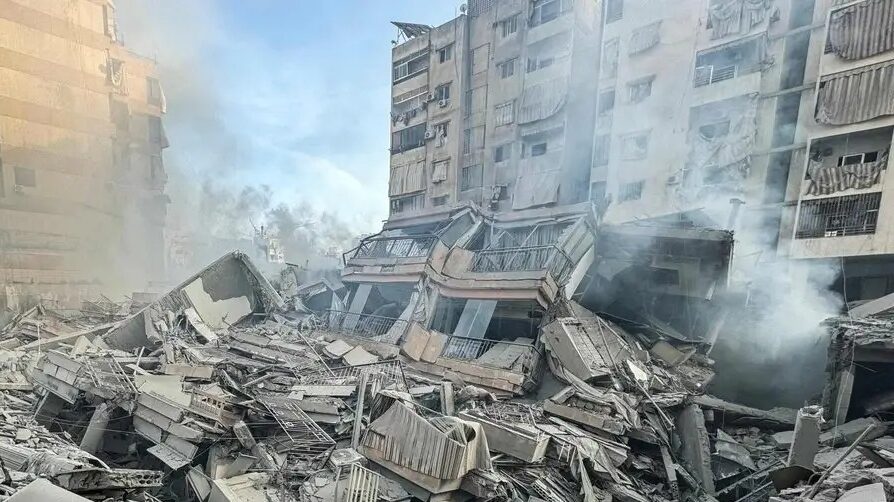
After weeks of intense bombardments and an energy blockade that has jeopardized the global economy, the American president has publicly expressed his interest in achieving a “definitive and just agreement” that would end the hostilities, always under the premise of a strategic capitulation of Tehran’s nuclear and regional ambitions.
This proposal, launched at a moment of maximum tension, seeks to capitalize on Iran’s internal weariness after the loss of key leadership figures and the collapse of its critical infrastructure, presenting diplomacy not as a concession, but as a pragmatic exit to avoid the total annihilation of the Iranian governing system.
Iran’s response, however, has been complex and laden with a symbolism of resistance that challenges Washington’s narrative. Through its remaining diplomatic channels and spokespeople of the Supreme National Security Council, the interim government of Mojtaba Khamenei has rejected any possibility of dialogue while the coalition’s active military presence persists on its borders and the attacks against its sovereignty continue.
For Tehran, Trump’s proposal is interpreted as an ultimatum disguised as diplomacy, a tactic of unconditional surrender that offers no real guarantees for the survival of the Islamic Republic. The Iranian leadership has conditioned any rapprochement on the immediate cessation of aerial operations and the lifting of the economic sanctions that have choked the civilian population, arguing that one cannot negotiate with “a gun pointed at the temple.”
Despite the rejection, reports of back-channel communications surfaced, possibly mediated by neutral actors in the region. Within Iran, moderate and technocratic sectors, fearful of irreversible social disintegration, would be pressing to have the American offer considered as a lifeline in a conflict that they can no longer bear militarily or socially.
Nevertheless, the radical wing of the Revolutionary Guard maintains belligerent rhetoric, insisting that the only dignified response is the continuation of the “sacred defense” and the harassment of Western interests in the Gulf. This internal division in Iran complicates the possibility of a unified and clear response to the White House’s gestures, leaving the door open to a prolongation of uncertainty.
For its part, the Trump administration has made clear that its peace offer has a limited validity and that, if there is no favorable and verifiable response in the short term, the intensity of the military campaign will not only be maintained but could expand toward new strategic objectives. The United States insists that its aim is not territorial occupation but the neutralization of a global threat.