
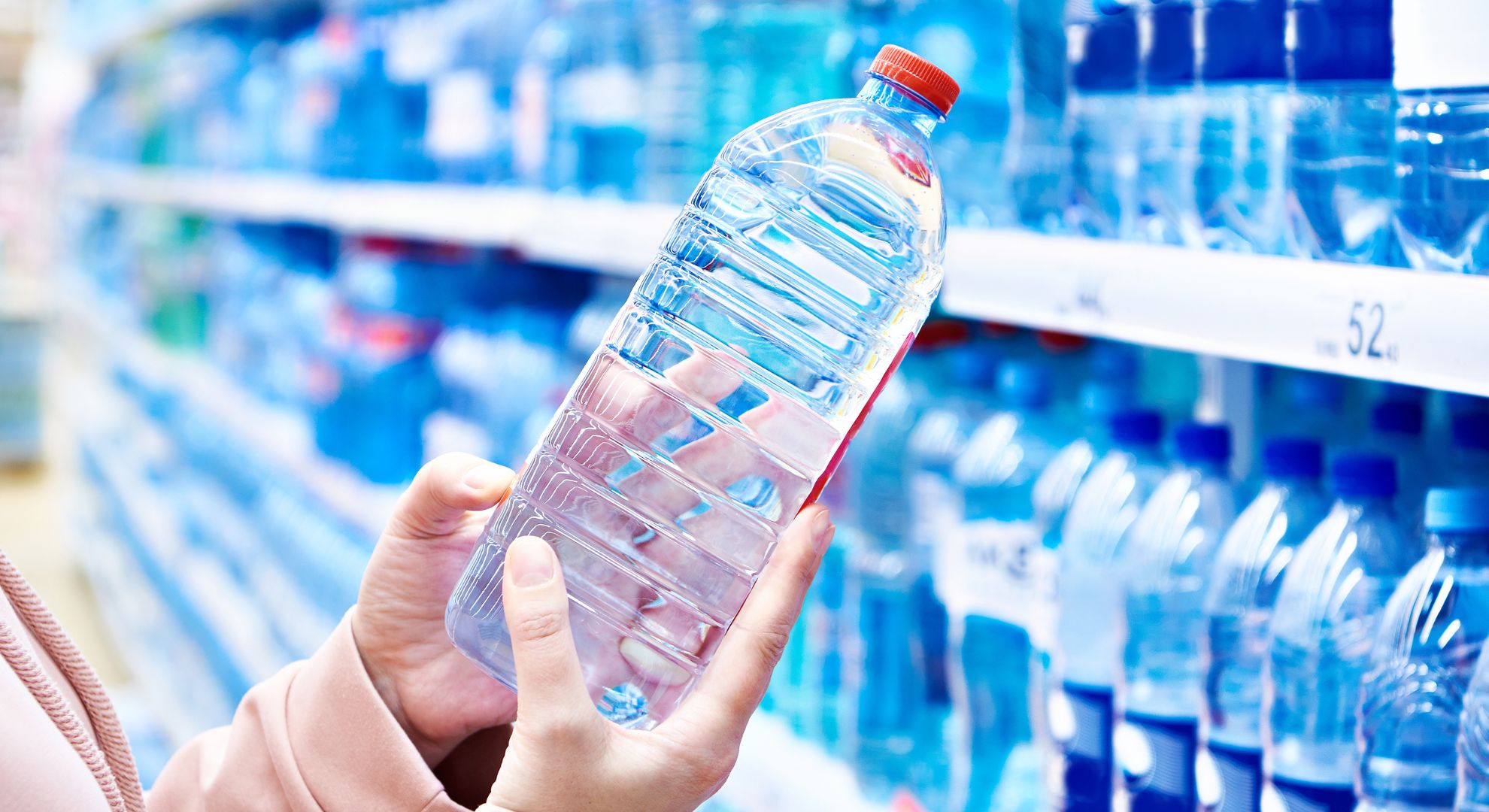
You grab it without thinking—the cold, clear staple that rides shotgun in your car and waits by the checkout line. A recent Columbia University analysis suggests that one such ubiquitous bottle may carry far more tiny plastic pieces than anyone expected. The findings don’t name brands, but they do describe “popular” labels you can buy anywhere, including gas stations and groceries. The numbers are, in a word, staggering—and they raise big questions about what we’re really drinking.
What researchers actually found
Using a cutting-edge imaging method called stimulated Raman scattering (SRS) microscopy, Columbia scientists examined several bottles from three widely sold U.S. brands and identified a stunning count of tiny plastic particles—on the order of hundreds of thousands per liter. Most weren’t the larger fragments we’ve heard about; they were nanoplastics, far smaller than a speck of dust. The researchers detected common polymers like PET (the bottle itself), polyethylene, polyamide, and even traces of PVC.
Crucially, the team did not disclose specific brand names, a standard practice meant to focus on the bigger pattern. What’s new is not the idea that plastics are present—it’s the sheer volume, and the dominance of particles too small for traditional tests to see. As one lab note summarized the scale, the counts were “far higher than previously estimated.”
If the earlier conversation on microplastics felt academic, these results sound more immediate. The data reframes a familiar ritual—twist cap, take a sip—as something we may need to examine with fresh eyes.
Why that matters for your body
Size is the unsettling part. Microplastics are already concerning, but nanoplastics are so tiny they can cross cellular barriers. Early research suggests they might move through the bloodstream, interact with the immune system, and accumulate in sensitive tissues. The science is still emerging, and there’s no definitive dose-response map for long-term risk. But the direction of evidence points to a simple posture: be curious, not complacent.
Think of it as a story about exposure. We encounter plastic fragments in dust, food packaging, textiles, and water—not just in bottles, but in other beverages and even some tap supplies. This new work doesn’t say “panic”; it says “pay attention.” As one line that stuck with me puts it, “Out of sight isn’t out of body.”
How do they get into a sealed bottle?
The pathway is surprisingly mundane. Manufacturing lines can shed microscopic bits from filters, pipes, and valves. Friction along the bottling process abrades surfaces. The cap and neck—often made of different plastics—can generate particles when you twist the closure. Time and temperature matter too; heat and agitation can encourage shedding. Even pristine-looking water can carry a hidden freight of particles so small they slip past ordinary screens.
None of this means a specific label is uniquely culpable. It means the whole system—materials, machinery, logistics—creates opportunities for plastics to find their way into the product.
What you can do right now
There’s no single switch that makes the problem disappear, but small moves add up to meaningful reductions.
- Choose reusable stainless-steel or glass bottles when possible, refill with trusted sources, and consider point-of-use filtration such as reverse osmosis or sub-micron filters (look for ratings around 0.2 microns); avoid leaving any plastic bottle in hot cars; don’t repeatedly reuse thin, single-use plastic bottles which can shed; when buying packaged beverages, glass or lined aluminum usually shed fewer fragments than soft plastics; if you prefer bottled water, store it cool, handle gently, and open caps with minimal abrasion; stay informed as standards evolve, and ask brands about testing for micro- and nanoplastics.
What this means for industry and policy
Right now, there are no specific federal limits for microplastics or nanoplastics in drinking water in the United States, and bottled water is primarily regulated by the FDA. Some states and research groups are building methods for measuring these particles more consistently, but standardization is still young. That leaves a gap between what technology can now detect and what regulations explicitly address.
The most credible next steps are transparency and testing. Brands can publish particle counts, detail manufacturing controls, and support independent labs using next-generation methods. Simple engineering upgrades—better filtration, smoother process pathways, cap-and-neck design tweaks—could help cut shedding at the source. The public conversation will likely turn from “Is it there?” to “How much is there, and can we bring it down?”
The smarter way to sip
No one wants fear in their water, but we do want the facts to flow as freely as the product. This research is a nudge to rethink our daily defaults, not an edict to abandon every bottle on the shelf. As one line keeps echoing: “Clear doesn’t always mean clean.” Until standards catch up, choosing sturdier materials, smarter filters, and cooler storage is a practical, calm response.
The bottom line is almost paradoxical: the more precisely we look, the more we see—and that clarity is the first step toward making a commonplace habit a little more careful.