
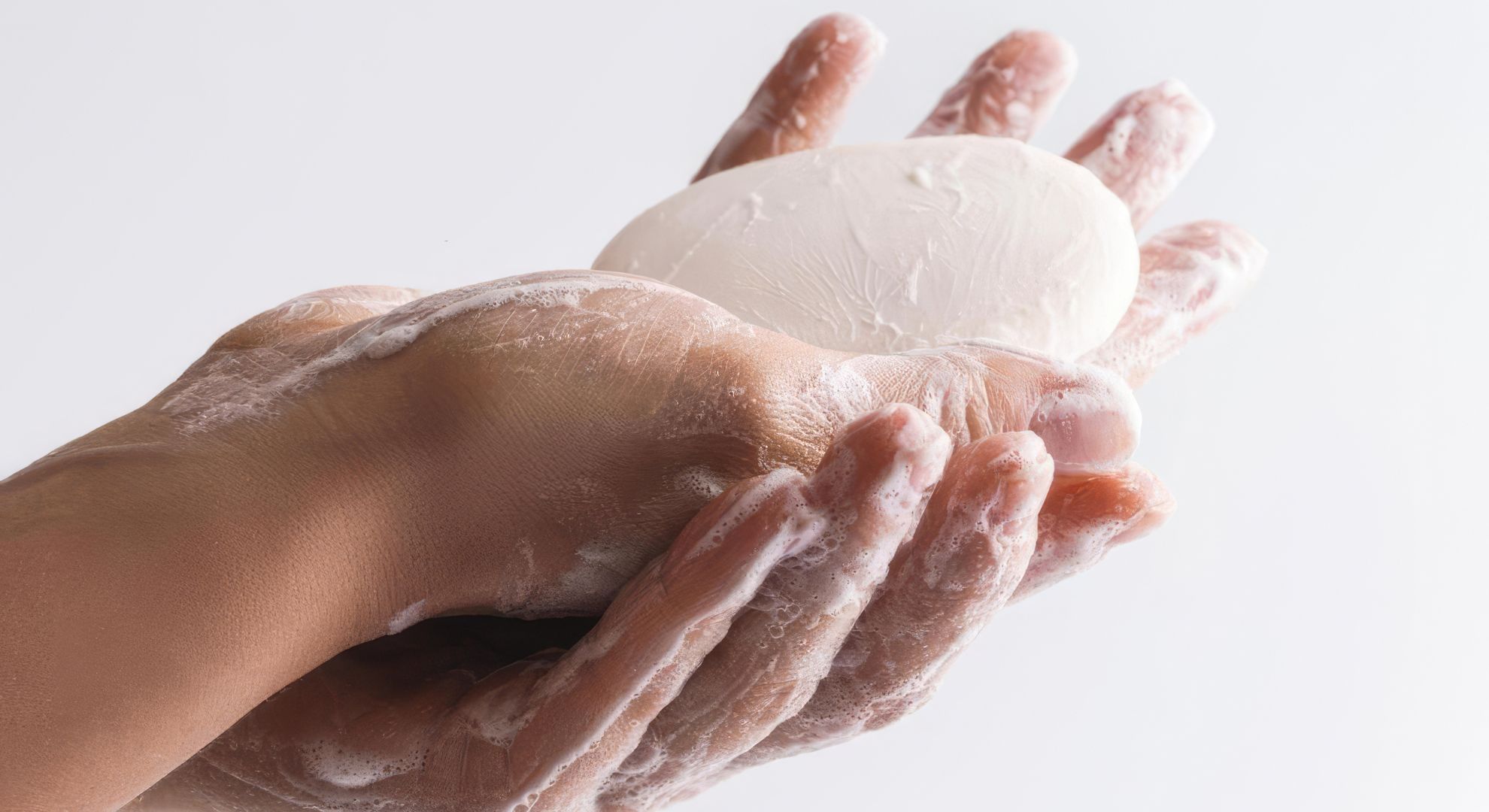
The pump by the sink looks harmless, even friendly. But that everyday lather in shared bathrooms often relies on a preservative that many dermatologists have urged regulators to restrict for years. When hands are washed dozens of times a day, a tiny dose becomes a big deal.
The chemical hiding in plain sight
The culprit is methylisothiazolinone (often paired with methylchloroisothiazolinone), a powerful preservative used to stop microbes from colonizing liquid soaps. On labels it may appear as “Methylisothiazolinone,” “MIT,” or as part of the blend “MCI/MI” or “Kathon CG.”
Manufacturers like it because it’s effective at very low levels and keeps bulk dispensers stable over time. Facilities like it because it’s cheap and easy to source in industrial quantities. Consumers rarely notice it because the name hides among long lists of other innocuous-sounding ingredients.
In the past decade, this preservative has become a leading cause of allergic contact dermatitis in frequent hand washers—teachers, office staff, janitors, healthcare workers, and parents shepherding kids to the sink.
Why dermatologists sounded the alarm
“Small amounts, big reactions” has become the unofficial mantra around this ingredient. That’s because MI is a potent sensitizer—a substance that can train your immune system to recognize it as a threat. Once that happens, even tiny exposures can spark a rash.
In 2013, the American Contact Dermatitis Society dubbed MI the “Contact Allergen of the Year,” a wry honor that reflected soaring case numbers. European regulators soon tightened rules, banning MI from leave-on cosmetics and severely limiting concentrations in rinse-off products. In the United States, the ingredient remains legal in soaps and many personal care items.
“We don’t need to wait for perfect data to reduce exposure,” is how one clinician summarized the ethos of precaution. For more than a decade, dermatology groups have urged limits or outright bans in products used millions of times a day.
How it shows up on your skin
Allergic contact dermatitis often starts as itchy, red patches on the backs of hands, between fingers, and around the wrists. The skin may burn, flake, or weep, and it can be confused with simple dryness or “eczema” that never seems to heal.
Unlike irritation from harsh detergents, an allergy can persist or even worsen when you switch brands but keep encountering the same preservative. Patch testing by a board‑certified dermatologist can confirm the culprit and guide realistic avoidance.
“If your hands are cracked, sore, and itchy for weeks, don’t assume it’s just winter skin,” is a helpful rule of thumb. A clear diagnosis can shorten a months‑long cycle of flare, steroid cream, and relapse.
Where you meet it most
MI commonly appears in:
- Bulk liquid hand soaps in refillable dispensers found in schools, offices, gyms, and public buildings.
You may also encounter it in some dish soaps, household cleaners, makeup removers, baby wipes, and “fresh‑scented” personal care products. Fragrance can add a second trigger, which is why fragrance‑free options are a smart fallback.
“Fragrance‑free and MI‑free is my default recommendation for workplaces,” many clinicians say, because it removes two of the most common offenders.
Why the problem feels so widespread
Public facilities buy soap by the drum, and those drums must resist contamination. MI does that job well, and the cost per gallon is hard to beat. When procurement teams compare bids, “lowest price” often wins—without a line item for dermatology complaints.
Open‑top dispensers add another wrinkle: they’re topped off again and again, and any microbial hitchhikers encourage hotter preservatives. Sealed‑cartridge systems reduce that pressure, making MI‑free formulas more feasible.
“Hand hygiene is non‑negotiable,” experts emphasize, “but the product doesn’t have to hurt.”
How to protect your skin—starting today
Start by reading labels. If you see the following, consider a different soap:
- Methylisothiazolinone, Methylchloroisothiazolinone, MIT, MI, MCI/MI, Kathon CG
Ask facility managers for MI‑free, fragrance‑free options preserved with alternatives like phenoxyethanol, sodium benzoate, or organic acids. Request sealed‑cartridge dispensers to reduce microbial load and minimize the need for strong preservatives.
If switching soaps isn’t possible, apply a thin layer of fragrance‑free barrier cream before work and a bland moisturizer after each wash. If symptoms persist, seek patch testing so you can avoid the exact trigger.
“Better soap choices reduce absenteeism, improve comfort, and still meet hygiene standards,” procurement teams are often surprised to learn. The fix isn’t exotic—it’s as simple as specifying “MI‑free, fragrance‑free” on the next order.
The humble hand‑wash shouldn’t come with a side of dermatitis. With a few informed choices, schools and offices can keep hands clean and skin calm—no petitions, protests, or cracked knuckles required.