
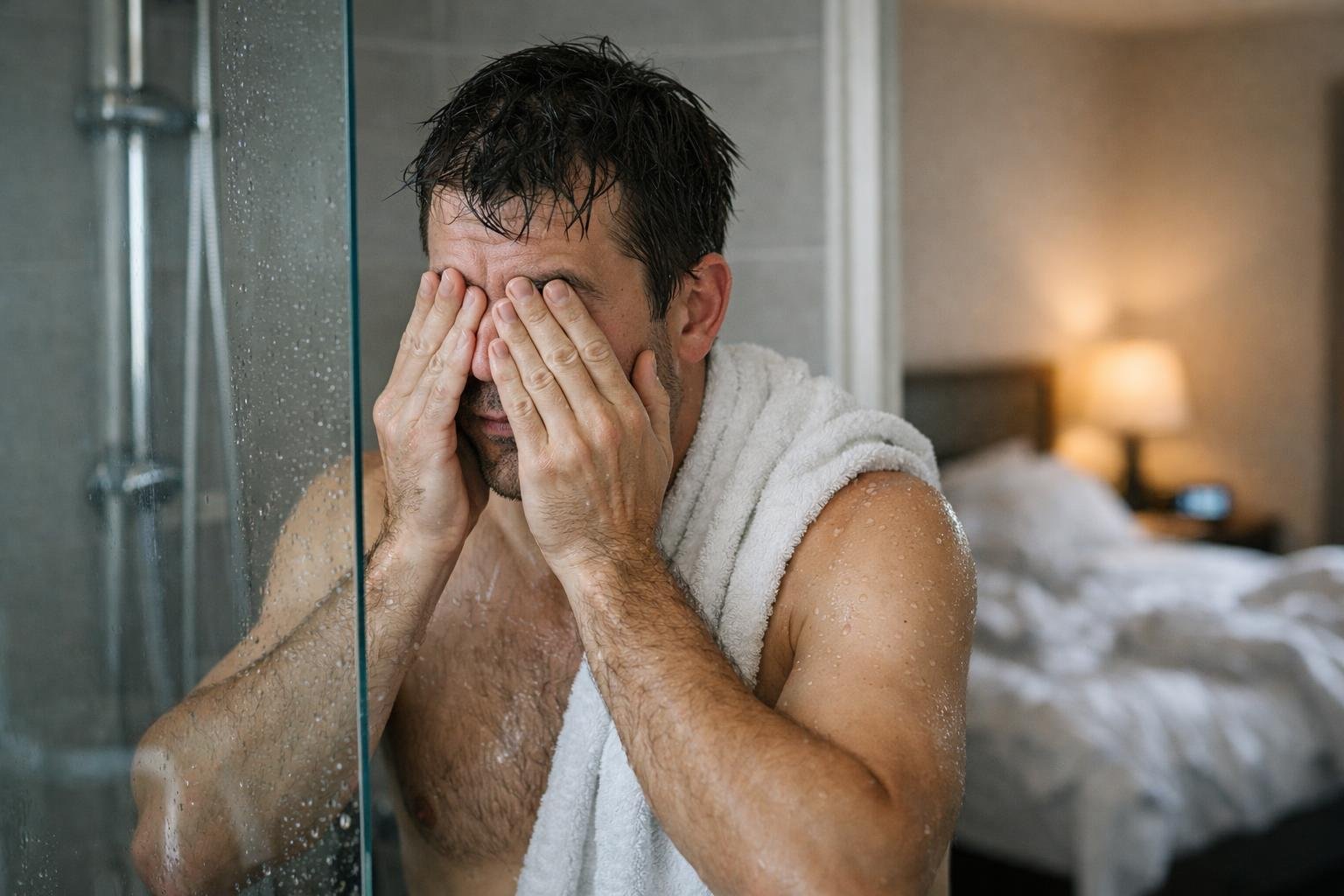
Morning habits have a way of echoing into the night, and few routines feel as automatic as a shower right after waking. The idea that this small choice could ripple into measurably worse sleep is both surprising and oddly plausible. Before you toss your towel, it’s worth unpacking what the claim really says, what the science can support, and how to turn a simple hygiene ritual into a sleep ally rather than a hidden saboteur.
Some readers have seen headlines pointing to a 35% drop in next‑night sleep quality for people who shower immediately after waking. That figure is attention‑grabbing, and it tees up a broader question: how do mornings sculpt our nights?
What the claim says—and what we can actually verify
Reports circulating online attribute this effect to research connected with Johns Hopkins, a respected name in sleep and circadian science. At the time of writing, there’s no publicly available, peer‑reviewed paper that cleanly documents a precise 35% deterioration tied specifically to post‑wake showers. That doesn’t mean the idea is nonsense; it means the exact number deserves caution.
Here’s the important context: scientists at major centers, including Hopkins, have long explored how thermoregulation, circadian rhythms, and morning‑time behaviors shape subsequent sleep. The larger scientific arc is clear—timing and temperature are potent signals to the brain’s internal clock.
“Timing is a signal, not a switch,” as the saying goes. Small daytime cues can produce evening consequences that feel disproportionate.
How a simple shower can nudge your circadian system
Your body’s 24‑hour rhythm rides on temperature, light, and hormones. A morning shower can, in principle, touch all three.
- Heat and cooling: A warm shower ramps skin temperature, which can trigger compensatory cooling as you step out. That thermal swing is a cue your clock can read.
- Arousal: Hot water and robust scrubbing can spike alertness, partnering with the cortisol awakening response already peaking after dawn.
- Light: Bright bathroom lighting adds powerful photonic input to your master clock in the brain.
None of this is inherently bad. In fact, a well‑timed morning warm shower can sharpen daytime performance. The potential tradeoff appears when the combination of heat, timing, and arousal is mismatched with your personal chronotype or sleep schedule.
“Sleep is a 24‑hour sport; what you do after sunrise shapes what happens after sunset.”
Why morning showers might backfire for some
The body sleeps best when core temperature is dropping, not rising. If your morning shower is intensely hot, unusually long, and immediately after waking, it may push your circadian phase slightly later for the following night—especially if you’re sensitive to thermal cues.
For early chronotypes who naturally wake soon, extra morning activation can deepen a mild phase delay, leaving you a bit too alert at bedtime. For night owls, the same habit might be neutral or even helpful, because any push toward a later phase meets their natural tendency.
“Heat is a steering wheel for your internal clock—turn gently, and you glide; yank hard, and you skid.”
What the broader evidence does support
While the exact 35% number remains unverified, the literature strongly supports three principles:
- Thermoregulation affects sleep onset and depth; warmth earlier in the day and a cool‑down before bed are generally helpful.
- Bright morning light advances the clock (earlier sleep), while late‑evening light delays it.
- Over‑arousal close to bedtime (heat, light, stress) can fragment sleep and reduce subjective quality.
Practical ways to keep the shower and protect your sleep
- Opt for warm‑not‑scalding water, and finish with a brief cool rinse to avoid prolonged thermal afterglow.
- Keep it short on weekdays when your sleep window is tight; five to seven minutes is usually plenty.
- Pair the shower with bright natural light or a light box early, then dim your evening environment.
- If you’re sensitive, delay the shower 30–60 minutes after waking to let cortisol and temperature peaks settle.
- Consider moving vigorous scrubbing or hot‑cold contrast sessions to late morning, not minute‑one after wake‑up.
- For better sleep onset, save a separate warm bath or shower 60–90 minutes before bedtime, then cool the bedroom.
Hot vs. cold: which helps, which hurts?
Cold showers right after waking feel invigorating, but they can spike sympathetic arousal. For some, that’s great for productivity; for others, it makes bedtime buzzier. Warm showers are calmer, yet if they’re too hot, the after‑warmth lingers and may blur your evening wind‑down. The best approach is purposeful: warm and short in the morning, warm‑then‑cool before bed, and gentle overall stimulation.
A simple experiment to find your sweet spot
Try a two‑week trial. Week one: shower immediately after waking. Week two: delay 45 minutes, keep it shorter, and reduce heat. Track bedtime, wake time, and a one‑to‑ten sleep rating. If your ratings rise in week two, you’ve found your lever.
“Measure what you modify, or you’re just guessing with extra steam.”
The splashy 35% number may or may not hold under strict scrutiny, but the larger takeaway is solid: morning routines are not trivial. Treat temperature, timing, and light as dials, not defaults, and your evening self will quietly thank your morning self.