
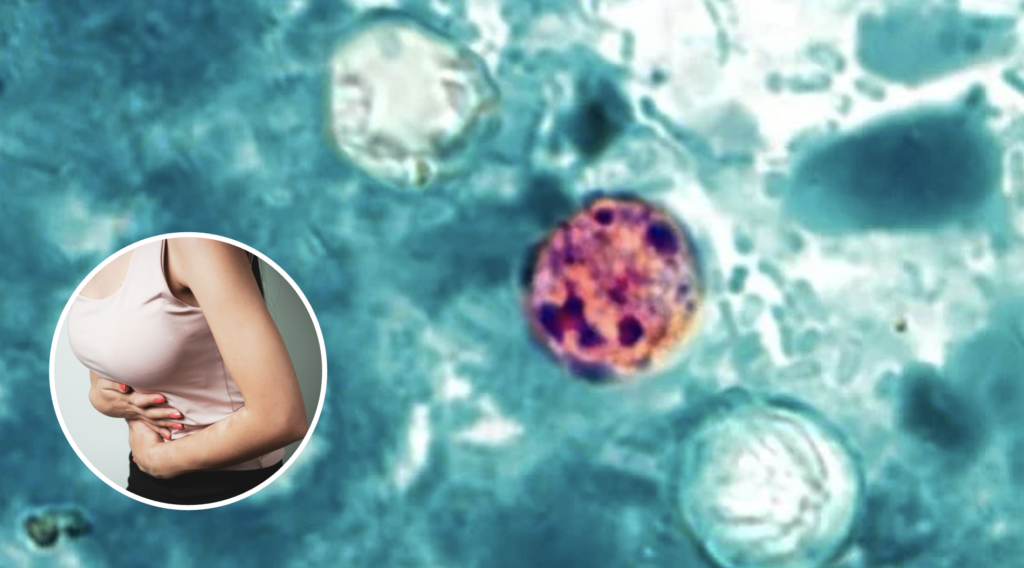
The Cyclospora outbreak has caused at least 454 hospitalizations and two deaths in 17 states. Local authorities have not yet determined whether the 34 cases previously reported in Houston and Harris County are part of the same outbreak.
Updated August 24, 2026.
The multi-state Cyclospora outbreak linked to iceberg lettuce reached 10,930 confirmed cases, at least 454 hospitalizations, and two deaths, while Harris County maintains its active local guidance on symptoms, testing, and prevention.
The illnesses began between June 14 and August 11, 2026. The two deaths occurred in Michigan, and the investigation remains open.
Epidemiological and traceback evidence links the outbreak to iceberg lettuce processed by Taylor Farms of Mexico. The products reached consumers, restaurants, and food-service businesses in several states, including Texas.
The 10,930 Cyclospora infections belong to the same lettuce outbreak
The count represents cases authorities linked to exposure to iceberg lettuce processed by Taylor Farms of Mexico. The investigation includes people who purchased or consumed the product at various establishments, including some who previously reported eating at Taco Bell.
The Centers for Disease Control and Prevention and the Food and Drug Administration include only laboratory-confirmed cases in the outbreak tally.
Additionally, the figure rose rapidly. The outbreak had 6,358 cases on August 5 and climbed to 9,481 by August 13. By August 20, the total reached 10,930 cases.
The actual number could be higher. Some people recover without seeking medical care or do not obtain a specific test for Cyclospora. Also, authorities can take up to six weeks to determine whether a case belongs to the outbreak.
The evolution and the most recent data remain available in the national Cyclospora outbreak investigation.
The recalled lettuce should no longer be sold
Taylor Farms of Mexico recalled on July 17 all iceberg lettuce from the central Mexican supply. The recall included products sold to restaurants and other businesses, as well as Marketside-brand entries available in some Walmart stores.
The best-by dates for the recalled products have already expired. Therefore, the FDA considers that lettuce should not remain available in stores or restaurants.
The agency also confirmed that the recalled products were distributed in Texas. However, distribution in the state does not prove that all Cyclospora cases recorded in Texas or the Houston area belong to the outbreak.
The FDA keeps the investigation open and conducts inspections and sampling of iceberg lettuce crops in Mexico together with Mexican authorities.
The 34 local Cyclospora cases are still not attributed to the lettuce
The local breakdown published in early July identified 34 infections: 16 within the City of Houston and 18 in the Harris County Public Health jurisdiction, which covers county areas outside city limits.
That count appeared before federal authorities identified iceberg lettuce as the source of the multi-state outbreak. As of August 24, Houston and Harris County had not published a new breakdown nor confirmed how many of those 34 cases, if any, are related to the recalled lettuce.
Harris County Public Health does recognize the multi-state investigation and maintains information for residents about the outbreak. At the same time, the agency notes that other Cyclospora infections and outbreaks under investigation have distinct sources and are not related to the lettuce.
Watery diarrhea can begin up to two weeks later
Cyclosporiasis is an intestinal disease caused by the microscopic parasite Cyclospora cayetanensis. Symptoms usually begin about a week after consuming contaminated food or water, though they can appear between two days and two weeks after.
Frequent watery diarrhea is the most common symptom. Others may include loss of appetite, weight loss, cramps, abdominal swelling, gas, nausea, and fatigue.
Without treatment, symptoms can persist from several days to more than a month. In some cases they temporarily disappear and then return.
Harris County Public Health notes that people with diarrhea or other symptoms for more than three days may contact a health care provider and request a specific test for Cyclospora. Routine stool tests do not always screen for this parasite and several samples may be required.
Washing reduces risk, but does not guarantee Cyclospora removal
Fruits and vegetables can be rinsed under running water before cutting, cooking, or eating. They can also be cleaned on cutting boards, knives, containers, and surfaces that come into contact with fresh produce.
However, washing does not guarantee elimination of the parasite. Harris County also cautions against relying on prewashed or pre-cut products, as commercial cleaning processes may not completely remove Cyclospora.
Soap and bleach should not be used to wash fruits or vegetables. In addition, common chlorine-based disinfectants do not reliably eliminate the parasite.
Cooking products to a minimum temperature of 158°F (70°C) can kill Cyclospora. The FDA also notes that surfaces or containers that came into contact with the recalled lettuce can be cleaned and disinfected.
Harris County maintains a hotline for Cyclospora inquiries
Harris County Public Health answers questions about Cyclosporiasis at 832-927-7575. The line operates Monday through Friday from 8 a.m. to 5 p.m. and Saturdays from 8 a.m. to 3 p.m.
Medical providers and laboratories in Texas must report confirmed cases to the relevant health department within one week. The national investigation into iceberg lettuce remains open, and the CDC has not announced the date of its next update.