
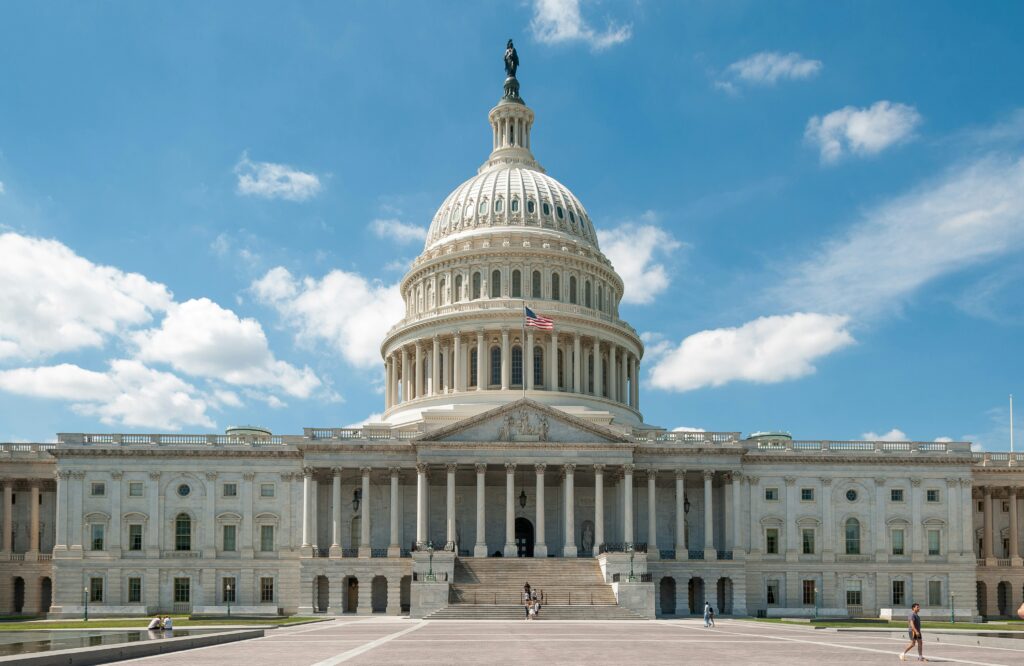
WASHINGTON.— The escalation of military operations abroad and the need to strengthen critical infrastructure within the country have sparked a week of intense negotiations on Capitol Hill.
Tension rose on July 17, when the House Appropriations Committee, controlled by the Republicans, conditioned the release of extraordinary funding on the inclusion of stringent audit and oversight clauses for the cybersecurity programs, technological resilience, and operational surveillance.
The “critical networks” — the systems that control essential services such as the electrical grid, potable water treatment plants, pipelines and major transportation hubs — represent one of the main areas of concern. According to experts and authorities, a cyberattack or a serious failure in these systems could produce a significant impact on the economy and on basic services for the population.
This urgency is also amplified by the current geopolitical tension in the Middle East. Washington’s firm stance against the growing threats from Iran has raised the perceived risk of possible retaliation, including cyberattacks against U.S. infrastructure. In this context, several lawmakers argue that any delay in approving funds for cyber defense could leave the country more vulnerable.
The deadline is pressing: the August legislative recess begins on Monday, August 3. If the Department of Homeland Security (DHS) funding package is not approved before that date, technology modernization projects and defensive funding will be frozen until sessions resume in September and the start of the new federal fiscal year, on October 1, 2026.
The debate is stalled by deep disagreements between Republicans and Democrats over public spending controls, the amount allocated to cyber defense, and how to reduce the federal deficit.
During the Senate hearings held on July 19, members of the National Security Committee urged not to postpone budget approval. Democrat Senator Gary Peters (Michigan), chairman of the National Security and Governmental Affairs Committee, stated:
“U.S. national security cannot be trapped in the back-and-forth of ordinary budget politics. Congress has the constitutional duty to ensure that federal agencies have the resources necessary to protect our ports, transportation networks, and information systems efficiently and responsibly with the American people’s tax dollars”.
Meanwhile, Republicans who advocate greater fiscal rigor argue that the constant increases in the DHS budget require stronger accountability mechanisms. This Monday, July 20, Republican Congressman Jim Jordan (Ohio), a key figure in the government oversight committees, declared during a press conference:
“Demanding accountability is not freezing the country’s security; it is protecting taxpayers’ pocketbooks. We cannot continue approving multimillion-dollar budgets automatically without verifying that every dollar translates into real and measurable protection for American families”.
The disputed bill spans funding for the Infrastructure and Cybersecurity Agency (CISA), the U.S. Coast Guard, and the Customs and Border Protection (CBP). The main point of contention is how to balance investments in cyber defense with the resources for surveillance and inspection at commercial entry points.
According to an analysis by the Congressional Budget Office (CBO), DHS spending has shown a substantial increase in recent years, driven by the need to upgrade digital defenses and expand technology programs at the country’s logistical hubs.
Impact on the Public
For families and productive sectors in the United States, especially in Texas, this confrontation directly defines the government’s capacity to respond to technological emergencies, the smooth flow of international trade at ports, and economic stability.
Uncertainty also affects planning for state and local governments, which rely on federal funds to bolster their security.
With August recess just around the corner, the days of this week will be decisive in determining whether Democrats and Republicans reach a bipartisan agreement or whether security-related uncertainty will extend until September 30.