
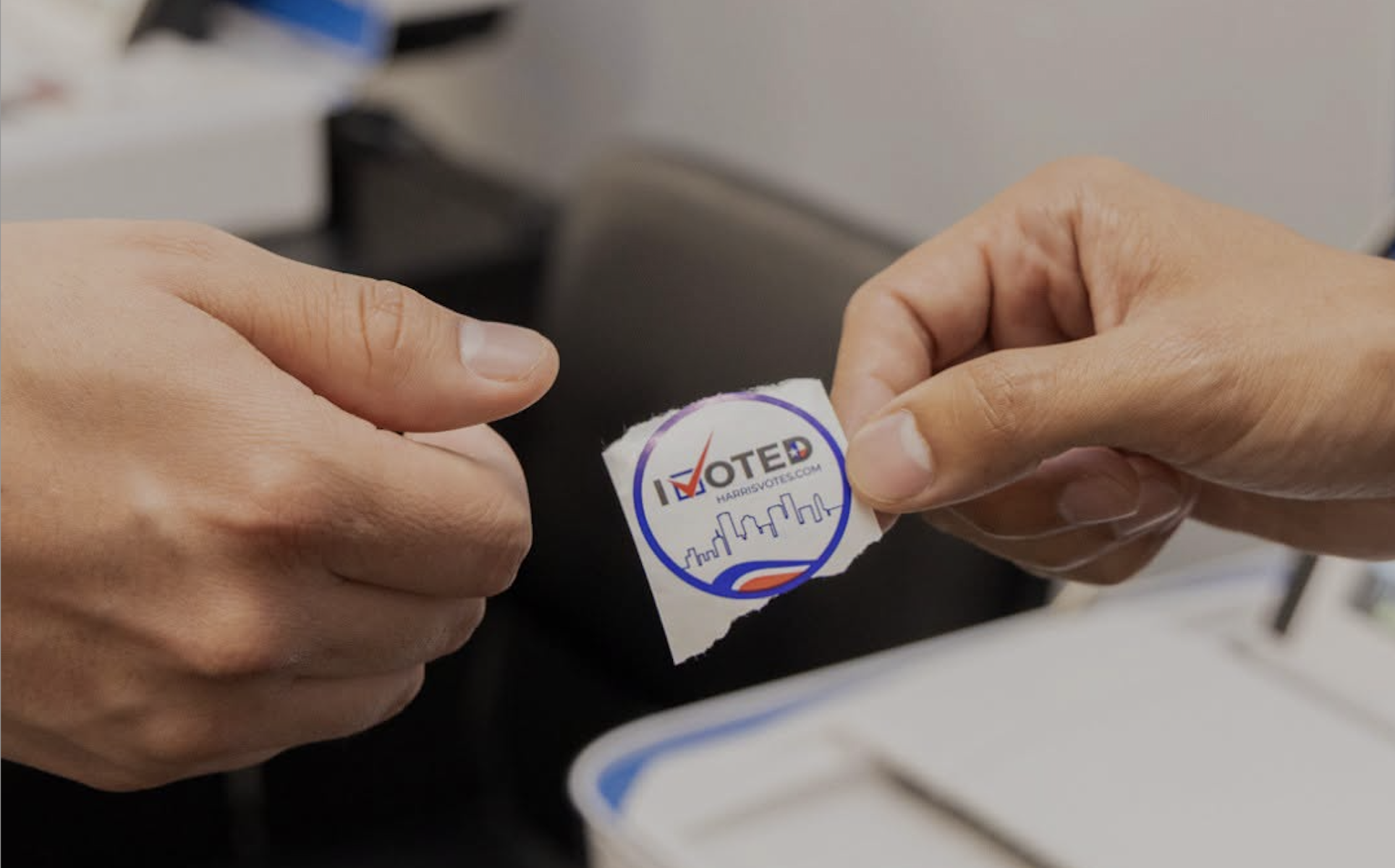
The Texas Attorney General’s Office has accused two Harris County officials of using audience-targeting criteria related to race and ethnicity in advertisements to promote voting. The County Clerk’s Office withdrew the questioned labels, though they defended the campaign’s legality.
October 30, 2026.
The Harris County Clerk’s Office, led by Teneshia Hudspeth, withdrew the targeting criteria from her election advertisements on Facebook and Instagram after the Texas Attorney General filed suit against her and her Communications Director, Irene Nuñez.
The complaint, filed on Thursday, October 29, accuses both officials of using advertising parameters associated with African American, Latino, and Asian communities to disseminate messages encouraging residents to vote in the November 3, 2026 election.
Hudspeth announced that same night that the questioned audience labels had been removed to avoid distractions during the election administration. Her office defended the legality of their efforts to provide information to voters.
The change was reported by The Texas Tribune, which updated its coverage on Thursday night. It was not confirmed that the modification would end the litigation.
Texas sought a court order against the election advertisements
The lawsuit filed by the State of Texas asks a Harris County district court for a temporary restraining order to stop the ads or remove the questioned targeting criteria.
It also seeks temporary and permanent injunctions that prevent the officials from using similar practices in other election-information campaigns.
The ads were part of a campaign called Plan. Check. Vote!, which invited users to prepare their voting participation, consult official information and go vote.
The controversy centers on the selection of the audiences who received those messages.
The Attorney General argues that the campaign used criteria associated with certain racial and ethnic groups without including equivalent parameters for other populations. According to their argument, that practice undermines the equal rights guarantees enshrined in the Texas Constitution.
These are allegations contained in a civil complaint, not judicial conclusions about the legality of the ads.
The complaint identifies cultural interests used on Facebook and Instagram
Among the targeting parameters noted by the Attorney General are African American history and literature, Latin music, Hispanic cuisine, and Latin dance.
The file also identifies interests related to countries and cities in Asia, Africa, and Latin America, as well as places like Madrid and Bangkok.
Texas argues that these categories favored the distribution of the ads among certain audiences and that the officials exceeded their authority by using public resources for that purpose.
However, a single advertising interest category does not by itself prove the racial or ethnic identity of each person who received an ad. The evaluation of the arguments and the evidence rests with the court.
The complaint identifies Hudspeth and Nuñez in their official capacities. Nuñez appears in the file as the contact for the questioned ads.
The Texas Attorney General estimates $43,429 in advertising over 30 days
The Texas Attorney General’s Office noted that Harris County’s elections office spent approximately $43,429 in the 30 days prior on a set of ads with the questioned parameters.
The file also mentions an estimated $10,804 in spending during the seven days preceding the filing of the complaint.
Both figures come from data in Meta’s advertising library incorporated into the lawsuit.
The state contends that the use of those criteria constituted an action outside the officials’ legal powers. The figures alone do not establish that funds were used illegally.
Hudspeth removes the labels and Harris County rejects the allegations
Hudspeth announced on the night of October 29 that her office had removed the questioned audience labels from the election-participation ads.
The County Clerk maintained that her responsibility is to administer elections that are transparent and accessible, as well as to provide nonpartisan electoral information to eligible voters.
The office of Harris County’s Attorney, Abbie Kamin, also rejected the state’s position. In a statement collected by The Texas Tribune, she called the lawsuit a political distraction and defended efforts to ensure voter participation.
Representative Christian Menefee, a Democrat who represents part of Houston, similarly criticized the suit. In statements circulated on social media, he accused Attorney General Ken Paxton of trying to hinder residents from voting.
The announced removal of the labels responds to one of the modifications requested by Texas. However, publicly available information does not confirm that the lawsuit has been withdrawn or that a judge has issued a final ruling.
Ken Paxton recused himself from the case due to his United States Senate candidacy
The Texas Attorney General’s Office said that Ken Paxton stepped away from the litigation because he is running as a Republican candidate for the United States Senate in the November 3 election.
The lawsuit was filed by the State of Texas through the Attorney General. The agency did not publicly clarify when the recusal occurred, according to The Texas Tribune.
The controversy arises during a period of high voter participation in Harris County.
As of October 25, the county had accumulated 624,532 in-person and mail ballots during the first week of early voting, approximately 57% more than in the comparable period of the 2022 midterm elections.
Early voting ends October 30 in Harris County
The lawsuit coincides with the last day of early voting for the general election on November 3.
Harris County’s early voting centers remain open on Friday, October 30, from 7 a.m. to 7 p.m. After that day, voters will have to wait until Tuesday, November 3 to go to the polls.
The lawsuit does not by itself alter voting dates, polling locations, or the requirements to participate in the election.
Residents can check locations and requirements on the official Harris County Elections website.
Related: Harris County Early Voting: October 19 to October 30, 2026.
What happens next in the Harris County lawsuit?
Texas sought court measures to prevent the use of the challenged targeting criteria. Hudspeth’s office, for its part, announced that it removed those labels and defended its voter-information efforts.
As of this revision, no definitive ruling has been publicly confirmed regarding the allegations. The impact of the county’s announced modification will depend on any later court decision and the evolution of the litigation.