
TEA Warns That Student Protests in Texas During Class Time Could Bring Sanctions to Districts and Teachers, and Creates a New Teacher Conduct Watchdog
The Texas Education Agency (TEA) sent this week a direct message to the state’s school districts: if they facilitate or permit student political protests during class time, they could face intervention by the state government. The warning comes amid recent protests against ICE and coincides with the announcement of a new position within the agency, tasked with overseeing investigations into alleged misconduct by teachers.
What the TEA Warns School Districts About
In a guide published on Tuesday about “walkouts,” absences, and political activism in schools, the TEA explained that it acted in response to an order from Governor Greg Abbott, who asked to investigate cases of what the agency described as “inappropriate political activism” in public Texas campuses.
According to that document, districts that allow or encourage students to leave class to participate in political protests could face measures provided by state law. Among them is the appointment of a monitor, a conservator or even a state-appointed board of administrators to run the district.
The guide also notes that teachers who facilitate “walkouts” could be investigated and face sanctions, including the possible revocation of their teaching license. According to the TEA, the objective is to clarify how districts should handle protests and absences related to political topics within the campuses.
Student Protests in Texas: Absences and Funding
In addition to the warning about possible interventions, the guide states that students who participate in political protests outside the classroom should be marked as absent. If districts allow or encourage these activities, they risk part of the funding they receive based on daily attendance, authorities noted.
That is, although student protests in Texas have brought civic participation by youth to the forefront across the state, districts could face financial consequences if such demonstrations take place during class time and with the backing of school staff.
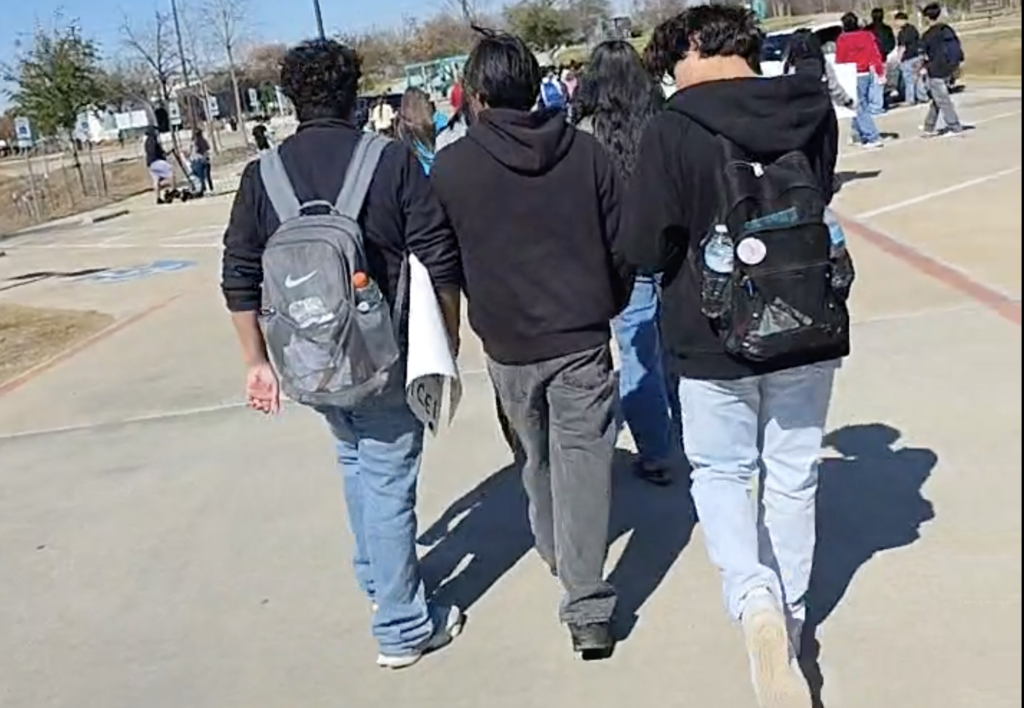
The discussion comes after several days of mobilizations. At McCallum High School in Austin, it was reported that around a thousand students left their classrooms on January 30 as part of a national day of protest against ICE. In Texas, hundreds of students skipped class with signs against the federal immigration agency.
Student protests in Texas were replicated in various regions of the state, including Houston, San Antonio, the Dallas–Fort Worth area and Austin. In the latter city, police department officials from the school district were seen escorting youths during the demonstration, drawing criticism from the governor. “Our schools are for educating our children, not for politically indoctrinating them,” Abbott wrote on social media.
New Inspector to Investigate Alleged Teacher Misconduct
Hours after publishing the guide on student protests in Texas, the TEA announced the appointment of Levi Fuller as the Inspector General of Educator Conduct, a newly created position that will oversee the enforcement of state policies and processes regarding alleged teacher misconduct.
In a statement released on Wednesday, the agency explained that this position aims to “help foster safe learning environments” for the nearly 5.5 million students in Texas public schools.
The TEA has recently handled an uptick in investigations related to teacher conduct, including some tied to educators’ public comments after the murder of conservative activist Charlie Kirk in September, according to the agency itself.
Education Commissioner Mike Morath stated that Fuller will help to “identify the minority that generates distrust among families and school communities, and restore trust in the teaching profession.”
State Government Reaction and New Information Requests
TEA’s actions come as state authorities intensify scrutiny of student protests in Texas linked to ICE. In a letter sent this week, Texas Attorney General Ken Paxton asked Austin school officials to turn over internal communications related to the recent “walkouts.”
According to reports, Paxton requested information about student exit policies, excused absences, and security measures, and suggested that some staff members may have known in advance and facilitated the demonstrations.
The attorney general’s message adds to public criticisms from Governor Abbott, who has insisted that campuses should focus on academic instruction and not on organizing protests.
What Families and School Communities Should Know About Student Protests in Texas
For now, the TEA’s guidance serves as a notice to districts about the limits of political participation within class hours. Student protests in Texas conducted during the school day could translate into absences recorded in official logs, potential loss of funding, and possible sanctions for teachers or administrators who back them.
At the same time, the creation of the new inspector general of educational conduct indicates that the agency will continue to closely monitor not only districts’ academic performance but also the behavior of their staff in sensitive situations, such as political protests.
Families, students and school workers in Houston and across the state should stay attentive to upcoming TEA decisions and the results of ongoing investigations, as the debate continues about how far political activism can go within Texas’ public school classrooms.