
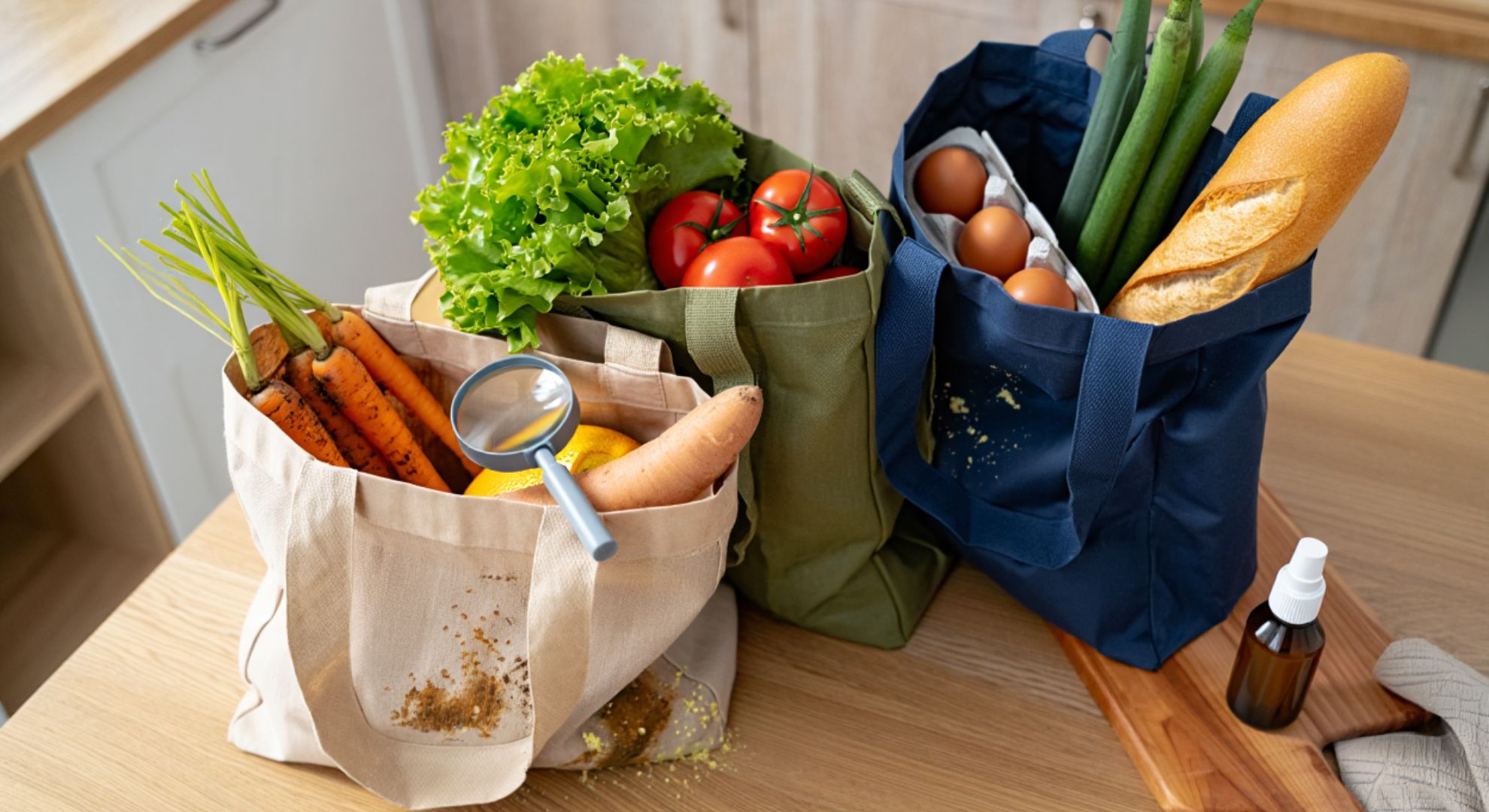
You probably toss your reusable tote into the trunk, grab it at checkout, and feel a little virtuous about skipping plastic. That habit feels harmless. It isn’t. After a month-long round of swabs on everyday shopping bags, a microbiology lab found bacterial loads that repeatedly outpaced what we measured on a gas station restroom floor. “The numbers stunned us,” says one of the researchers. “Your bag isn’t dirty every time, but when it’s bad, it’s very bad.”
What we found inside your tote
In sample after sample, fabric totes carried dense films of microbes—not just the harmless kind, but also coliform bacteria and occasional traces of pathogens associated with foodborne illness. Typical restroom floors clocked in at thousands of colony-forming units; some bags soared into the hundreds of thousands.
Not every microbe is a villain. But when raw chicken juice, cut melon, or leafy greens meet a warm, dark bag, the conditions tilt from “mostly benign” to “potentially hazardous.” As one microbiologist put it, “You’re building a tiny ecosystem you can’t see, then carrying it into your kitchen.”
Why bags turn into microbe motels
Reusable bags are perfect for colonization because they combine three accelerants: moisture, nutrients, and time. “Bacteria love those three things,” the researcher notes. “A damp tote can become a nursery in hours.”
- Porous fabrics trap moisture and crumbs where detergent rarely reaches.
- Polypropylene weaves hold microscopic films that resist a quick wipe.
- Warm car trunks act like slow incubators, especially in summer.
- Smells fade, but bacteria remain active, moving from seam to seam.
Common contaminants include harmless skin flora, but also strains linked to E. coli, Salmonella, and Staph. Most exposures won’t make you sick, yet the dose matters. The more frequently you load and unload a dirty bag, the more you raise your odds—especially for kids, older adults, and anyone with a weakened immune system.
The everyday habits that feed the problem
A few ordinary behaviors quietly amplify risk. Setting bags on grocery cart seats, car floors, or sidewalks transfers grime to the fabric. Tossing gym clothes or shoes in the same tote seeds it with sweat and soil. Letting raw meat packages ride unbagged allows drips to soak into seams you’ll never fully scrub.
Then there’s the kitchen handoff. You set the tote on a countertop, unload produce, then make lunch. “We’ve watched people wipe a bag with a sponge and then wipe the cutting board with that same sponge,” says the researcher. “That’s a two-step contamination shortcut.”
How to make your bag safer
You don’t need to ditch reusables—you need a simple system. Treat the bag like a dishcloth: it touches food, so it deserves hygiene.
- Wash fabric totes weekly in hot water, then machine-dry on high. Heat matters more than fancy detergent.
- If it smells, looks stained, or carried raw meat, wash it now, not “later.”
- For non-washable polypropylene, wipe inside and out with diluted bleach (1 tablespoon per gallon of water) or 70% alcohol; let air-dry fully.
- Assign one bag only for raw proteins. Line it with a washable insert or a washable hard-sided bin.
- Keep totes off kitchen counters. Unload onto a washable mat or directly into clean bowls.
- Store bags open, dry, and out of hot cars. Heat without airflow traps humidity.
- Replace frayed, smelly, or chronically damp bags. Fabric that won’t dry is a liability.
“Think of it as risk budgeting,” the microbiologist says. “A ten-minute wash saves you from a ten-day stomach bug.”
What about the environment?
Reusable bags exist to cut waste, and washing them uses water and energy. Even so, routine cleaning preserves the bag longer and prevents the kind of foodborne incidents that send people to clinics—another hidden cost.
Choose materials that balance durability and washability. Sturdy cotton and machine-washable blends survive hundreds of cycles; lighter polypropylene needs consistent wiping, but dries fast. Sunlight helps: UV plus airflow is a cheap, partial disinfectant. And if you must carry raw meat, a small rigid tote inside your main bag prevents seepage and cleans easily.
Bottom line
The danger isn’t the concept of reusables—it’s the quiet buildup. Most people clean the items they can see: cutting boards, knives, and hands. Bags slip through the cracks because they feel like just another accessory. They’re not. They’re food-contact surfaces that follow you from store to stove.
“Once you reframe the tote as kitchen equipment, your habits change,” the microbiologist says. Wash it, dry it, and keep raw foods contained. With a few small adjustments, you get the best of both worlds: less plastic in the trash, and far fewer microbes in your meal.
