
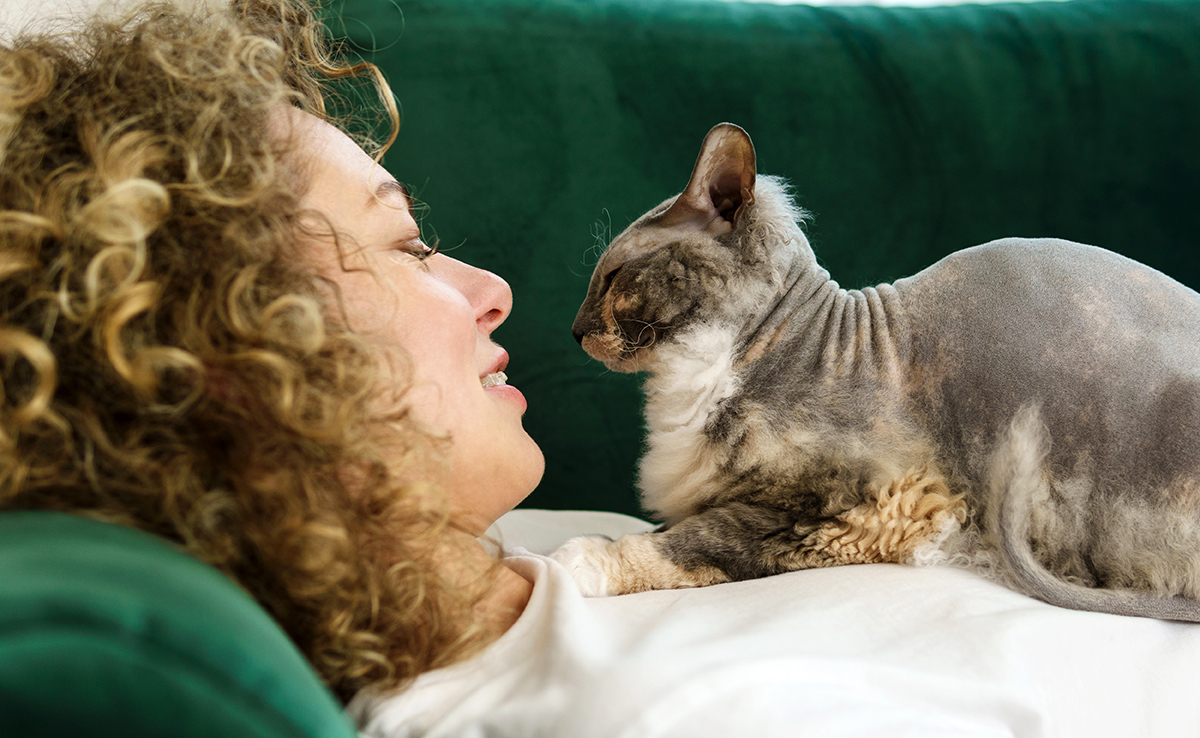
Many cat guardians wonder whether their feline companions actually enjoy being spoken to. Research and everyday observation suggest the answer is a confident yes, with a few individual caveats. While meaning matters less than tone, most cats respond to familiar voices in ways that signal attention, interest, and even comfort.
Attuned to the human voice
Cats are remarkably attentive to how we sound, especially to a caregiver’s voice. Studies show they distinguish a familiar speaker from a stranger, often by subtle head turns, ear movements, or body orientation. These are small, selective signs of awareness rather than indifference.
Daily exposure makes the human voice a consistent cue in a cat’s home environment. Over time, it becomes linked with predictable events, creating a sound map that helps cats anticipate what comes next.
- Meal-time announcements and food-related sounds
- Door opening or human arrival within a shared space
- Invitations to play or gentle social contact
- Calm cues that end an unwanted behavior
Do they understand the words?
Cats do not parse human language like we do, but they excel at sound-action associations. They learn patterns in pitch, rhythm, and certain frequently paired words. A name, a snack cue, or a familiar phrase becomes meaningful through consistent outcomes rather than syntax.
In other words, it’s the reliable link between what they hear and what then happens that drives understanding. Predictability builds clear expectations and reduces daily friction.
Why a gentle tone works
A soft, slightly higher-pitched voice tends to soothe and engage most cats. Felines are especially responsive to higher frequencies, a perceptual legacy of hunting small, high-pitched prey. Gentle vocal patterns read as safe, familiar, and emotionally neutral.
Conversely, harsh or overly loud tones may trigger caution, tension, or social withdrawal. When in doubt, aim for warm, slow, and consistent delivery, and pair it with relaxed body language.
Strengthening the social bond
Talking to a cat is a modest but meaningful form of social grooming. The more positive, predictable exchanges a cat experiences, the stronger the shared sense of safety. Over time, this fosters trust, affiliative behaviors, and calmer responses to household change.
“A gentle voice is a daily form of enrichment—small in effort, profound in effect.”
Many cats “reply” with meows reserved primarily for human-directed communication. This back-and-forth may look like a miniature dialogue, but it’s really reciprocal attention and learned social timing.
Reading individual preferences
Every cat has a distinct personality and social comfort zone. Some flourish with frequent verbal interaction, while others prefer softer, less frequent cues. The goal is to match your style to your cat’s visible feedback.
Positive signs include relaxed ears, slow blinks, gentle tail movements, leaning in, or choosing proximity during your speech. Signs of discomfort include flattened ears, rapid tail flicks, freezing, or walking away.
Using voice in daily routines
Predictable phrasing can anchor key household moments. Repeating the same cue before meals organizes anticipation and reduces random food-seeking vocalization. Similarly, calm narration during grooming can decrease stress and increase handling tolerance.
For play, enthusiastic but gentle cues help signal that a fun interaction is coming, guiding attention without frantic overarousal. Clarity and repetition shape stable, low-stress habits.
Communication as feedback
A cat’s reaction to your voice can illuminate their current emotional state. A well cat may approach, blink, or purr in soft, social ways. A stressed cat may go quiet, hide, or vocalize in repetitive, anxious patterns.
Track changes across days and contexts, not just single moments. Consistent departures from a cat’s baseline merit gentle support—or veterinary advice if paired with other concerning signs.
Can voice aid training?
While cats are not small dogs, your voice can still shape useful household skills. Pair a clear cue with the desired action and an immediate reward, and keep sessions short and positive. Calm, firm “no” signals work best when followed by a redirection toward an allowed option.
- Reliable recall from a nearby room
- Off-the-counter cues with immediate alternatives
- “All done” phrases ending play or food opportunities
Success depends on consistency, timing, and your cat’s unique motivation. Pair words with body language and outcomes to keep messages crisp and easy to decode.
Ultimately, most cats benefit from kind, predictable human voices woven into daily life. With patience and sensitivity to individual preferences, your quiet conversations can become a reassuring social bridge—one that enriches both feline wellbeing and your shared, everyday bond.