
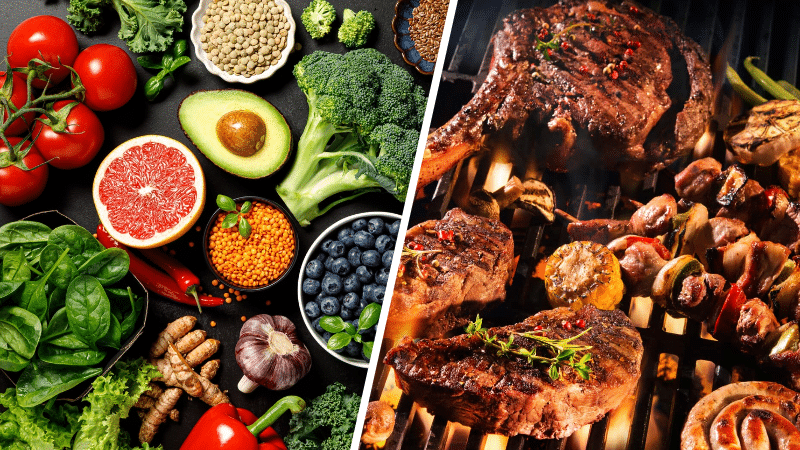
A rare natural experiment in nutritional contrasts
British twins Hugo and Ross Turner turned their taste buds into a laboratory, running a 12‑week experiment that split their diets down the middle. One went strictly vegan, the other embraced a meat‑ and dairy‑heavy regimen, while keeping training and total calories carefully matched. Overseen by researchers at King’s College London, and covered by Business Insider in May 2025, the protocol offered a rare chance to compare dietary effects in nearly identical bodies.
Energy, endurance, and composition split in surprising ways
From the early weeks, differences became visible, even as training loads and meal timing stayed aligned. Hugo, on a wholly plant‑based diet, reported steadier energy, stronger endurance during workouts, and notably fewer between‑meal cravings. Ross, eating abundant animal foods, described larger day‑to‑day energy swings, despite consistent sleep and exercise.
Physically, Hugo shed body fat and saw his cholesterol trend down, changes that paired with that smoother energy curve. Ross gained muscle but also added fat, a common pairing when protein and total intake are high, yet his cholesterol levels stayed broadly stable.
The gut tells a nuanced story
Researchers also tracked the twins’ microbiomes, looking for how different menus shape the gut’s microbial diversity. The vegan diet appeared to increase bacterial variety, although with signs of decreased stability over time. The animal‑heavy regimen maintained more constant flora, suggesting a different kind of microbial resilience.
These shifts underscore a key principle: the gut favors diversity yet also values consistency. A varied intake of fibers, polyphenols, and fermentable substrates can broaden species, but too rapid a shift may unsettle microbial equilibrium. In practice, diet quality and pace of change matter as much as diet type.
Supplements extend the experiment
After the 12‑week trial, the brothers continued for six more months, each adding targeted supplements reflecting their core dietary choices. Hugo used algae‑derived and plant‑based oils, while Ross took fish‑based omega‑3 formulas. Counterintuitively, Hugo’s vitamin D3 and omega‑3 status ultimately surpassed Ross’s, hinting that thoughtful supplementation can overcome assumed nutrient gaps.
This result reminds us that nutrient status is influenced by absorption, dose, matrix, and baseline needs, not only by the nominal source of a nutrient. Smart formulation and individual response can tip expected outcomes on their head.
There is no single “best” diet
The twin design spotlights a humbling truth: bodies are not copy‑and‑paste machines. The same caloric targets, divided between plants and animals, produced distinct energetic and compositional trajectories. A plant‑exclusive approach favored endurance and lipid profile, while an animal‑rich plan supported muscle but carried extra fat.
As the investigators emphasized, diversity and balance help reconcile microbiome variation with metabolic goals. The most resilient plan blends quality plant foods with selectively chosen animal options, tuned to a person’s context, values, and measurable responses.
“There is no perfect diet—only a well‑constructed diet that fits your biology, your goals, and your life.”
Key takeaways you can apply
- Favor consistent training and matched calories when comparing dietary effects.
- Track energy stability, not just weight or macros; steadiness often signals better fit.
- Use diverse plant fibers to support microbial variety, while changing diets gradually.
- Don’t assume animal sources always win on omega‑3 or vitamin D; test and adjust.
- Expect individual variation and iterate with clear, measurable checkpoints.
A balanced path forward
If there is a headline finding, it is nuance. Vegan eating can boost endurance, temper cravings, and improve lipid markers, though rapid shifts may unsettle gut stability. Animal‑forward plans can enhance hypertrophy, yet they may raise total adiposity if energy creeps up. Both patterns can be optimized through careful food quality, fiber diversity, and informed supplementation.
In the end, the Turner twins’ experiment serves less as a verdict and more as a mirror. It reflects how genetics, training context, and habitual preferences interact to shape outcomes that feel personal—and often surprising. Build your plate like a flexible toolkit: emphasize minimally processed plants, choose animal foods deliberately, and let your data—not dogma—steer the course.
