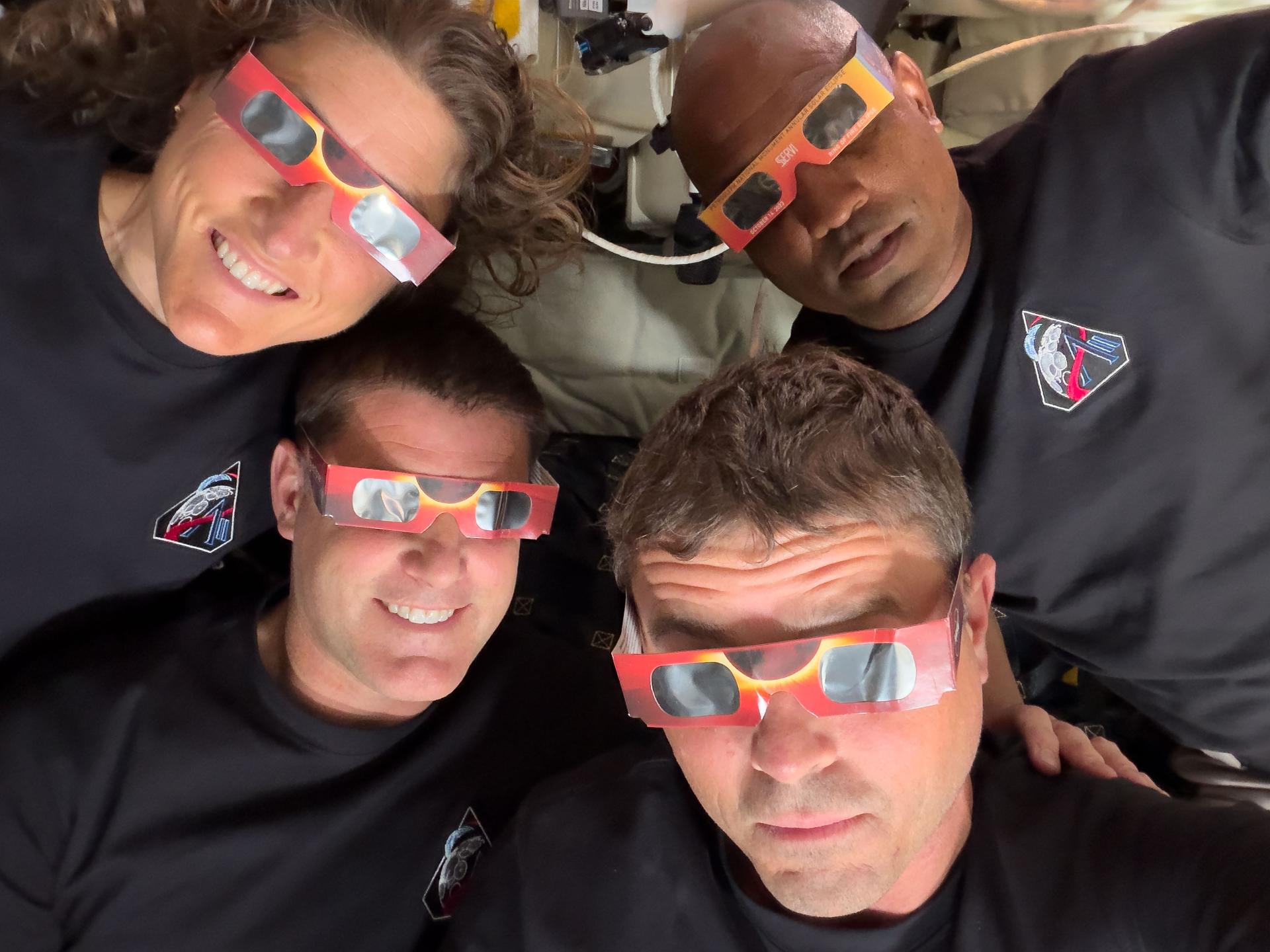
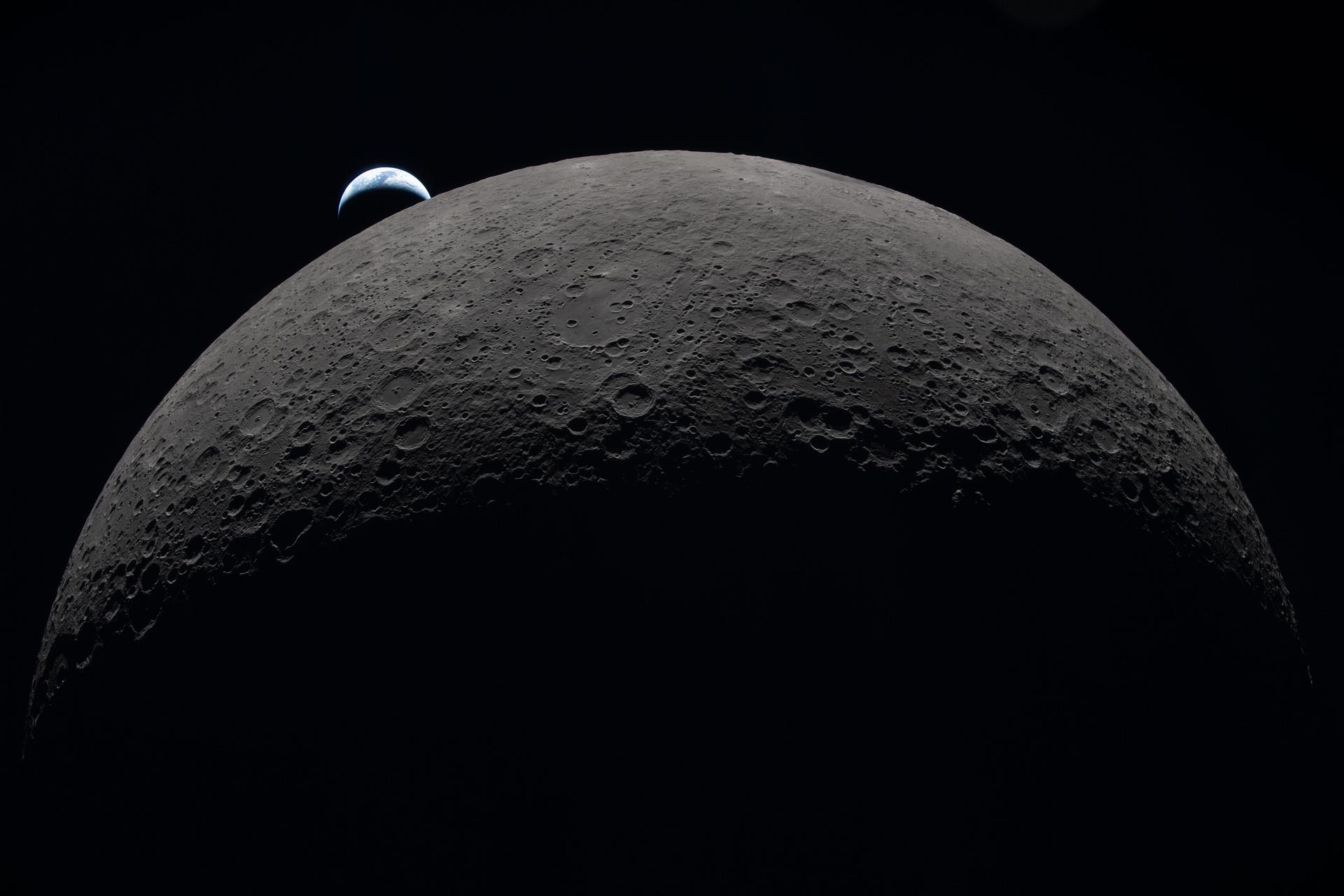
After their historic lunar flyby on April 6, the Artemis II crew began their journey back to Earth. The four mission astronauts ventured further into space than any human before them, performing an unusual flyby of the Moon’s far side, dark and shadowed, which revealed a lunar surface under cosmic bombardment.
This six-hour reconnaissance of the usually-hidden hemisphere of Earth’s only natural satellite was marked by the astronauts’ direct visual observations of flashes of impact caused by meteoroids bombarding the dark and densely cratered lunar surface.
The six-hour flyby came within as close as 4,070 miles of the lunar surface; it took place six days after the start of a spaceflight that marks the world’s first human voyage to the vicinity of the Moon since NASA’s Apollo missions of the Cold War era, more than half a century ago.
Hours later, the crew, composed of American astronauts Reid Wiseman, Victor Glover and Christina Koch, along with Canadian astronaut Jeremy Hansen, made history in spaceflight by venturing farther from Earth than any human has to date, reaching a distance of 252,756 miles.
The previous record, of approximately 248,000 miles, was set in 1970 by Apollo 13 after a nearly catastrophic failure aboard the spacecraft truncated that mission, forcing the crew to use the Moon’s gravity to help them return safely to Earth.
“By surpassing the greatest distance that humans have ever traveled from planet Earth, we do so in honor of the extraordinary efforts and feats of our predecessors in human space exploration,” expressed Jeremy Hansen, astronaut of the Canadian Space Agency (CSA), who is part of the group.
During part of this feat, the crew was without communication for about forty minutes, and just before losing contact with Earth, Victor Glover, Artemis II pilot, sent a message.
“As we prepare to exit the reach of radio communications, we will continue feeling your love from Earth. And to all of you down on Earth and around the Earth: we love you, from the Moon. See you on the other side.”
Crater Naming
Just northwest of the Orientale basin, highlighted earlier, there lies a crater they would like to name Integrity, in honor of their spacecraft and this historic mission. Just northeast of Integrity —at the boundary between the visible face and the far side of the Moon, and sometimes visible from Earth—, the crew suggested the crater Carroll, in honor of Reid Wiseman’s late wife, Carroll Taylor Wiseman. Once this mission is completed, the crater-name proposals will be formally submitted to the International Astronomical Union, the organization that governs the nomenclature of celestial bodies and their surface features.