
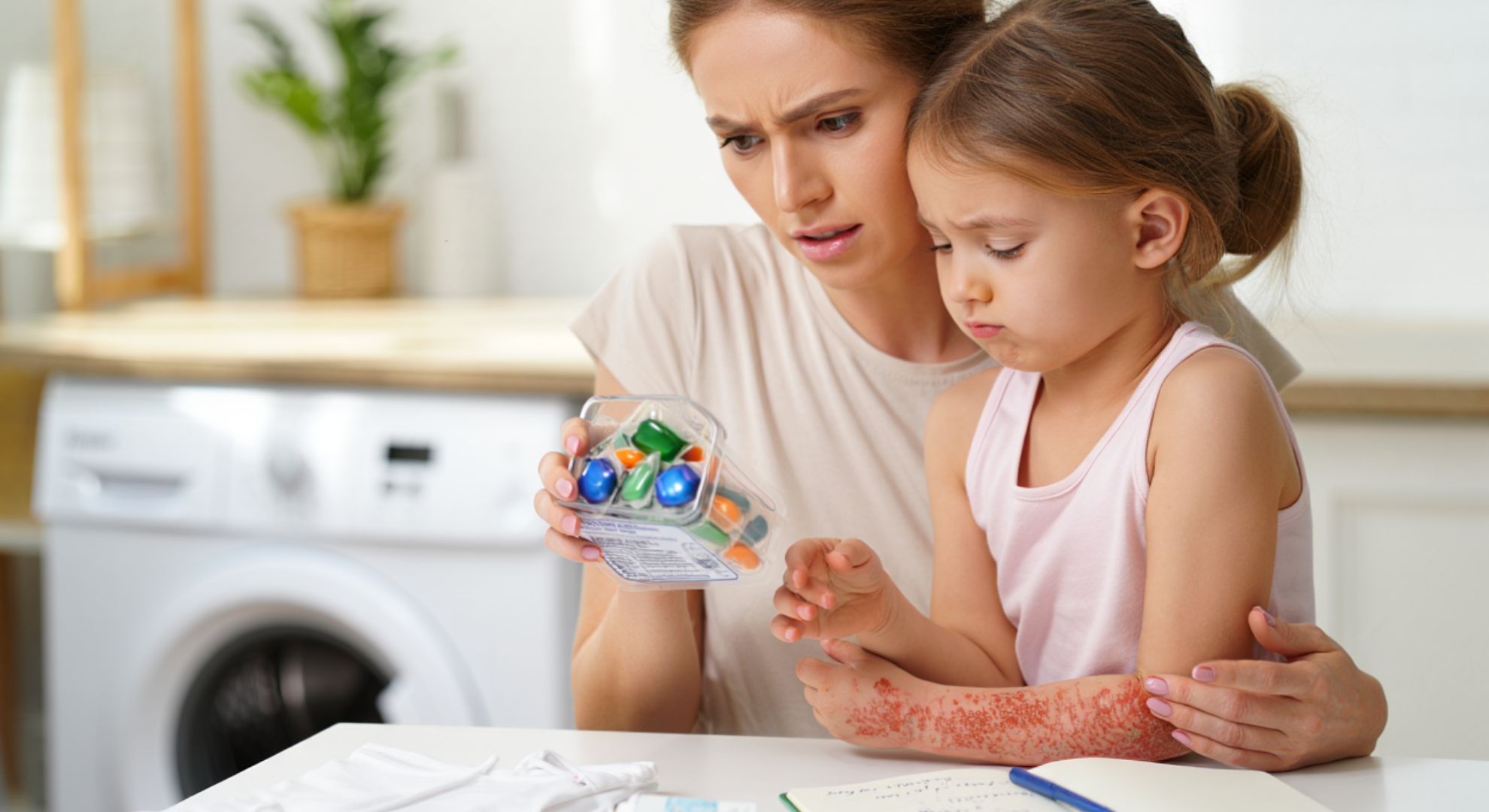
Parents across the country are doing more laundry than ever, yet some are noticing more rashes on their children’s skin. Dermatologists say a simple culprit may be hiding in plain sight: highly concentrated detergent pods that can leave chemical residue clinging to fabric. When that residue brushes delicate skin, especially in toddlers and infants, it can stoke itch, inflammation, and persistent flare-ups.
“It’s the combination of concentration and contact,” said one pediatric dermatologist. “If a pod doesn’t fully dissolve, you get a film of surfactants and fragrance trapped in the weave of clothes—and your child wears that film all day.”
What dermatologists are seeing
Clinics are reporting more families showing up with small, symmetrical patches of itchy eczema where elastic meets skin—waistbands, cuffs, and necklines. Parents often say the rash improves during vacations or when they switch to a different detergent routine, then flares when pods return.
“We’re not talking about poisoning or dramatic burns,” another dermatologist clarified. “This is about micro-residue that repeatedly irritates a sensitive barrier. Over weeks, that irritation can tip a child into full-blown eczema.”
Why residue sticks to fabric
Laundry pods pack powerful surfactants, enzymes, and fragrances into dissolvable films. Under perfect conditions—correct load size, proper temperature, and sufficient water—they dissolve and rinse cleanly. Real life is messier. Cold cycles, hard water, short washes, overfilled drums, and quick-dissolve films can leave traces behind.
Those traces get trapped in cotton loops, fleece nap, and elastic bindings near the skin. Add sweat, friction, or heat, and the residues can reactivate, amplifying irritation across the day. “You end up with a wearable irritant that refreshes with every wiggle,” a clinician noted.
Ingredients that can provoke flare-ups
Not every child will react, but several common ingredients can be problematic for eczema-prone skin:
- Fragrances and “parfum,” which can include dozens of sensitizers
- Preservatives such as methylisothiazolinone (MI/MCI)
- Optical brighteners and dyes that bind to fibers
- Potent surfactants that degrease skin’s lipids
- Enzymes that help with stains but may irritate broken skin
Patch-test data consistently show fragrance mixes and certain preservatives among the top sensitizers in dermatitis. “It’s not the marketing; it’s the molecules,” one expert said. “Concentration plus contact time equals risk.”
What parents can do right now
If you suspect the wash is part of the problem, small changes can yield big relief:
- Switch to a fragrance-free, dye-free detergent, avoid pods for now, measure liquid or powder carefully, run a second rinse, use warm water when fabric allows, wash new clothes before wear, avoid fabric softeners, and trial a two-week “laundry reset” to assess changes
Parents often report that a second rinse alone reduces itch within days. “The skin is talking; our job is to listen,” a pediatric dermatologist remarked.
Beyond the wash
Laundry is one lever among many. Daily moisturizing—ideally within three minutes of bathing—helps restore the barrier that detergents can strip. Choose soft, breathable fabrics like cotton; avoid rough seams and tight elastics on irritated areas. Keep nails short to reduce scratching injury, and consider light layers to minimize sweat build-up.
If flare-ups persist, ask your clinician about patch testing to pinpoint allergens. “Knowing your child’s triggers turns guesswork into a plan,” clinicians often stress. Topical therapies still matter, but removing the spark makes every treatment work better.
How to evaluate your detergent
Look for clear labels that say “free & clear,” “fragrance-free,” and “dye-free.” “Unscented” can still mean masking fragrances. Shorter ingredient lists are often kinder to skin. If your water is hard, consider a booster or water-softening approach so detergents rinse more cleanly.
Remember that “green” or “natural” doesn’t automatically mean gentle. Botanical extracts and essential oils are still fragrances and can be potent sensitizers.
The bigger picture
Manufacturers have pursued convenience and cleaning power, and pods undeniably deliver on both. But for vulnerable skin, convenience can carry a hidden tax. The fix is not panic, nor finger-pointing at a single brand. It’s a series of practical choices—better rinsing, smarter ingredient lists, attentive fabric care—that stack up to calmer skin.
“As clinicians, we’re not anti-clean,” a dermatologist quipped. “We’re pro-barrier. When the barrier is happy, kids sleep, parents exhale, and laundry becomes just laundry again.”
If you’re navigating an active flare, loop in a pediatric dermatologist, bring photos of the rash, and jot down your laundry routine. The pattern often reveals itself: clothes that touch skin the longest are the ones worth rewashing first. In many homes, that single adjustment is the quiet, unsung cure.