
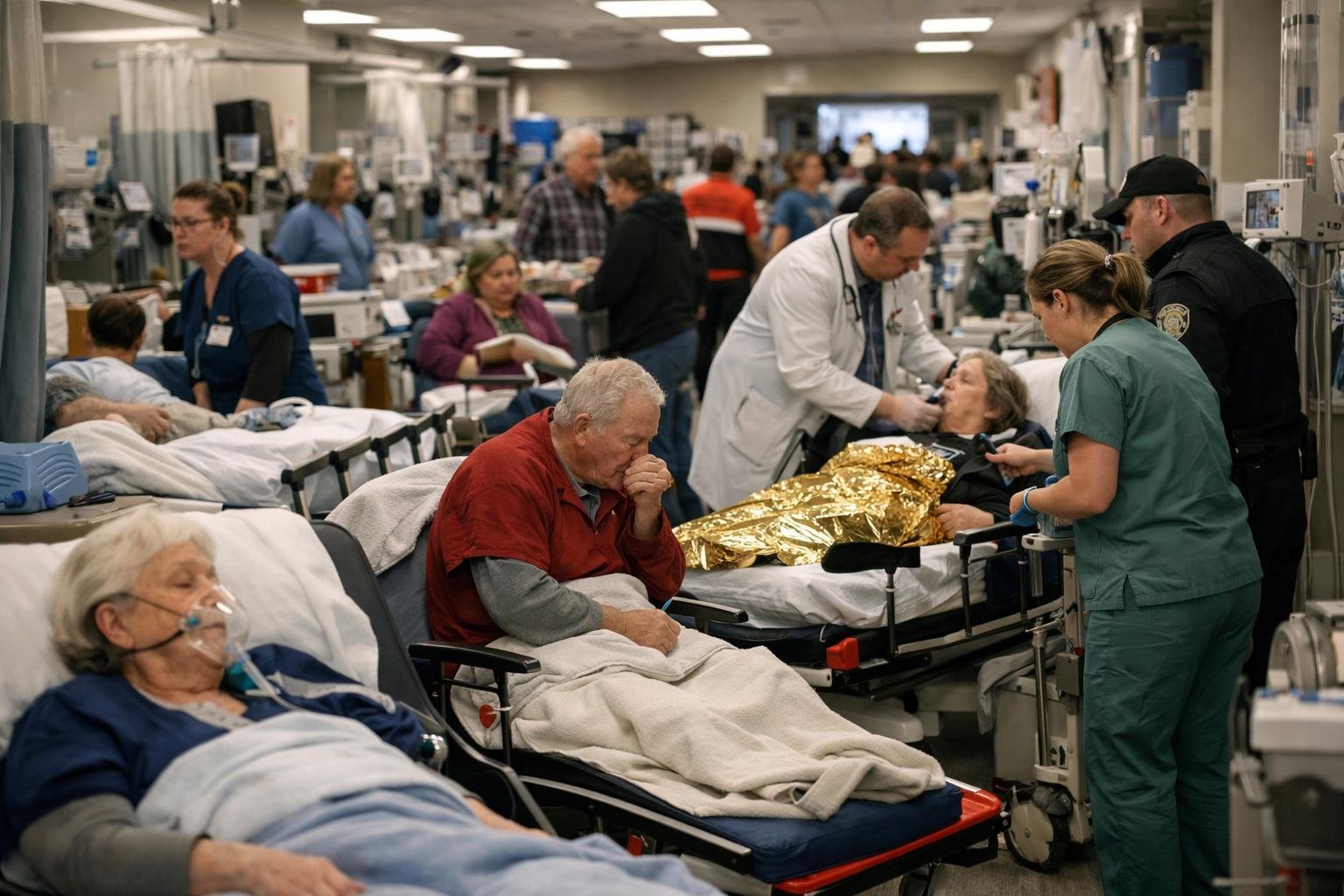
Hallways bustle with stretchers as families wait in folding chairs, and triage nurses shuffle clipboards with grim efficiency. In city after city, emergency departments from the Great Plains to the Great Lakes are filling fast. The seasonal uptick arrived earlier, arrived harder, and shows little sign of easing.
Doctors describe a cascade: crowded lobbies, longer waits, and inpatient beds that are already spoken for. “We’re doing everything we can to keep people moving,” said one charge nurse, “but the volume is unlike anything we’ve seen this time of year.” The shift has turned what’s usually a late-winter crunch into a midwinter gridlock.
Behind the scenes, hospital command centers flicker with dashboards colored red, while call trees activate overflow plans. Staff are picking up extra shifts, volunteers are handing out masks, and parking lots host pop-up clinics. The entire system is stretching to absorb a wave that came ahead of schedule.
An earlier, sharper peak
Public health trackers show a steeper-than-usual rise in illness, with some Midwest facilities at or near capacity. Flu-like activity accelerated in late fall, then jumped after the holidays, tightening the squeeze. “We expected busy,” said a regional administrator, “not a four-week jump-start on the usual curve.”
Cold snaps push people indoors, where shared air helps viruses spread with unsettling ease. Layer in travel, family gatherings, and school reopenings, and the transmission ladder fills quickly. The timing means hospitals never caught their breath between respiratory waves.
Ripple effects inside hospitals
When emergency rooms swell, every downstream unit feels the strain. Admitted patients linger on gurneys—so-called “boarding”—while beds upstairs turn over more slowly. Routine imaging and elective procedures face delays, and supply teams chase high-demand items like pediatric masks and IV fluids.
Clinicians report more older adults with dehydration and pneumonia, a familiar but unforgiving pattern. Pediatric wings see clusters of fevers, ear infections, and wheezing that demand rapid attention. “No one wants to send a child home too soon,” a hospitalist said, “but we’re balancing safety with scarce space.”
Why this surge now
Experts point to converging forces. Immunity from last season has waned in many communities, while vaccination uptake is lagging behind recent years. Co-circulating viruses—flu, RSV, and COVID—are stacking risks for families and the elderly.
Weather adds another lever. Dry, cold air keeps droplets aloft and nasal passages vulnerable, nudging infections upward when windows stay shut and gatherings go long. The result is a brisker arc than models predicted, magnified by staffing gaps that persist across systems.
How systems are adapting
Hospitals are activating surge protocols: expanding fast-track areas, shifting non-urgent cases to next-day clinics, and tapping telehealth for virtual rechecks. Some are partnering with urgent care centers and primary care networks to decompress lobbies.
Pharmacies extend hours, community groups deliver at-home test kits, and health departments amplify vaccine clinics. “The playbook is familiar,” said a Midwestern coordinator, “but execution matters when minutes become precious.” Flex teams, cross-trained after prior winters, are again front-line glue.
What you can do right now
- Get the seasonal flu shot and stay current on other recommended vaccines to reduce severe illness and shorten recovery.
- Wear a high-quality mask in crowded indoor spaces, especially if you’re at higher risk or visiting healthcare settings.
- Stay home if you’re sick, hydrate aggressively, rest, and use fever reducers as directed by packaging or your clinician.
- Call your primary care office or use telehealth for non-emergency questions before heading to the ER.
- Know red flags: trouble breathing, chest pain, confusion, dehydration, or symptoms that rapidly worsen.
- Keep test kits, a thermometer, and basic meds on hand to avoid late-night runs when symptoms spike.
Inside the waiting room
Families arrive with plastic bags of meds, toddlers asleep on shoulders, and worry folded into quiet conversations. Security offers blankets, volunteers pass tissues, and overhead speakers repeat paging tones. The small acts—water cups, warm smiles, frank updates—help hold the line.
For clinicians, the calculus is constant: who needs a bed, who can recover at home, who needs imaging now versus tomorrow morning. “It’s a thousand micro-decisions,” said an ER physician, “and the stakes are always someone’s worst day.”
The weeks ahead
Forecasts suggest several more weeks of elevated activity, with regional peaks that come and go like tides. If uptake of vaccination rises and indoor crowding eases, the arc may flatten before late winter. If not, a second bump could follow school returns and deep-freeze weekends.
Communities can blunt the impact. Small choices—shots, masks, calls to primary care—scale into real relief for overwhelmed teams. As one nurse manager put it, “Every prevented visit buys us time for the patient who can’t wait.” In a season arriving early, time is the scarcest medicine.