
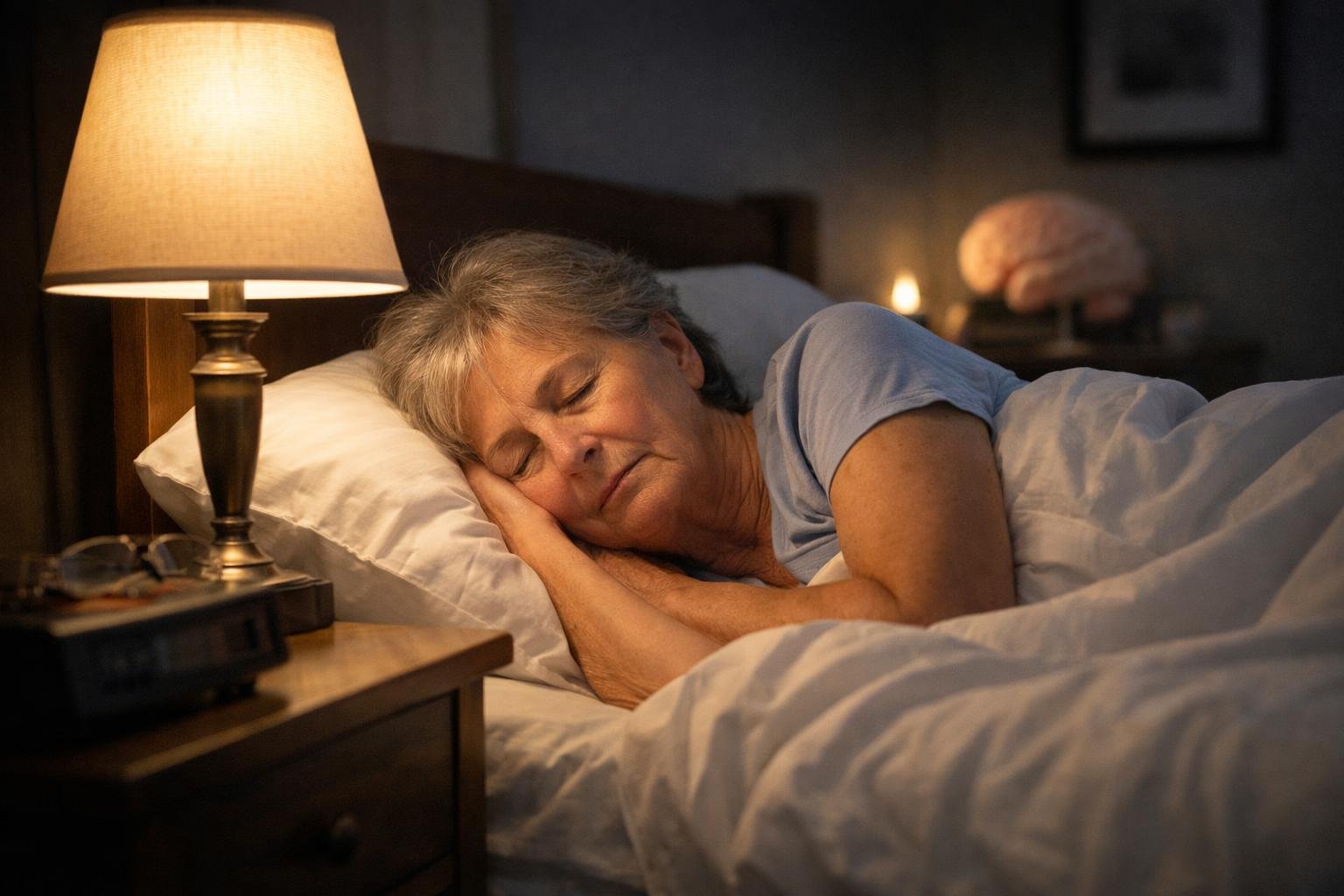
A faint bedside glow can feel comforting, but growing evidence suggests our brains may prefer deeper darkness. While a single night won’t rewrite your biology, chronically lit nights may nudge sleep architecture, hormones, and metabolic signals in directions researchers associate with long-term risk.
What the science is really asking
Your body runs on circadian rhythms, a 24-hour program set by light and dark. When evening light lingers, melatonin’s rise can be blunted, delaying sleep phases and trimming deep, slow-wave sleep. That’s notable because slow-wave sleep supports glymphatic “washout,” the brain’s nightly cleanup of metabolic waste, including amyloid and tau—proteins central to Alzheimer’s pathology.
“Darkness is a biological signal, not an absence of things,” sleep scientists often note. In other words, night tells neurons to shift into maintenance mode, recalibrating immune tone, metabolism, and synaptic plasticity. Persistent light may scramble that message, replacing crisp rhythms with a fuzzier, round-the-clock drizzle of alerting input.
What the evidence actually shows
Human data are still emerging. Observational studies link nighttime light exposure with poorer sleep, worse glucose regulation, and higher rates of depressive symptoms—all factors that can intersect with brain aging. Small lab experiments show even modest light (as low as 5–10 lux) can reduce insulin sensitivity, raise heart rate, and alter melatonin in healthy adults. Animal work ties circadian disruption to accelerated amyloid deposition, but translating rodents to humans demands caution.
So the link to dementia is not settled fact, but a plausible pathway is taking shape: light at the wrong time disrupts sleep and circadian timing; disrupted sleep undermines glymphatic clearance and cognitive resilience; over years, that could tilt risk in susceptible people. “Absence of proof is not proof of absence,” as methodologists like to say.
Why a little light can loom large
Your master clock in the suprachiasmatic nucleus reads light via specialized retinal cells tuned strongly to blue-rich wavelengths. Even with eyes closed, eyelids transmit light, and aging lenses scatter more stray glare. That means a phone flash, hallway lamp, or bright streetlight sneaking past thin curtains can still stimulate circadian circuits.
Timing also matters. Late-evening and overnight light carry disproportionate weight, because they collide with melatonin’s natural window. Dim, warm light early in the evening is less disruptive than cool, bright light at midnight. “Light is a powerful drug; dose and timing count,” as clinicians sometimes remind.
Practical ways to protect the night
You don’t need a bunker-level blackout, but you can make darkness your default while preserving safety and comfort.
- Swap bright fixtures for low, warm (amber/red) nightlights, positioned near the floor and out of direct eyesight.
- Use blackout curtains or a well-fitted eye mask to block street glow.
- Put chargers and LEDs out of view, tape over indicator lights, or switch to low-intensity devices.
- Set screens to “very warm” evening modes and lower overall brightness hours before bed.
- Consider motion-activated, low-lux path lights for bathroom trips instead of leaving lamps on.
Who may need extra vigilance
Shift workers face chronic circadian misalignment, amplifying the impact of night light. Older adults may be more sensitive, given lens changes and higher rates of sleep fragmentation. People with diabetes, sleep apnea, or cardiovascular disease may also benefit from stricter light hygiene, because nocturnal physiology is already under added strain. If sleep problems persist, speak with a healthcare provider; personalized strategies can balance safety with darkness.
The rest of the 24-hour picture
Nighttime darkness works best paired with robust daytime bright light and regular timing. Morning sunlight anchors the clock, boosts alertness, and strengthens the contrast with evening dimness. Keep meals and exercise on consistent schedules, and reserve the last hour before bed for genuinely low-light, low-stimulation activities.
Think of light as a daily diet. Strong, nourishing brightness by day; gentle, minimal exposure by night. Over time, that pattern supports deeper sleep, steadier metabolism, and healthier circadian signaling—foundations for long-term brain resilience.
So, does a glowing room cause dementia? The honest answer is “not proven,” but the biology urges prudence. Given how little it costs to darken a room—and how much sleep and circadian health can gain—the trade-off looks wise. As one researcher put it, “Protect the night, and the night will protect you.”