
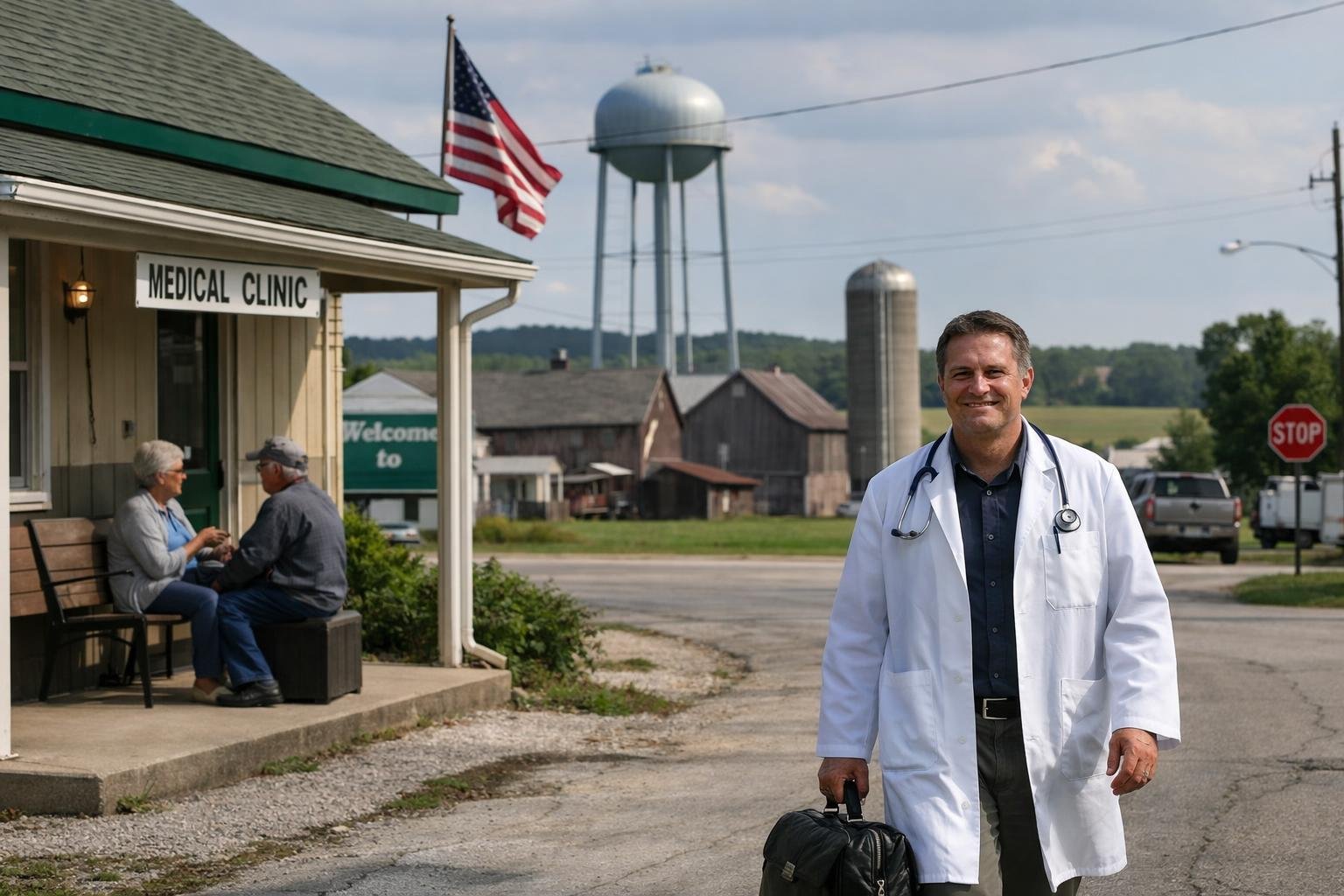
The morning sun cut across the grain silos, and someone hung a hand-painted sign: “Welcome, Doctor.” It fluttered near the clinic that had been mostly quiet, a shell of care for years, with borrowed providers and long gaps between appointments. Today, the parking lot filled early, engines idling in hope, neighbors waving like they were greeting the rain.
“Four years is a lifetime when your mother’s blood pressure won’t cooperate,” said Evelyn Morris, who runs the bakery and once drove to three towns for a refill that expired en route. “It feels like the town can breathe again.” She folded a napkin into a triangle and blinked twice, quickly.
Four years of waiting
The clinic never fully closed, but a rotation of traveling providers left holes in continuity, which meant duplicated tests, lost histories, and waiting rooms that turned into triage. If a kid spiked a fever on Friday, parents weighed a 60-mile drive against another sleepless night.
Ambulance crews became the default, hauling people for problems that a steady primary care clinician would usually catch. Telehealth helped at the edges, but bad bandwidth turns advice into a buffer, and you cannot palpate an abdomen through a screen.
Why it took so long
Recruiters came and went, posting glossy job ads no one clicked. Debt-loaded graduates gravitate toward systems with colleagues, backup call, and salaries that don’t hinge on thin rural margins. Meanwhile, small hospitals keep closing, and clinic reimbursement remains stubbornly fragile.
“We weren’t just competing with cities,” said County Commissioner Ruth Baker. “We were competing with the idea of predictability, of schedules that don’t bend around a snowstorm or a combine stalled at the crossing.” She tapped her notebook, where “housing” and “daycare” were underlined twice.
The doctor arrives
On Monday, Dr. Maya Patel unlocked the clinic door at 6:45 and walked past a stack of unopened exam cuffs, ordering numbers quietly under her breath. She trained in family medicine, delivered babies and stitched fingers, loved solving puzzles that look like a rash but aren’t.
“I wanted a place where I could be useful, not just busy,” she said, pressing the stethoscope against her own palm like a metronome. “You can rebuild health if you rebuild relationships.”
The clinic’s new schedule stretches into evenings, keeps same-day slots for acute needs, and carves a weekly block for school physicals and postpartum check-ins. Saturday mornings are for walk-ins that used to become ER visits by Sunday.
The immediate priorities look simple, but none of them are easy:
- Reconcile scattered records and medication lists
- Stand up a hypertension and diabetes registry
- Bring in visiting OB-GYN and behavioral health hours
- Reopen lab draws and same-day imaging partnerships
A clinic rebuilt around trust
Inside Exam Room Two, a farmer slid a worn cap into his lap and apologized for not coming sooner. His blood sugars read like a seismograph, and his feet have a numb border that creeps each season. Patel nodded, then drew a map of next steps in blocky pen.
Trust is a muscle, and it atrophies without use. Continuity makes prevention possible, from childhood vaccines to colon screens, from prenatal vitamins to postpartum checks that catch silent bleeds. It also shrinks the distance between “this hurts” and “I know why it hurts.”
“We lost the habit of routine,” said school nurse Jenna Collins. “Everything became a flare, a crisis, an email to a faraway portal. A real door you can open changes that.”
The delicate math of staying open
The clinic survives on a ledger that doesn’t forgive mistakes. Reimbursement for rural primary care still trails the complexity of what small teams carry. A snow day can wipe a schedule, and one broken lab machine can derail a month.
To buffer the edges, the county assembled a small fund for recruitment and retention—help with a rental, a daycare slot, spousal job leads. A regional hospital added monthly cardiology consults and offered backstop call for complex admissions that would otherwise head straight to the interstate.
Telehealth remains a tool, not a solution. Patel uses it to adjust meds, read home BP logs, and prevent winter roads from dictating who gets seen. But first visits and unstable situations still anchor to an in-person chair.
What comes next
Success here won’t look like a gleaming tower with a valet loop. It will look like fewer sirens, fewer weekend treks to a distant ER, and more kids with documented asthma plans pinned to their fridges. It will look like hemoglobin A1C lines that flatten, and prenatal visits that start earlier.
The clinic is building a pipeline, too: shadow days for high schoolers, a summer stipend for premed students, and a scholarship that requires a year of service back home. “I always thought I’d have to leave to be a doctor,” said senior Luis Herrera. “Now I’m thinking I could just take the short road and come back.”
On her second afternoon, Patel stepped outside to the smell of fresh doughnuts and diesel, the sound of a tractor rolling past the stop sign. She waved to a patient booking her first Pap in a decade and to a grandfather comparing statins in the shade.
The door clicked shut, the waiting room hummed softly, and the chart queue finally looked surmountable. A town that had been living on medical weather now had a steady forecast—not perfect, not permanent, but finally, unmistakably, present.