
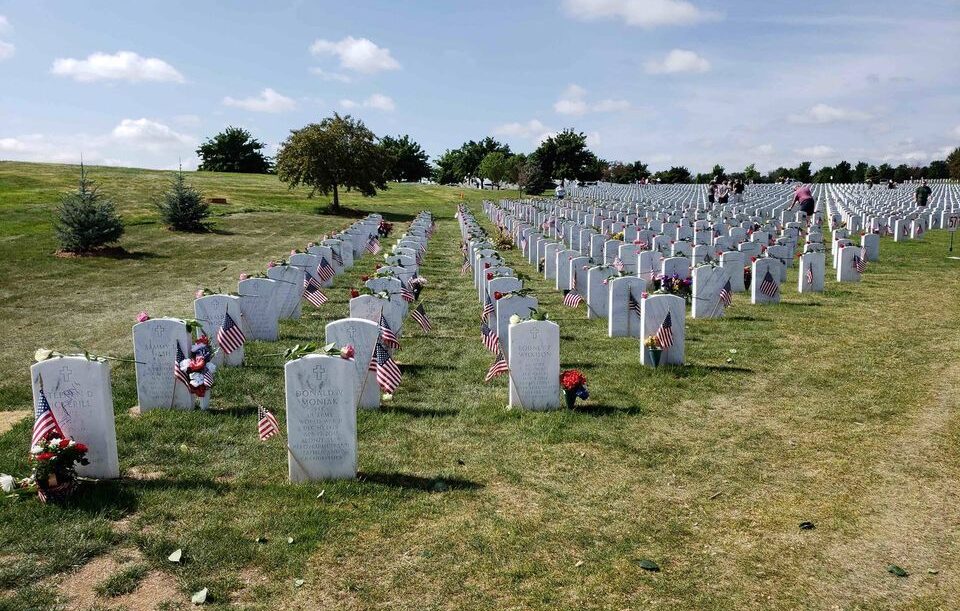
In the blink of an eye, May is almost over, and with it we celebrate Memorial Day, or, as it is known in English, Memorial Day. This observance takes place on the last Monday of the month and is to honor those who gave the ultimate sacrifice for the United States.
Originally called “Decoration Day,” it was formalized through a “Memorial Day Order” issued in 1868 by the Commander in Chief of the Grand Army of the Republic, John A. Logan. The modern proclamation urges Americans to observe Memorial Day by praying, according to their individual religious faith, for lasting peace, according to the National Cemetery Administration.
They add in its history that, in the final years of the Civil War (1861-1865) and immediately afterward, Northern and Southern communities, both Black and White, adorned the graves of soldiers with floral offerings during the spring days of remembrance.
One of the earliest accounts of Memorial Day took place in Boalsburg, Pennsylvania, where a trio of women decorated the graves of fallen soldiers in October 1864. Another was held in Charleston, South Carolina, where freed Black people and white abolitionist allies from the North organized a massive and historically significant event on May 1, 1865, in the Martyrs’ Cemetery at the Hippodrome, where 257 Union soldiers lay buried.
The observance began to be known more and more as Memorial Day; it continued through the late 19th and early 20th centuries as an informal patriotic festival.
After World War I, the event was broadened to honor those who perished in all American wars. The appearance, during the 20th century, of plaques reproducing Logan’s General Order No. 11 helped foster this association.
The United States Army placed its own version of the Day of the Fallen Act plaques in most of the national cemeteries it developed in urban areas during the interwar period, including those in Baltimore, Maryland, and Long Island, New York. These were among the twenty-eight plaques that Levering Brothers Inc. manufactured in York County, Pennsylvania, in 1939.
The design reproduces the dimensions and appearance of the cast-iron plaques that bore the Gettysburg Address engraved on them, which the Army installed in all existing national cemeteries in 1909, as part of a centennial commemorative project in honor of President Abraham Lincoln.
More recently, to reiterate that the sacrifices of the fallen American heroes never fade from memory, in December 2000 the National Moment of Remembrance Act established the White House Commission on the National Moment of Remembrance. The commission’s message to American citizens is to give back to their country, which affords them so much freedom and opportunity, by promoting Memorial Day commemorative activities.
Thus, on this day, in addition to its rich history to become what it is today, it is a special date for the families of fallen service members and for those who served the United States and who have since passed away.
It is a day of rest for many, but among the activities we organize, let us not forget those who sacrificed everything for the freedom of this country.
