
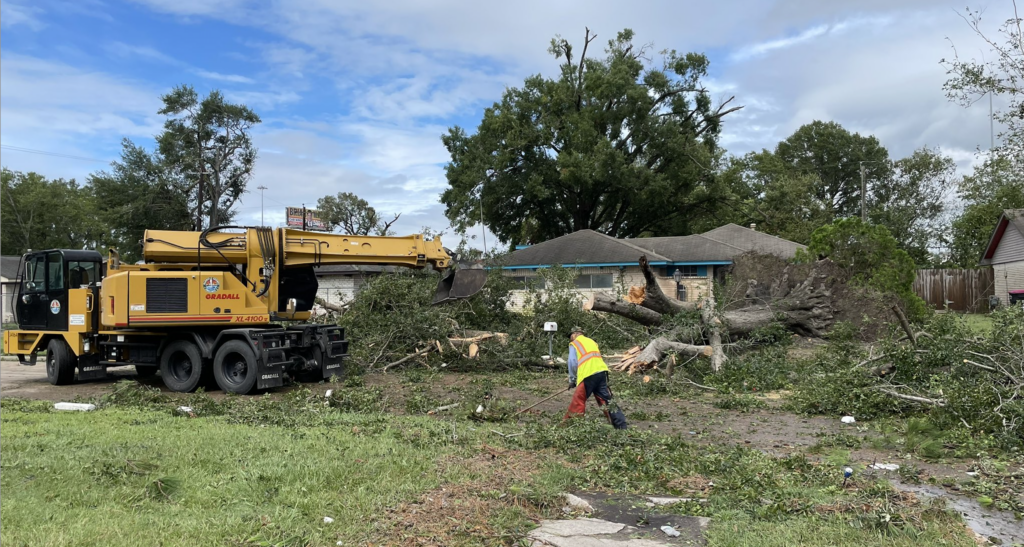
Residents, activists, and community organizations gathered at a local forum to call for greater investment in disaster funds, preparedness, recovery, and infrastructure in the face of hurricanes, floods, and other extreme events.
Houston opened hurricane season with new community calls to strengthen disaster preparedness and recovery. During a forum held on Saturday, May 30, more than 20 residents, activists, and local leaders shared experiences of hurricanes, floods, extreme cold, and pollution following industrial emergencies.
The gathering was organized by Climate Action Campaign and other environmental groups. Participants called for more public funds for disaster recovery in Houston and Texas, as well as investments in infrastructure, community safety, and federal agencies that respond to climate emergencies.
Among the testimonies was that of Doris Brown, co-director of West Street Recovery, an organization that helps Houston residents rebuild after natural disasters. Brown recalled that during Hurricane Harvey the water broke through the roof of her home and fell on a chair where she had been sitting moments before.
Residents shared experiences of hurricanes, floods, and extreme cold
The forum brought together people who have lived up close to the effects of severe climate events in Houston and other parts of Texas.
In the past decade, Texas has faced multiple hurricanes, floods, a derecho, and a historic frost. During the gathering, participants noted that these events have left physical, emotional, and economic damage in various communities.
Brown said that, over the years, natural disasters have been numerous and have worsened. Her work at West Street Recovery has kept her close to families facing repairs, housing loss, material damage, and long recovery processes.
The testimonies also included experiences related to recent floods in Hill Country and pollution generated by disasters at industrial facilities.
Activists called for full disaster funding for FEMA, NOAA, and the National Weather Service
The Houston forum was part of a national initiative by Climate Action Campaign.
The campaign calls for full funding for the Federal Emergency Management Agency, known as FEMA; the National Weather Service, or the National Weather Service; and the National Oceanic and Atmospheric Administration, known as NOAA.
Organizers also called for stronger enforcement of environmental regulations by the Environmental Protection Agency, or EPA, and for a faster transition to clean energy.
The requests were presented as Houston and the Gulf region prepare for hurricane season. For residents who have lived through floods, power outages, or housing damage, preparedness includes both early warnings and recovery resources after the emergency.
Organizers noted that resilience does not replace safety
Amy Zachmeyer, a local organizer, said during the forum that Houston is often described as a resilient city, but communities also deserve safety.
Zachmeyer noted that resilience becomes necessary when people are forced to rely on it. Her comment responded to a repeated concern from several participants: that residents not only need to rebuild after each disaster, but have systems that reduce risk before the next event.
Attendees asked for more government support for preparedness and recovery, in a context marked by climate change and the increasing frequency of extreme events.
Concerns included access to post-disaster assistance, more resilient infrastructure, emergency services with adequate resources, and protection for communities exposed to floods or industrial pollution.
Galena Park also highlighted the physical, mental, and financial cost
Tom Ehlers, fire chief of Galena Park, participated in the gathering and spoke about the effects disasters leave on communities.
Ehlers said he has seen firsthand the consequences of these events, including the physical, mental, and financial impact that residents can feel after an emergency.
Galena Park, an industrial city east of Houston, has been among the suburban communities where environmental and public safety concerns often intersect with health, infrastructure, and emergency preparedness issues.
During the forum, residents also discussed pollution following incidents at industrial facilities, a topic environmental groups connected with the need for greater oversight and enforcement of environmental standards.
The call arrives at the start of hurricane season
The community meeting took place as a new hurricane season began, when families, local governments, and aid organizations review emergency plans and available resources.
Participants urged that disaster preparedness should not rely solely on responses after each event. They also highlighted the need to invest in infrastructure, weather information, community recovery, and environmental protection.
The requests focused on federal and local resources to address emergencies before, during, and after hurricanes, floods, freezes, or other extreme events.
The forum left a clear list of community priorities: funding for response and monitoring agencies, support for housing recovery, safer infrastructure, and stronger environmental regulations.