
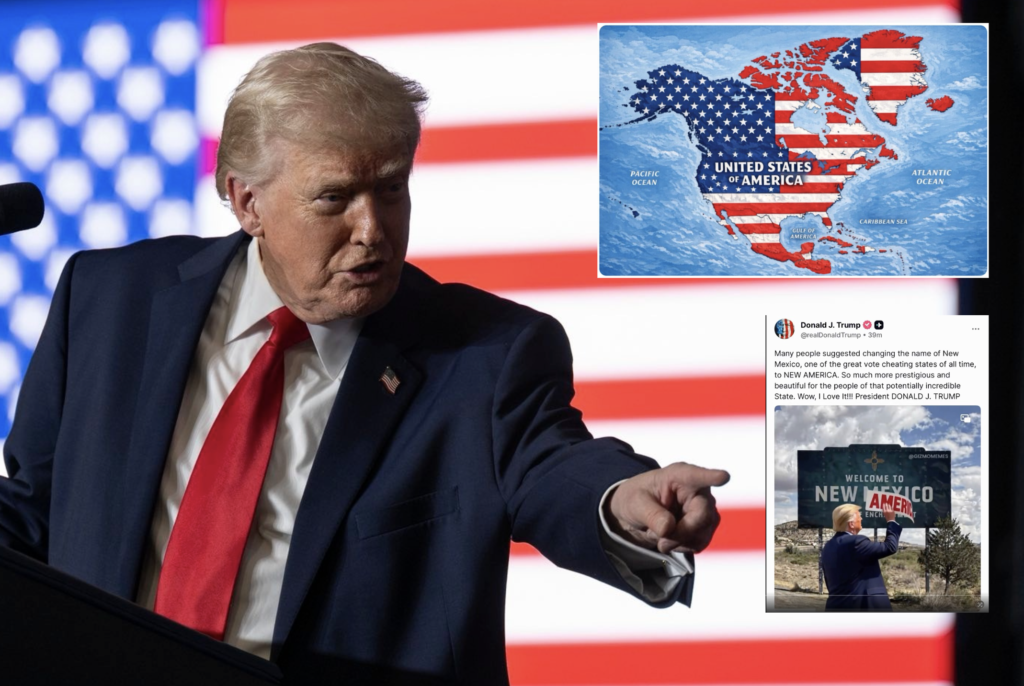
Washington. The mere insinuation of a potential geopolitical absorption or asymmetric integration of Mexico and Canada by the United States has unleashed a severe diplomatic furor and an intense debate about the future of sovereignty in North America.
Although the idea of a formal territorial annexation lacks legal viability, constitutional viability and backing under international law, the recent dynamics of economic pressure, the constant threat of unilateral imposition of tariffs and the intensification of military control at the borders have revived alarms about the degree of subordination to which Washington intends to subject its closest trading partners.
In recent months, references to turning Canada into the ’51st state’ of the Union or the demand to deploy American troops on Mexican soil on the grounds of fighting organized crime and containing irregular migratory flows have generated a forceful response from Ottawa and Mexico City.
Both governments have characterized these positions as a direct affront to the self-determination of their peoples, emphasizing that any regional cooperation scheme must be strictly grounded in respect for national sovereignty and not in models of coercive hegemony or political tutelage.
International affairs analysts agree that, beyond the expansionist rhetoric that tends to emerge in electoral periods or during domestic polarization in the United States, the real dispute lies in the reconfiguration of the United States-Mexico-Canada Agreement (USMCA). The White House seeks to take advantage of the trilateral agreement’s review mechanisms to consolidate an asymmetrical dominance over supply chains, energy resources, industrial production and the architecture of continental security.
Through the strengthening of protectionist measures, stringent requirements on rules of origin and environmental and labor conditionalities, the North American power aims to shield the regional market from competition by rising powers such as China, while simultaneously restricting the autonomy of its neighbors’ public policies.
This trend toward economic and regulatory assimilation generates deep concern among civil society organizations, business associations and think tanks in the three countries. Human rights advocates and international relations experts warn that, if a scheme of subordination where security and the economy depend entirely on the dictates issued from Washington materializes, North America would be on a path toward a ‘de facto annexation’.
Under this scenario, although geographic borders and the national symbols of Mexico and Canada remain nominally intact, strategic decision-making would be entirely subordinated to the interests of United States foreign policy.
In response to this juncture, both the Mexican government and the Canadian government have begun to explore bilateral coordination strategies to counter the diplomacy of pressure.
Both nations have made clear before international forums that the region’s prosperity should not be built on imposition or the loss of sovereignty, but through an equitable alliance that recognizes the diversity of their institutions and the value of their national identities.
