
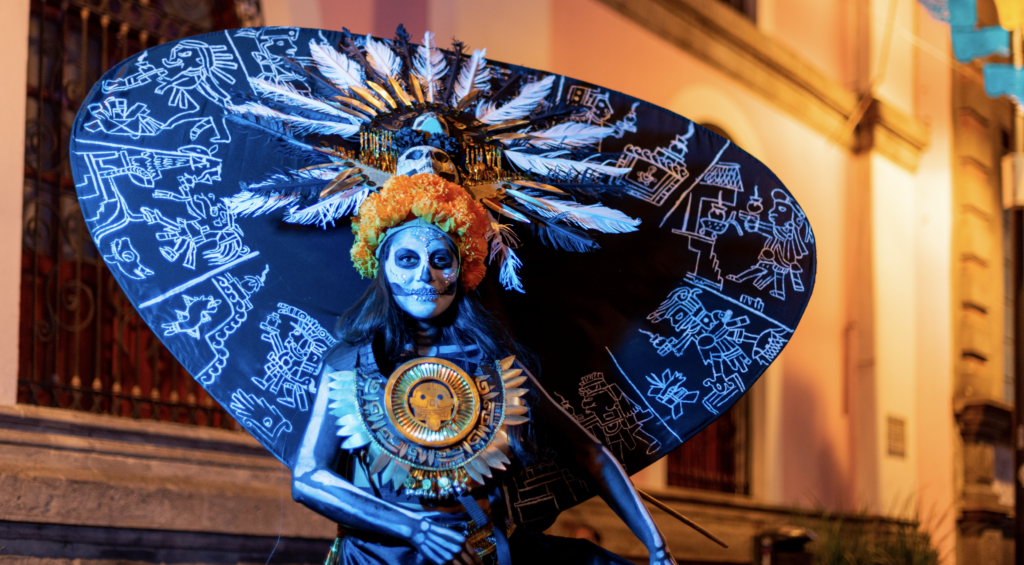
José Guadalupe Posada created La Calavera Garbancera as a social satire. Diego Rivera transformed it into the elegant figure that today identifies the Day of the Dead.
Updated October 22, 2026.
The Catrina is one of the best-known characters of the Day of the Dead in Mexico, but its origin lies in political caricature and social critique from the early 20th century. The figure was born as the Calavera Garbancera, created by the Mexican engraver José Guadalupe Posada, and acquired its most recognizable appearance decades later thanks to the muralist Diego Rivera.
The elegant hat, the skull face, and the dresses that today appear in parades, costumes, and celebrations have a history linked to the social differences of the Porfiriato, Mexican popular art, and the transformation of a satirical illustration into a cultural symbol.
José Guadalupe Posada created La Catrina as the Calavera Garbancera
José Guadalupe Posada (1852–1913) was an engraver, illustrator, and caricaturist born in Aguascalientes, Mexico. His work portrayed political events, social problems, popular characters, and scenes of daily life through images that circulated mainly in printed publications.
One of his best-known creations was the Calavera Garbancera, a female skull wearing a luxurious hat adorned with feathers, but lacking a body and clothing.
The image is generally attributed to the last years of Posada’s life, around 1910. However, scholars have noted differences in its dating and the printed documents preserved from 1913. Therefore, there is no single date accepted without caveats for its creation and first circulation.
The Calavera Garbancera formed part of a tradition of satirical illustrations and verses that used skeletons to represent different sectors of Mexican society.
The Calavera Garbancera criticized appearances and social differences
The name garbancera referred to people who pretended to adopt the customs and appearance of the wealthy classes, particularly European fashions, while rejecting aspects of their own social and cultural origins.
During the Porfiriato, Mexican elites received a strong influence from French fashion. Posada used that aspiration for elegance as the target of his satire: his skull wears a refined hat, but beneath it lies a skull.
The portrayal reminded that death does not discriminate between rich and poor. Titles, clothing, and social position lose their importance when all people end up as bones.
The National Institute of Anthropology and History (INAH) identifies the Calavera Garbancera as a caricature of vanity and the social pretensions of its era.
Diego Rivera gave it body and popularized the name La Catrina in 1947
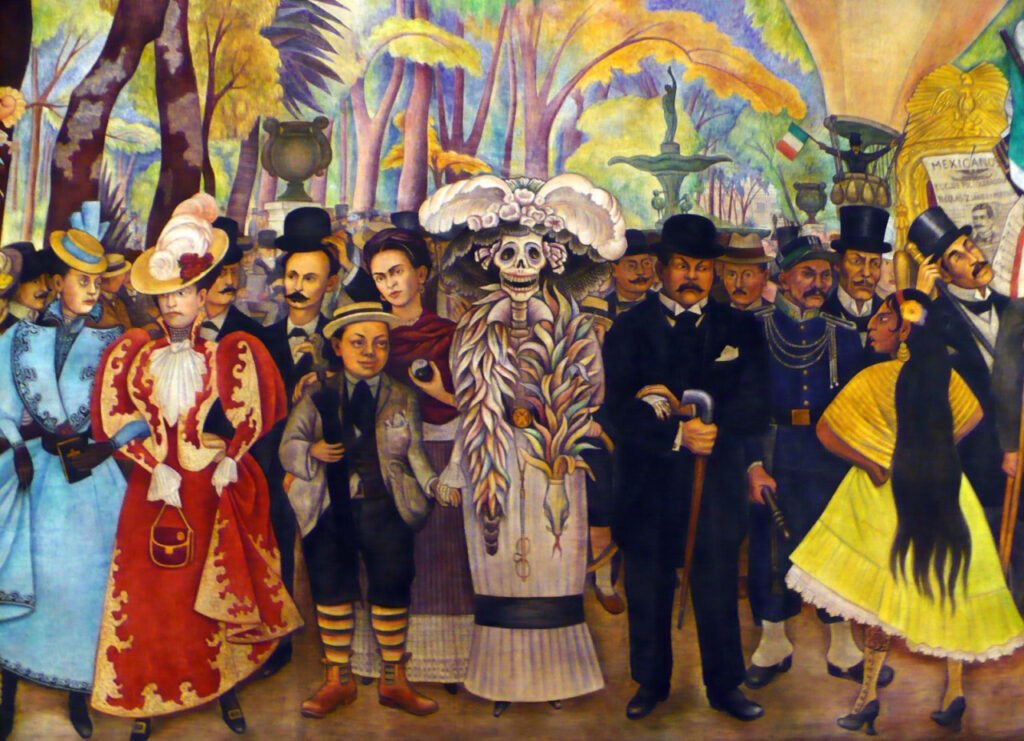
The decisive transformation of the character arrived in 1947, when Diego Rivera incorporated it into his mural Dream of a Sunday Afternoon in the Alameda Central.
In this work, Rivera depicted the former Calavera Garbancera in full figure, dressed elegantly and accompanied by figures from different eras of Mexican history.
The figure appears in the center of the mural, arm in arm with José Guadalupe Posada and hand in hand with a Diego Rivera depicted as a child. Behind the artist stands Frida Kahlo.
La Catrina wears a long dress, an elaborate hat, and a feathered collar that evokes Quetzalcóatl, a deity of the Mesoamerican tradition.
Rivera popularized the name La Catrina, connected to the word catrín, used to refer to a person who dresses with elegance and refinement.
The mural was originally created for the Hotel del Prado in Mexico City. After the building suffered damage during the 1985 earthquake, the work was rescued and moved to the current Diego Rivera Mural Museum.
The Diego Rivera Mural Museum, located in Mexico City, preserves this fresco painting and considers it one of the emblematic works of Mexican muralism.
What does La Catrina mean in the Day of the Dead?
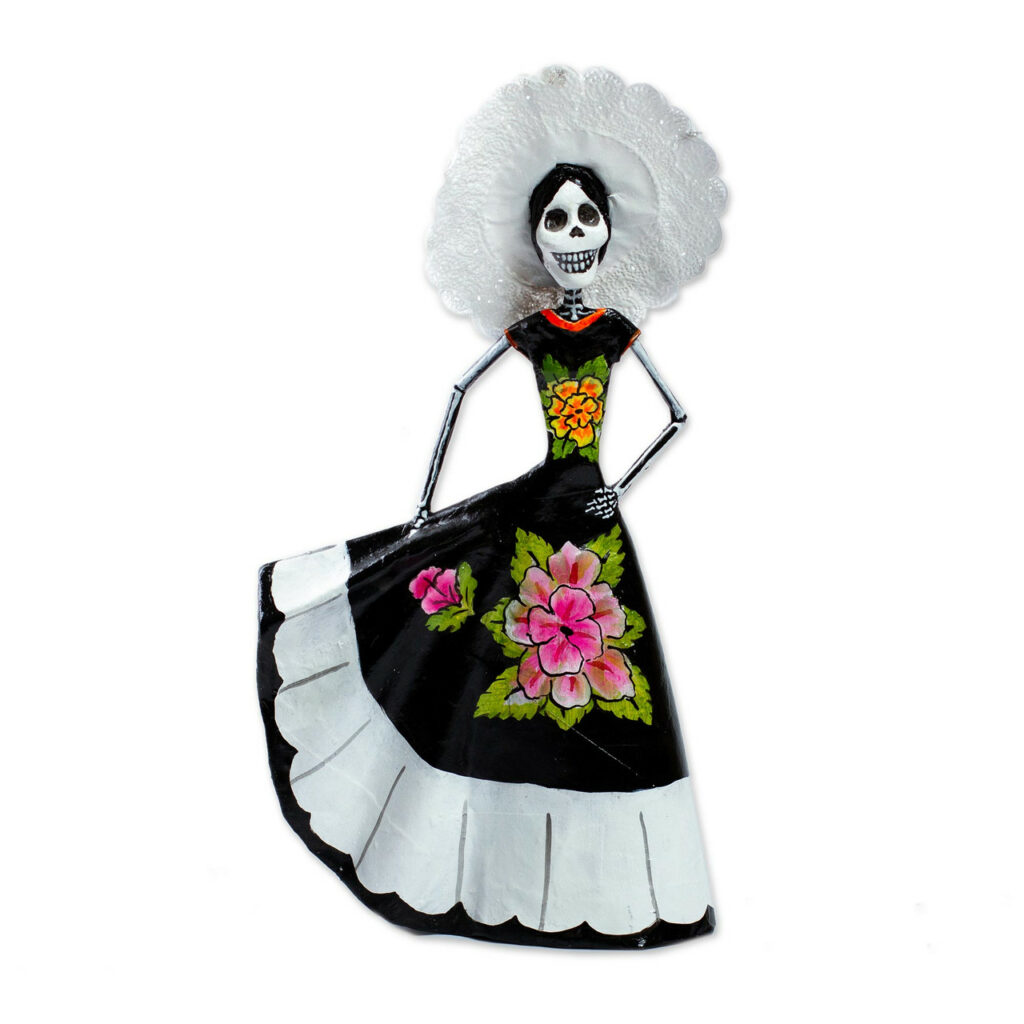
La Catrina represents a way of looking at death through humor, social critique, and Mexican artistic expressions.
Its current meaning combines Posada’s satirical intent with Rivera’s reinterpretation and the new ways in which artists, craftspeople, and families have adopted the character.
The figure appears in sculptures, papel picado, illustrations, makeup, costumes, and parades linked to Day of the Dead celebrations.
However, La Catrina is not the origin of the Day of the Dead nor a mandatory element of its offerings. The practices to remember the deceased have a much longer history, linked to indigenous traditions, Catholic customs, and regional expressions that have changed over time.
Altars typically incorporate photographs, candles, flowers, foods, and objects related to the deceased. Some families also place Catrina figures, but their presence depends on the customs and preferences of each celebration.
La Catrina and the Catrin have become figures in parades
Current representations of La Catrina usually include skull makeup, elegant dresses, hats, flowers, and colorful accessories.
The Catrin is her most well-known male counterpart, typically depicted wearing a suit, hat, or other formal garments.
These characterizations have extended to parades, contests, festivals, and school activities in both Mexico and Mexican communities in the United States.
Makeup and attire can vary widely. Some designs preserve the elegance associated with Rivera’s mural, while others incorporate contemporary elements, regional references, and their own artistic styles.
The popularity of the character has also contributed to Posada’s image being internationally recognized, although its original meaning as a satire of social differences is not always preserved in modern representations.
Museums in Aguascalientes and Mexico City preserve its history
The legacy of José Guadalupe Posada and Diego Rivera is preserved in various cultural centers across Mexico.
In Aguascalientes, the José Guadalupe Posada Museum, located beside the Jardín del Encino, houses engravings, prints, and other works related to the artist who created the Calavera Garbancera.
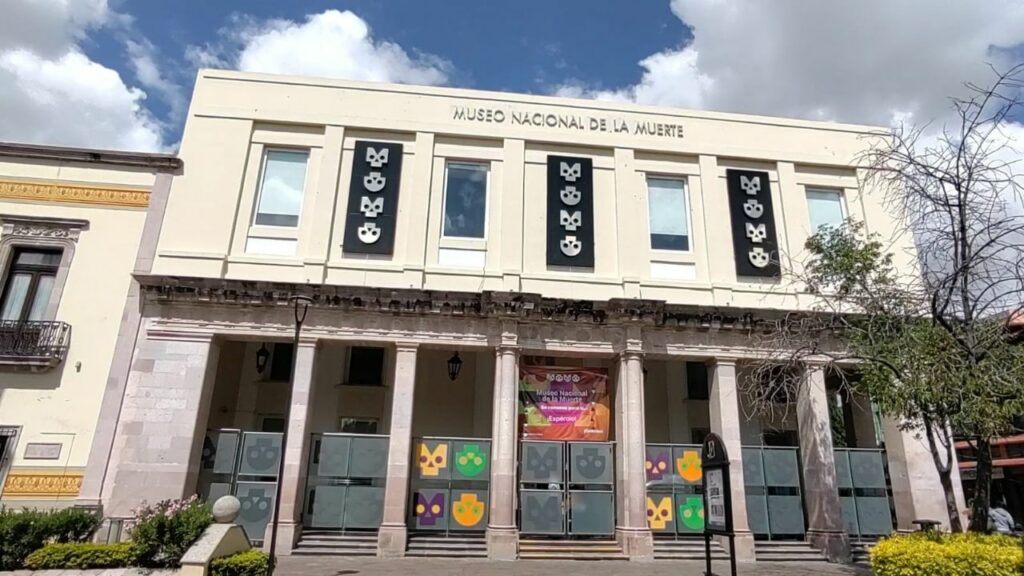
The city also hosts the National Museum of Death, administered by the Autonomous University of Aguascalientes. Its exhibitions explore representations of death in art and funeral customs across different periods of Mexico.
In the capital city, the Diego Rivera Mural Museum preserves Dream of a Sunday Afternoon in the Alameda Central, where La Catrina appears with the appearance that helped consolidate her cultural recognition.
These venues allow visitors to trace the evolution of the character from popular engraving to muralism and its presence in contemporary traditions.
The Aguascalientes Calaveras Cultural Festival honors Posada
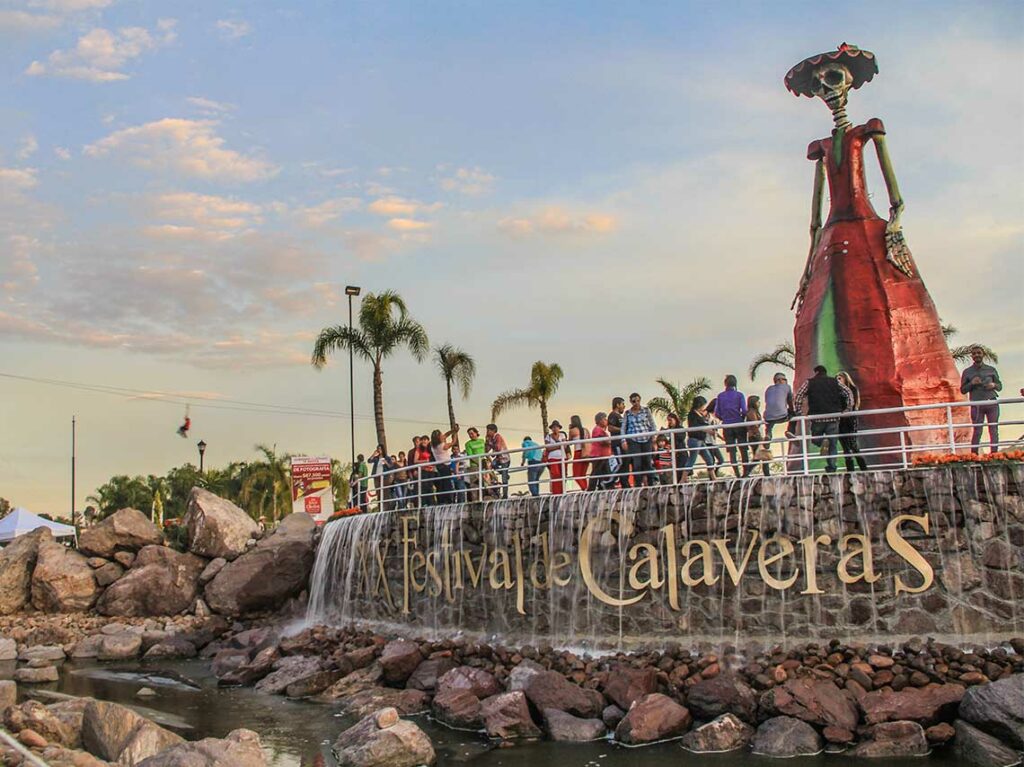
Aguascalientes celebrates every autumn the Festival Cultural de Calaveras, created in 1995 as a tribute to José Guadalupe Posada and to the artistic representations of death.
The celebration includes parades, exhibitions, altar contests, music, dance, crafts, and cultural activities at different venues across the city.
The Secretariat of Culture of Mexico identifies the festival as a multidisciplinary celebration that recognizes the importance of engraving and folk art in Day of the Dead traditions.
The event maintains a direct connection to Posada’s career, born in Aguascalientes in 1852, whose Calavera Garbancera ended up becoming one of Mexico’s most well-known visual symbols.