
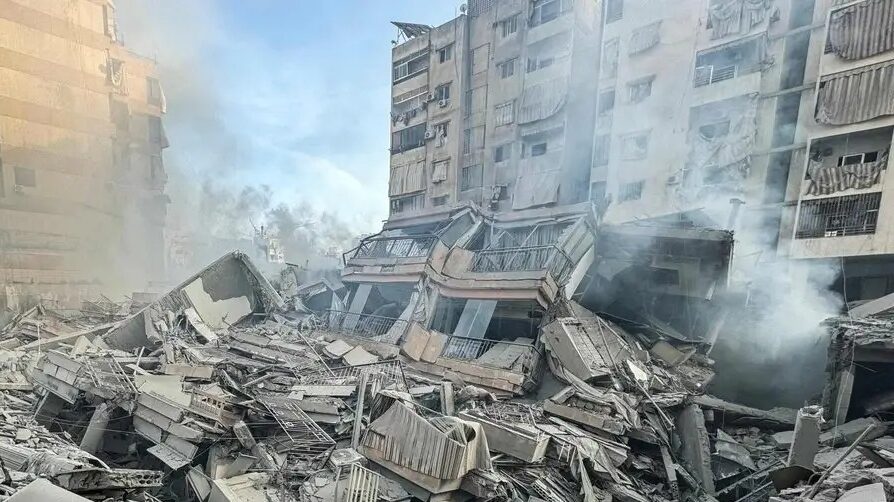
Turkey.— The prospect of a large-scale conflict between the United States and Iran has ceased to be mere academic conjecture and has become an imminent reality following the systematic collapse of diplomatic channels in recent days.
The history of this escalation is marked by a series of peace attempts that, far from reducing friction, ended up deepening mutual distrust. The most resounding failure occurred during the dialogue tables in Geneva, where Washington’s demands for a complete dismantling of Iran’s ballistic missile program collided head-on with Tehran’s demand for an immediate and guaranteed lifting of all economic sanctions.
The talks stalled not only for technical reasons, but due to a complete lack of political will to concede on points that both countries consider vital for their national security.
As the international mediators from the European Union and Qatar watched their ‘freeze-for-relief’ proposals being rejected by both sides, the language of diplomacy was replaced by that of active military deterrence.
The United States administration, pressed by a Congress demanding decisive actions against the Iranian axis of influence in the Middle East, moved from verbal warnings to the massive deployment of naval and air assets in the Persian Gulf.
For its part, Iran has interpreted the failure of the peace talks as a signal that the diplomatic path is sterile, accelerating its uranium enrichment and strengthening its ties with Western rival powers to shield its war economy. This dynamic has created a feedback loop where every military exercise or economic sanction is answered with a symmetric provocation, definitively closing the window of opportunity that briefly opened earlier this year.
What lies ahead in this confrontation scenario is a phase of high-intensity hybrid conflict that could escalate into open war on multiple fronts. With no direct communication channels to prevent misunderstandings, the risk that a minor incident in the Strait of Hormuz or a cyberattack on critical infrastructure could trigger a massive response is higher than ever.
Analysts anticipate that the United States’ next operational move will be to establish a more aggressive maritime exclusion zone, while Iran will likely activate its network of regional allies in Lebanon, Iraq, and Yemen to saturate U.S. defenses.
The world watches with concern how leaders’ inability to find a common language at the negotiating table has paved the way toward a conflagration that threatens to destabilize not only the global energy market but the entire architecture of international security, leaving diplomacy as a forgotten relic in a context where there seems to be room only for force.
Meanwhile, President Donald Trump described Iran’s response to the United States’ peace proposal as “completely unacceptable,” which appears to push the chance of an agreement to end the war further away again.