
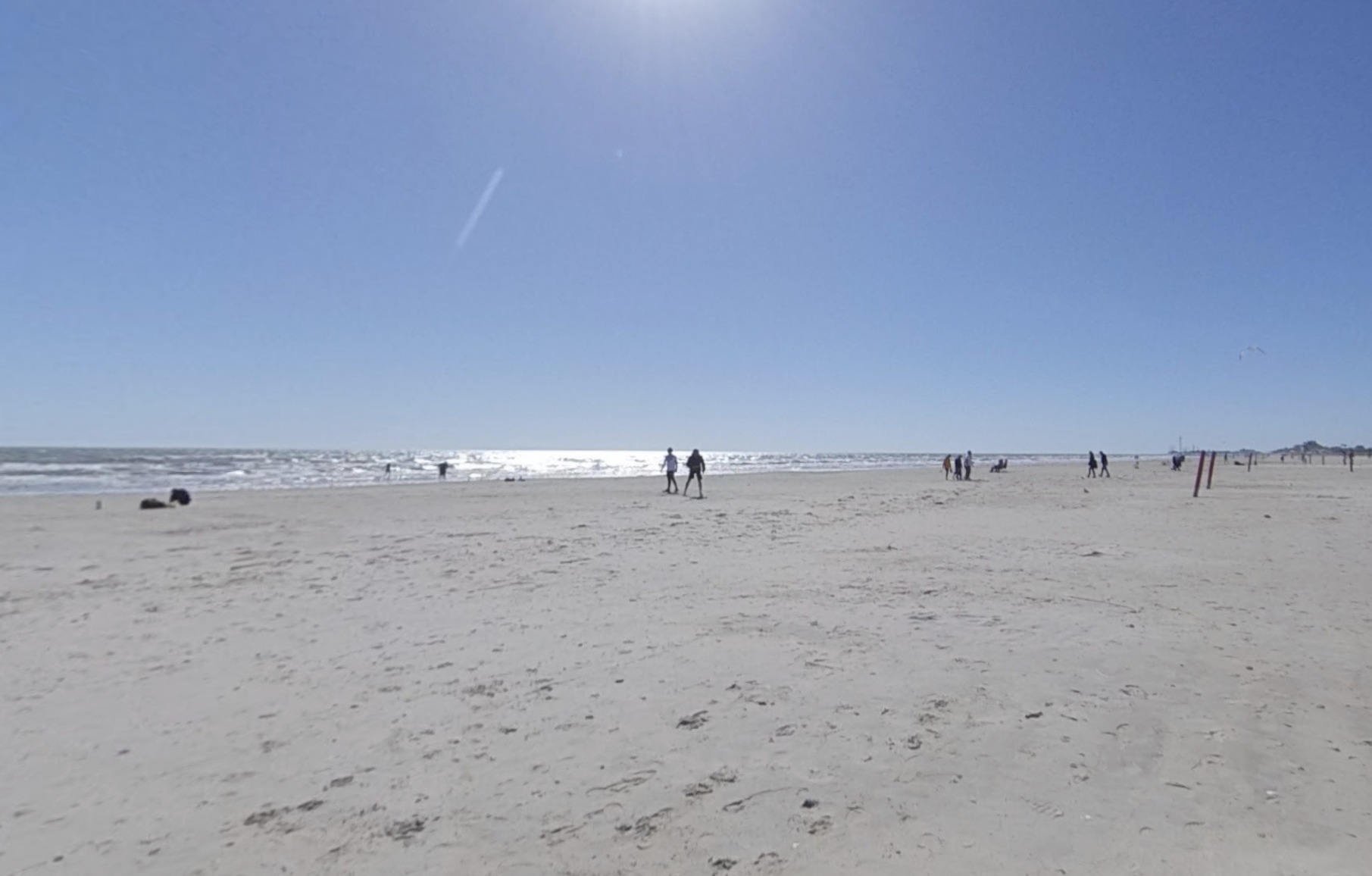
The risk will persist for the next 36 hours and may vary from one beach to another. Discomfort is more likely when the wind blows from the Gulf toward shore or parallel to the coast.
Some beaches in Galveston County may record a risk moderate to high respiratory irritation from red tide over the next 36 hours, a condition that can cause coughing, sneezing, throat irritation and eye discomfort among those who stay near the shore.
The current forecast was issued by NOAA’s National Centers for Coastal Ocean Science at noon on Saturday, September 12. Conditions can vary considerably between different stretches of beach and can also change during the same day.
The phenomenon is associated with Karenia brevis, a microalga that produces toxins capable of reaching the air through sea spray.
The risk increases when the wind blows from the Gulf toward the shore
Episod es of respiratory irritation are more likely when winds blow from the water toward land or parallel to the coast. The risk decreases when the wind blows from land toward the Gulf.
This difference explains why two relatively close beaches can record different conditions at the same time.
NOAA maintains a forecast that combines concentrations of Karenia brevis, wind speed and direction to estimate the risk of irritation at individual beaches.
The updated conditions can be checked in NOAA’s official Gulf Coast red tide forecast.
Recent samples detected red tide in Galveston County
Water samples collected between September 2 and 9 detected Karenia brevis along the Texas coast.
In Galveston County, concentrations reached levels capable of producing respiratory irritation. NOAA also detected the microalga in Aransas and Nueces counties, though the concentrations observed there were less likely to cause such discomfort.
Red tide typically appears in patches and can move or change intensity with currents, tides and winds. Its presence does not imply that all Galveston beaches are affected in the same way.
Coughing, eye irritation, and difficulty breathing can occur near the water
The toxins produced by Karenia brevis can disperse in small water droplets and sea spray.
Exposure can cause:
- coughing or sneezing;
- throat irritation or pain;
- eye irritation;
- trouble breathing;
- skin irritation;
- worsening of asthma symptoms.
People with asthma or other respiratory illnesses may experience more intense symptoms. When discomfort occurs, NOAA recommends moving away from the affected area and considering another beach where impacts are not being recorded.
Moderate or persistent breathing difficulties require medical attention.
Discolored water and dead fish may accompany a red tide
The presence of Karenia brevis can also affect marine life. Signs associated with a red tide bloom include discolored water, dead fish and respiratory discomfort among people near the shoreline.
However, the term “red tide” does not mean the water necessarily looks red. A bloom can be present without producing an obvious color change.
The forecast should be checked before traveling to Galveston
The risk of red tide can change rapidly due to wind direction, tides and movement of algal concentrations.
For this episode, NOAA forecasts a risk moderate to high for the 36 hours after noon on September 12. Those planning to visit Galveston or the Bolívar Peninsula over the weekend can check the latest forecast before heading out.