
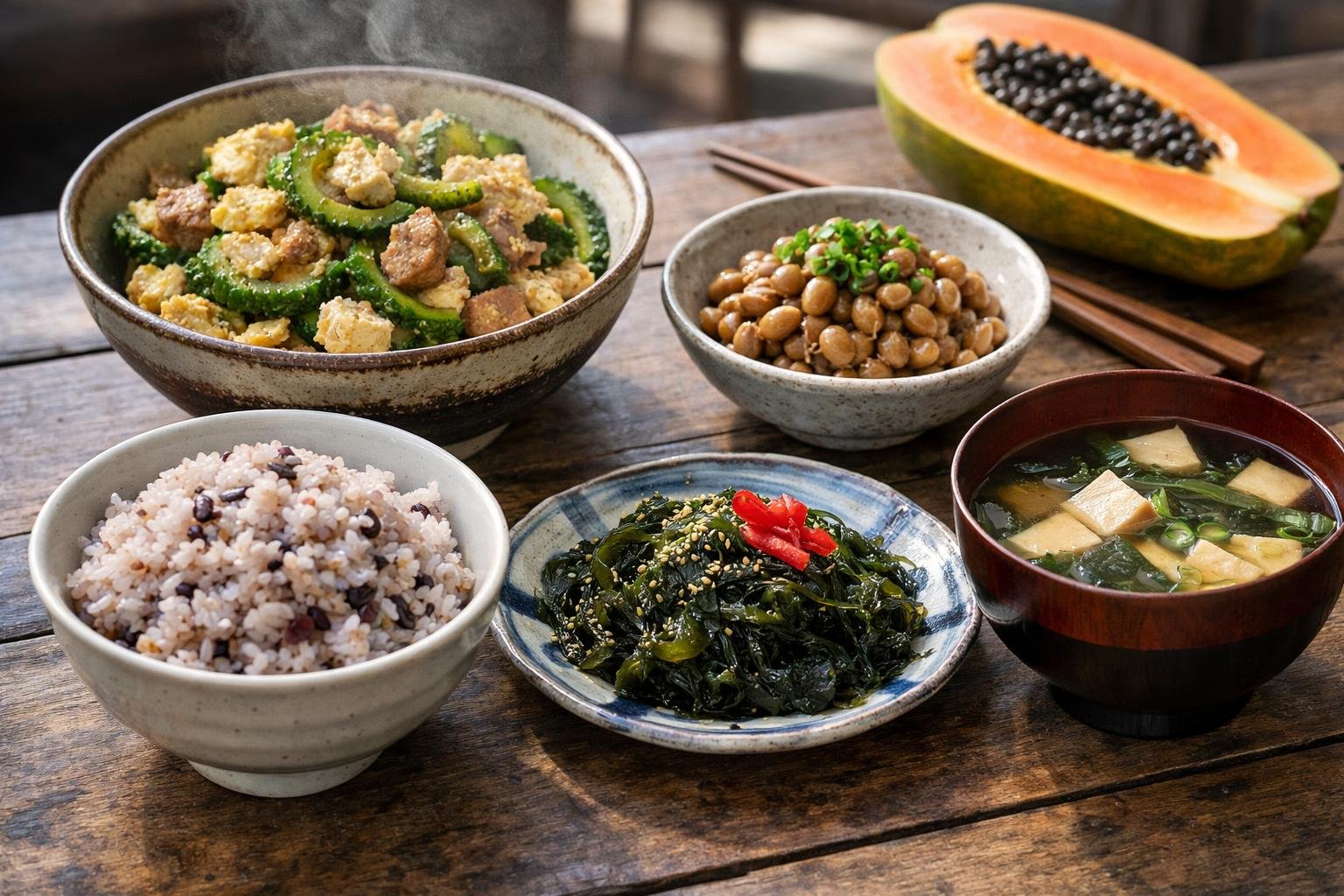
Longevity on Okinawa feels ordinary, not exotic. You see it in the markets, the morning walks, the calm rhythm of meals. The secret is less about supplements and more about simple, steady foods cooked with care.
"Eat until you are eight parts full," says an old proverb, and the plate follows that wisdom. Portions stay modest, flavors stay pure, and the daily staples do the heavy lifting.
Below are four quiet heroes, eaten so often they become invisible—yet they shape resilient bodies and unhurried years.
Sweet potatoes, purple and patient
The Okinawan sweet potato—often the purple kind—anchors the table. It’s sweet but slow, with fiber that calms glucose spikes and a rainbow of anthocyanins that protect cells from daily wear.
People steam them, bake them, or slip cubes into miso broth. The taste is comfort, the effect is steady energy, and the feeling is "I could walk a little farther." In a place where work once meant fields, these roots powered decades without fanfare or fuss.
"Food should be kind," one elder once smiled, "and this is very kind." No rush, no gimmicks—just a tuber that keeps you going.
Tofu, the quiet protein
Tofu shows up in soups, stir-fries, and chilled dishes, gentle yet complete. It brings lean protein, calcium, and isoflavones that seem to whisper benefits to heart and bone.
What stands out is the frequency, not the flash. A few silky cubes in miso soup, firm slices sautéed with greens, or chilled tofu with grated ginger—each portion is small, but the pattern is daily.
Soy here is mostly whole or simply made—miso, tofu, natto—less processed, more honest. "You don’t need a lot," a home cook might say. "You need it often."
Seaweed, the mineral net
From the sea comes a soft strength: kombu in broth, wakame in soup, mozuku in bright salads. Seaweeds deliver iodine, magnesium, and soluble fibers like fucoidan that feed the microbiome and keep digestion smooth.
The flavor rides in the background—umami-rich dashi that makes vegetables sing and sodium go lower without losing satisfaction. You taste the ocean, but also restraint and balance.
"Cook with the sea, not just salt," a phrase you hear like an island echo. It’s a culinary shortcut to depth, and a gentle nudge toward better blood pressure.
Bitter melon, the brave crunch
Goya—bitter melon—isn’t shy; it’s bold. That bite wakes the palate and may help with glucose control, thanks to plant compounds like charantin and a payload of vitamin C.
Sliced thin, salted to soften the edge, then tossed into goya chanpurū with tofu and egg—it tastes alive, especially in the heavy heat of summer. Bitter foods train restraint, and this one feels like a crisp reminder to keep things light.
Locals pair bitter with gentle—tofu, egg, a touch of dashi—turning contrast into harmony. The tongue learns, and the body thanks you later.
How to bring these staples to your table
- Build a simple miso soup with kombu dashi, silken tofu, and a sprinkle of wakame; add sweet potato cubes for cozy, satisfying heft.
Beyond recipes, daily rhythm matters. These foods show up in many small ways, not in one grand moment. A bowl here, a side there—enough to feel nourished, not stuffed or sleepy.
Another thread runs quietly: hara hachi bu—stop at eighty percent full. It’s easier when staples are fiber‑rich, water‑rich, and lightly seasoned. You chase flavor, not fullness; you leave the table ready to move.
Notice what’s often missing: heavy creams, mammoth steaks, and towering desserts. Meat appears, but less often. Fat leans toward soy, sesame, and the ocean’s gifts. Heat stays gentle, methods stay simple, and the pantry keeps faith with plants.
If you adapt this pattern, start small. Roast a tray of purple sweet potatoes on Sunday. Keep tofu in the fridge, miso in the door, and dried seaweed in a clear jar. Learn to love a hint of bitter, then build your plate around what makes you feel light.
Longevity is not a hack; it’s a habit made of everyday choices. Put these four foods on gentle repeat, add movement and a circle of friends, and let time do its quiet, generous work.