
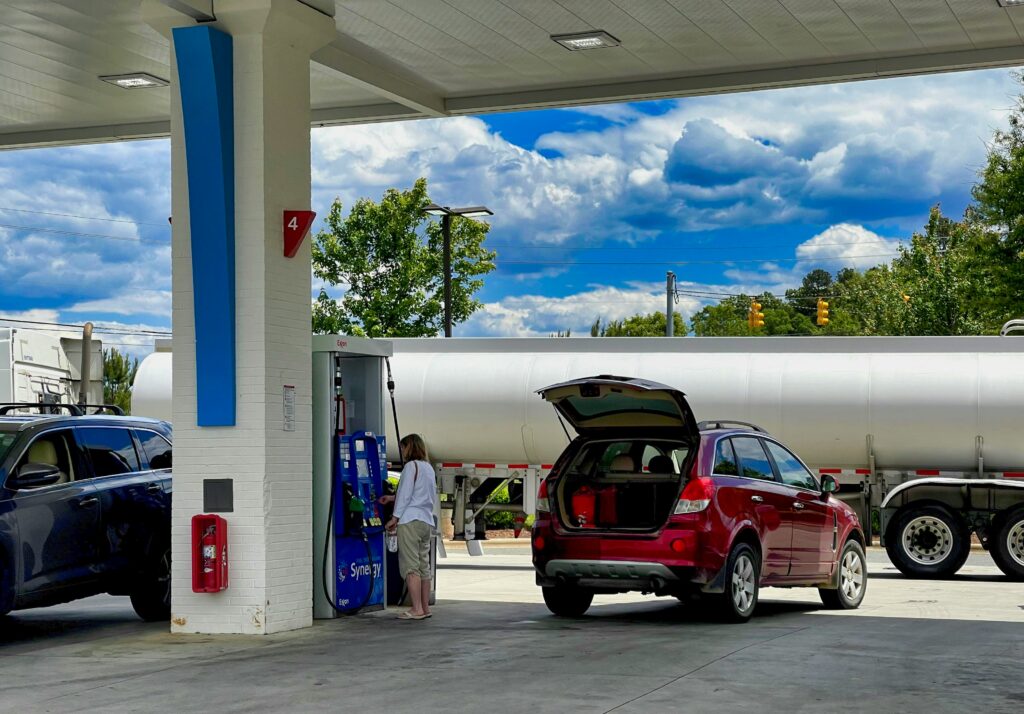
The city plans to review projects located on streets 80 feet wide or less and in areas with a high concentration of housing. Existing gas stations would not be affected.
October 27, 2026.
Houston is preparing an ordinance that could limit the construction of new gas stations near homes. The proposal, presented on October 21, 2026, to the City Council’s Economic Development Committee, would establish location requirements for fueling stations on narrow streets and in predominantly residential areas.
The ordinance is not yet approved. The city administration proposes incorporating it into Chapter 42 of the Houston Code of Ordinances, which governs urban development. If enacted, it would apply to future applications for gas stations, without imposing the new conditions on existing establishments.
The initiative responds to concerns of residents from different neighborhoods, including Riverside Terrace and Old Sixth Ward, about commercial projects near their homes. Objections have included traffic, lighting, noise, and potential effects on properties.
Gas stations on streets 80 feet wide or less would undergo additional review
The proposal contemplates a two-step procedure to determine if a new fueling station meets the municipal location requirements.
First, Houston would assess whether the site lies on a main thoroughfare with a width greater than 80 feet. If it meets this condition, the project would pass the proposed location review, although it would still need to satisfy other permits and applicable requirements.
If the main thoroughfare is 80 feet or narrower, or if the site is on a lower-category street, the city would analyze the surrounding residential land proportion.
- Less than 50% residential land: the site would meet the location criterion.
- 50% or more residential land: the site would not meet the ordinary criterion and the applicant would need to seek an exception to proceed.
The municipal proposal for fueling stations contemplates a mechanism to request exceptions, known as variances. However, the possibility of applying for them does not guarantee approval.
The final method to measure the percentage of nearby residential properties is part of details that still need to be clarified during the drafting of the ordinance. The references of 50 and 100 feet used in the municipal analysis should not be confused with a mandatory minimum distance that has been approved.
Houston found nearby homes in 98 gas station applications
The city analyzed 188 fueling station applications submitted over the last four years within the Houston portion located in Harris County.
The municipal study identified three characteristics among those applications:
- 178 applications, equal to 95%: were on sites on main roads.
- 50 applications, 27%: were located on streets 80 feet wide or narrower, or on smaller streets.
- 98 applications, 52%: had homes within 50 to 100 feet of the proposed site.
The 50 applications located on narrower streets would have required the second review planned by the proposal. That does not mean all 50 would have been rejected: the outcome would depend on the surrounding residential land percentage and on possible variances.
The data refer to project applications, not necessarily gas stations built or in operation. They also do not represent an inventory of all gas stations existing in Houston.
Two sites on Live Oak Street and Washington Avenue would not meet the residential criterion
The city administration used two specific locations to illustrate how the new rules would work: 5204 Live Oak Street, in the Riverside Terrace area, and 1909 Washington Avenue.
In the case of Live Oak Street, the site sits adjacent to Southmore Boulevard, a main thoroughfare 80 feet wide. The municipal analysis classified 100% of the studied area as residential within both 50 and 100 feet from the property.
Therefore, the project would not meet the ordinary location criterion contemplated in the proposal. However, that result is an example of applying the proposed rules and does not constitute a final decision on a project already submitted for construction.
On Washington Avenue, also considered an 80-foot main thoroughfare, the city identified 80% residential land within 50 feet and 57% within 100 feet. Both proportions exceed the 50% threshold, so that location would not meet the ordinary criterion either.
The examples illustrate how the new procedure could limit projects surrounded by housing, even on commercial streets. The proposal does not establish a general prohibition on gas stations nor would it automatically prevent construction near any home.
The proposal would add location requirements to Houston’s development code
Houston does not use a general zoning system like other large Texas cities. Its development rules regulate specific aspects of land, buildings, and permits, without dividing the entire city into traditional residential or commercial districts.
The proposed ordinance would add a new division to Chapter 42 of the city code. Its stated objective is to protect the character of residential areas and to establish more predictable conditions for the location of future fueling businesses.
Currently, different authorities participate in permits and controls to open a gas station. The Houston Permitting Center processes city authorizations, while the Texas Department of Licensing and Regulation and the Texas Commission on Environmental Quality have responsibilities regarding equipment, accessibility, and storage of fuels.
The new location review would be added to that procedure. It would not replace safety inspections, environmental permits, or other authorizations as appropriate.
The first public hearing is scheduled for December 17
The preliminary Houston calendar indicates that the proposal will go to the Planning Commission on November 12, 2026, when a public hearing is expected to be scheduled for December 17.
Afterwards, the City Council could set a hearing for January 13 on January 6, 2027. The official filing contemplates a possible consideration of the ordinance at that hearing and another review date on January 20, 2027.
These dates are tentative and may change during the process. The initiative still needs to move through the appropriate municipal channels before becoming a binding regulation.
The next scheduled presentation is November 12, 2026 before the Houston Planning Commission. Until the City Council approves an ordinance and sets its effective date, the proposed restrictions do not constitute a new current prohibition.