
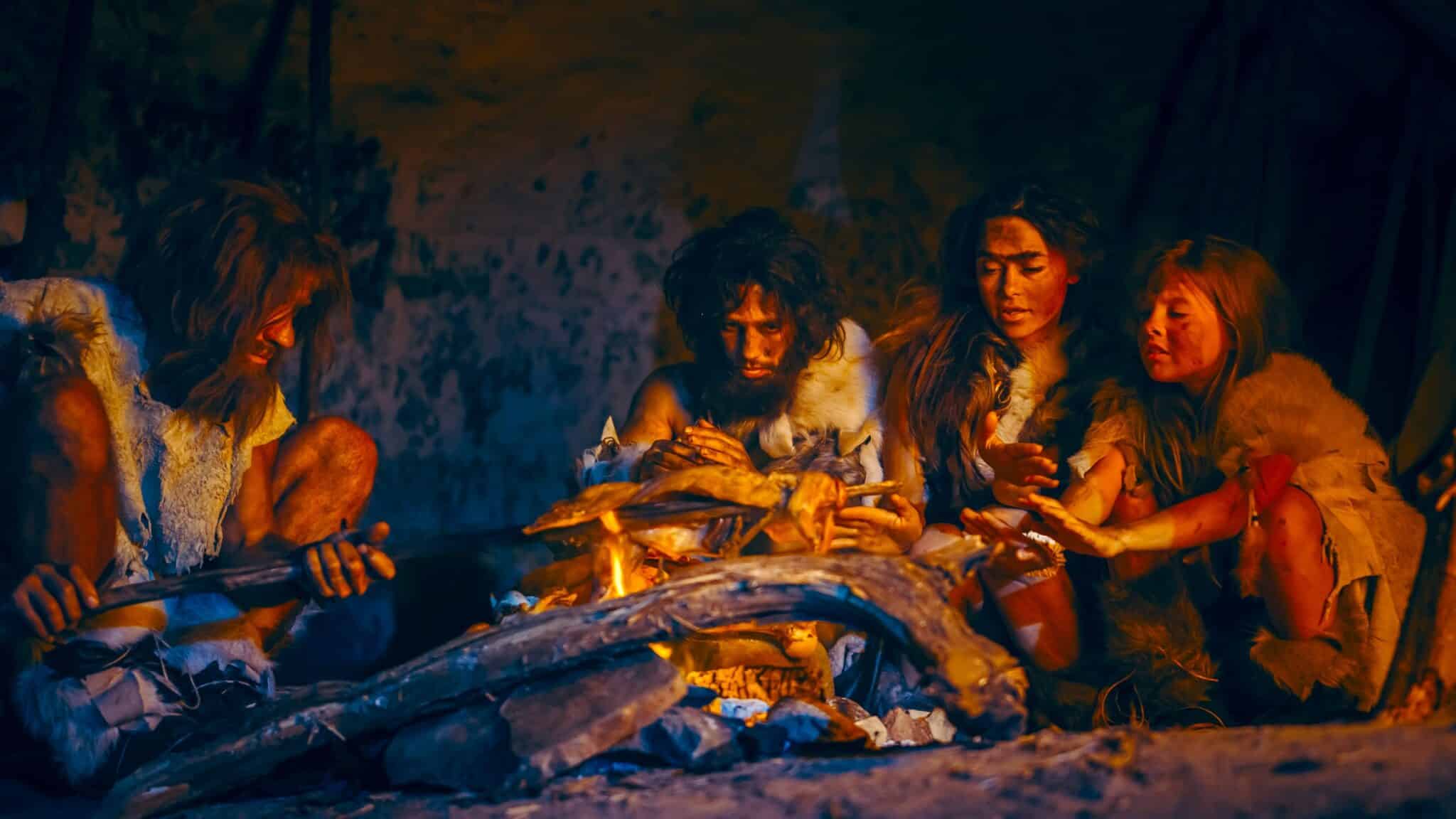
A hidden incompatibility in ancient blood
Our picture of Neanderthal decline often centers on conflict and climate, but a quieter force may have been at work in their veins. Researchers at the Zurich Institute of Evolutionary Medicine propose that a subtle change in the PIEZO1 gene altered how blood handled oxygen. That tweak, benign on its own, became perilous when mixed across human lineages. In hybrid pregnancies, this molecular misfit may have starved fetuses of oxygen, turning reproduction into a slow-motion trap.
A genetic union destined to fail
Around 45,000 years ago, Neanderthals and early Homo sapiens met, mingled, and mated, leaving small but persistent ancestry in modern genomes. The gene PIEZO1 existed in two flavors: an “ancient” version kept by Neanderthals, and a “modern” variant carried by sapiens. The ancient form likely held onto oxygen more tightly, a boon in cold, hypoxic environments. The modern form favored release into tissues, a better match for varied climates. Trouble arose when both versions coexisted in hybrids, especially where maternal biology sets the rules.
When oxygen turns from lifeline to liability
Pregnancy depends on the placenta, a finely tuned interface that trades maternal for fetal oxygen. If a mother’s hemoglobin clings too tightly to oxygen, less reaches the developing fetus. The result can be fetal hypoxia, growth restriction, or miscarriage—not in every pairing, but in a critical subset. The riskiest scenario likely involved a woman with a Neanderthal maternal lineage—carrying the ancient PIEZO1 context—who mated with a modern human or another hybrid. As one team member put it, “the PIEZO1 incompatibility could have accelerated the disappearance of Neanderthals by eroding their reproductive capacity with each interaction with modern humans.”
Genetic rust instead of a single blow
This model replaces catastrophe with corrosion—a biological “rust” that weakens a lineage over generations. Rather than strengthening Neanderthals through admixture, repeated gene flow may have undermined their fertility in subtle yet cumulative ways. The irony is sharp: a variant that once aided cold-weather survival could have become an Achilles’ heel when hybridization surged. Analogies exist in living humans, like Rh incompatibility, where maternal-fetal mismatch endangers pregnancies. In evolutionary terms, small reproductive penalties can compound, especially in small, isolated populations.
A plausible mechanism grounded in blood
The PIEZO1 protein helps red blood cells sense mechanical stress, shaping volume and oxygen-delivery dynamics. Even modest shifts in that regulation can ripple through placental exchange, where gradients and timings are everything. A hybrid fetus may inherit mismatched settings, with maternal blood that holds too much oxygen and fetal tissues that need it released. Across many unions, even a slight increase in fetal loss can reduce the effective population size of Neanderthals. In a species already fragmented by climate and resource pressure, that drag could be decisive.
What the hypothesis does—and doesn’t—claim
No one is arguing for a single-gene silver bullet, and the researchers are careful about scope. Climate volatility, competition with sapiens, pathogens, and cultural differences all likely mattered. Yet adding a maternal-fetal dimension clarifies why gene flow left limited Neanderthal legacy in us, and perhaps left them with reproductive costs. It shows that vulnerability can hide in an ordinary protein, waiting for a demographic shift to become fate.
- What’s new: a maternal-fetal incompatibility centered on PIEZO1 and oxygen handling in the placenta.
- What it predicts: elevated risk for hybrids with a Neanderthal-maternal background paired with sapiens fathers.
- Why it fits: parallels with known human incompatibilities, like Rh factor complications in pregnancy.
- What remains: testing across more ancient genomes, functional assays, and models of demographic impact.
The open edges of an ancient story
Each new ancient DNA dataset acts like a lantern, illuminating corners of a long and tangled history. Future work may uncover other “gray zones” of incompatibility, where the two human lineages could mix only at hidden cost. Extinction need not be loud to be final; it can arrive as a steady, silent erosion of fertility. Evolution is not always about superior brains or sharper tools; sometimes it is a variance in blood that makes all the difference. Neanderthals did not lose a war—they may have lost the quiet lottery of reproduction.