
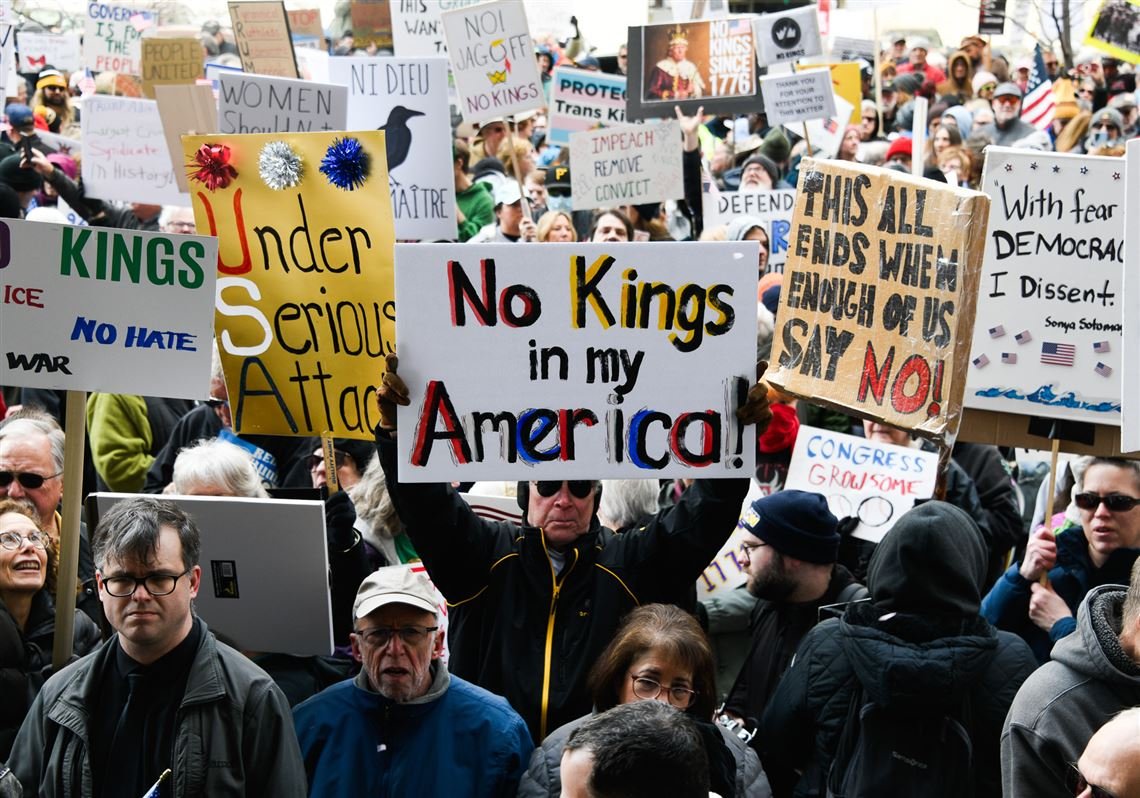
Washington.— Last Saturday, March 28, 2026, the United States and several capitals around the world were the scene of one of the most massive protest days in recent history. Under the slogan “No Kings” (Sin Reyes), it is estimated that more than 8 million people participated in about 3,300 coordinated events to voice their rejection of immigration policies, the warlike escalation against Iran, and what the organizers describe as an “authoritarian drift” of President Donald Trump.
The mobilization, also known as “No Kings Day 3.0,” was driven by a convergence of crises that have marked the first quarter of the year.
The main trigger has been the war against Iran, which last weekend reached five weeks of hostilities. The protesters denounced the direct economic impact on their pockets, with fuel prices at record levels, and the deployment of thousands of additional troops to the Middle East.
In addition to the above, outrage over domestic policies reached a critical point after a series of Immigration and Customs Enforcement (ICE) operations that resulted in fatal incidents.
The protests honored the memory of citizens and migrants who died in recent operations, demanding the end of mass roundups and the protection of civil rights.
Unlike previous marches focused in Democratic strongholds, the March 28 day stood out for its reach in traditionally conservative and rural areas. In Washington, D.C., thousands marched from the Lincoln Memorial to the National Mall with slogans such as “Regime change begins at home.” Figures such as Senator Chris Murphy and the science communicator Bill Nye led the speeches.
In Minnesota, in St. Paul, attendance reached a record 200,000 people, surpassing the turnout of the 2017 Women’s March. The rally featured Bernie Sanders and performances by Bruce Springsteen.
While there were also gatherings in California and Texas. In San Diego, about 40,000 people demonstrated, while in the Texas Valley (McAllen and Brownsville), border communities denounced militarization and harassment by federal forces.
The movement crossed borders, with solidarity demonstrations in cities such as Paris, Berlin and Rome. In Mexico, social collectives and human rights organizations joined the call for peace and respect for migrants, with notable demonstrations at strategic points in the capital and border cities, linking the local struggle for social justice with opposition to the White House’s foreign policy.
As the streets filled with cries of “No Kings,” the Trump administration maintained a confrontational stance. The president, via his social media, labeled the protesters as “paid agitators” and boasted of military advances on Jarg Island, Iran. However, political analysts note that the magnitude of these protests, combined with the TSA federal security workers’ strike and the longest government shutdown in history, places the Administration in an unprecedented political vulnerability heading into the rest of the year, an election year.