
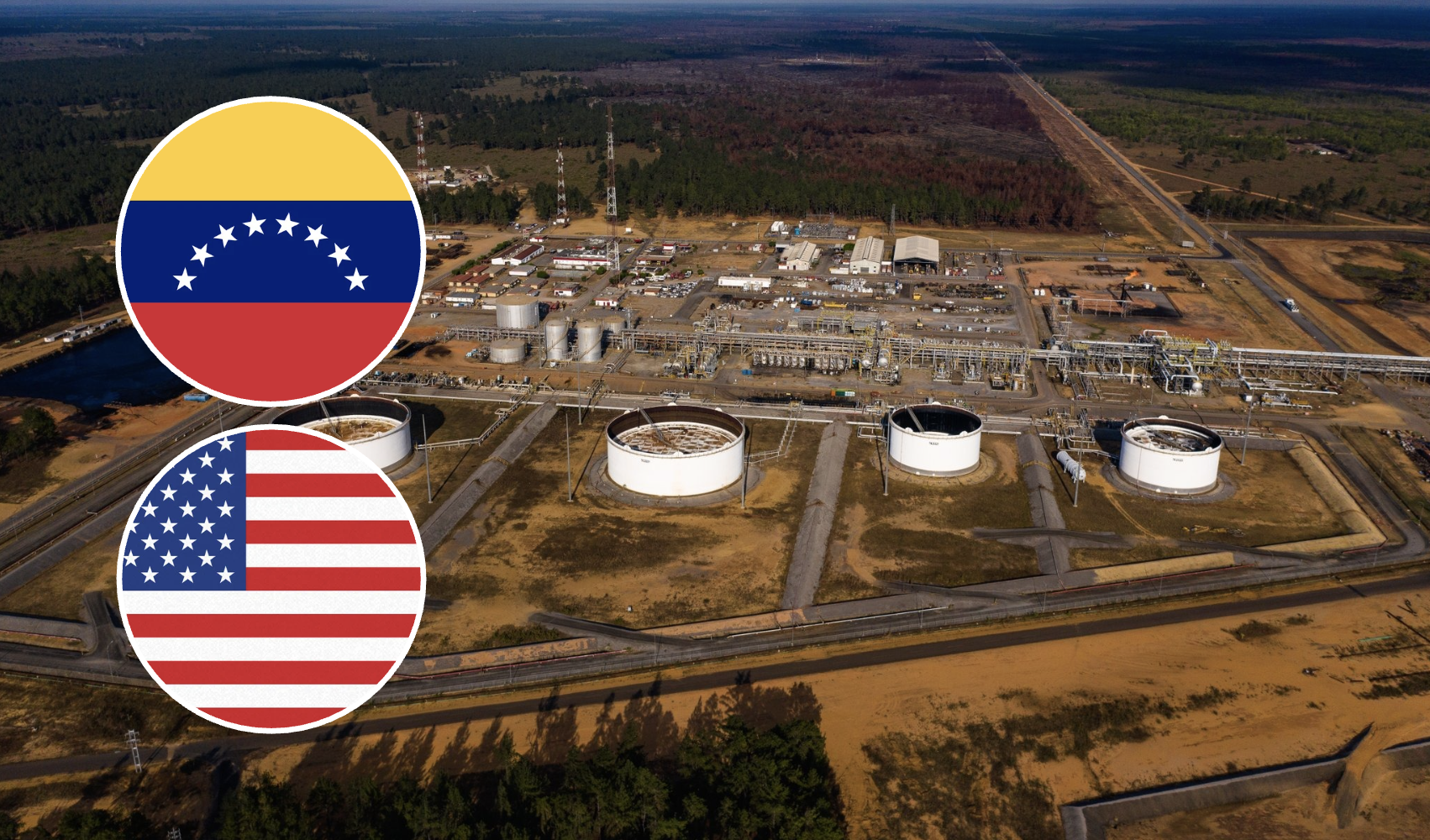
Washington.- The bilateral negotiations that culminated in the energy agreement between the administration of President Donald Trump and the operational authorities of Venezuela, led by the interim president Delcy Rodríguez, unfolded under a framework of high diplomatic secrecy.
The talks were conducted directly by Secretary of State, Marco Rubio, and Secretary of Defense, Pete Hegseth, in constant dialogue and with the approval of the interim president following the ousting of Nicolás Maduro.
The central objective was to secure the operational control of South American hydrocarbon resources through a contractual model of direct exploitation and permanent financial oversight.
The regulatory framework of the agreement contemplates the awarding of concessions for a period of 100 years over 17 strategic oil fields located in the Orinoco Petroleum Belt and the Lake Maracaibo basin, areas that previously included participation by Russian and Chinese state-owned consortia.
These assets will be managed by the private firm North American Blue Energy Partners (NABEP). Under the agreed institutional architecture, the company ceded to the United States Department of Defense a 35% equity stake in its parent company.
Furthermore, the State Department secured the guaranteed right to acquire 20% of total production at cost to ensure the continuous supply of the Strategic Petroleum Reserve, added to an exclusive right of first refusal on the remaining 80% of the output for processing in Gulf of Mexico refineries.
Economically and fiscally, the White House estimates that the corporate scheme will generate a private injection of 100 billion dollars destined for the reconstruction of the deteriorated energy infrastructure.
In turn, it is projected to raise about 200 billion dollars in royalties and taxes for the Venezuelan treasury over the next 25 years. Likewise, in the aim of guaranteeing transparency and avoiding resource diversion, Washington established direct auditing mechanisms, banking supervision and financial monitoring over the public accounts where revenues from international crude sales will be deposited.
For Delcy Rodríguez’s administration, the negotiation represented a pragmatic route to oxygenate the weakened Petróleos de Venezuela (PDVSA) industry, secure financial liquidity and validate the institutional continuity of the regime without the requirement of immediate commitments regarding an electoral calendar or a formal political transition.
The pact generated intense reactions across the Venezuelan political spectrum. Opposition leader María Corina Machado adopted a stance of strategic caution, noting that any multi-billion-dollar long-term investment will lack the required legal certainty until constitutional order and the rule of law are fully restored.
In contrast, various leaders of the opposition bloc and civil organizations harshly criticized the negotiation, labeling the concession of fields and foreign oversight as a theft of national sovereignty and questioning the legal validity of contracts signed by authorities whom they deem to be lacking democratic legitimacy.
The move prioritizes U.S. energy security over multilateral pressures for democracy in the region.