
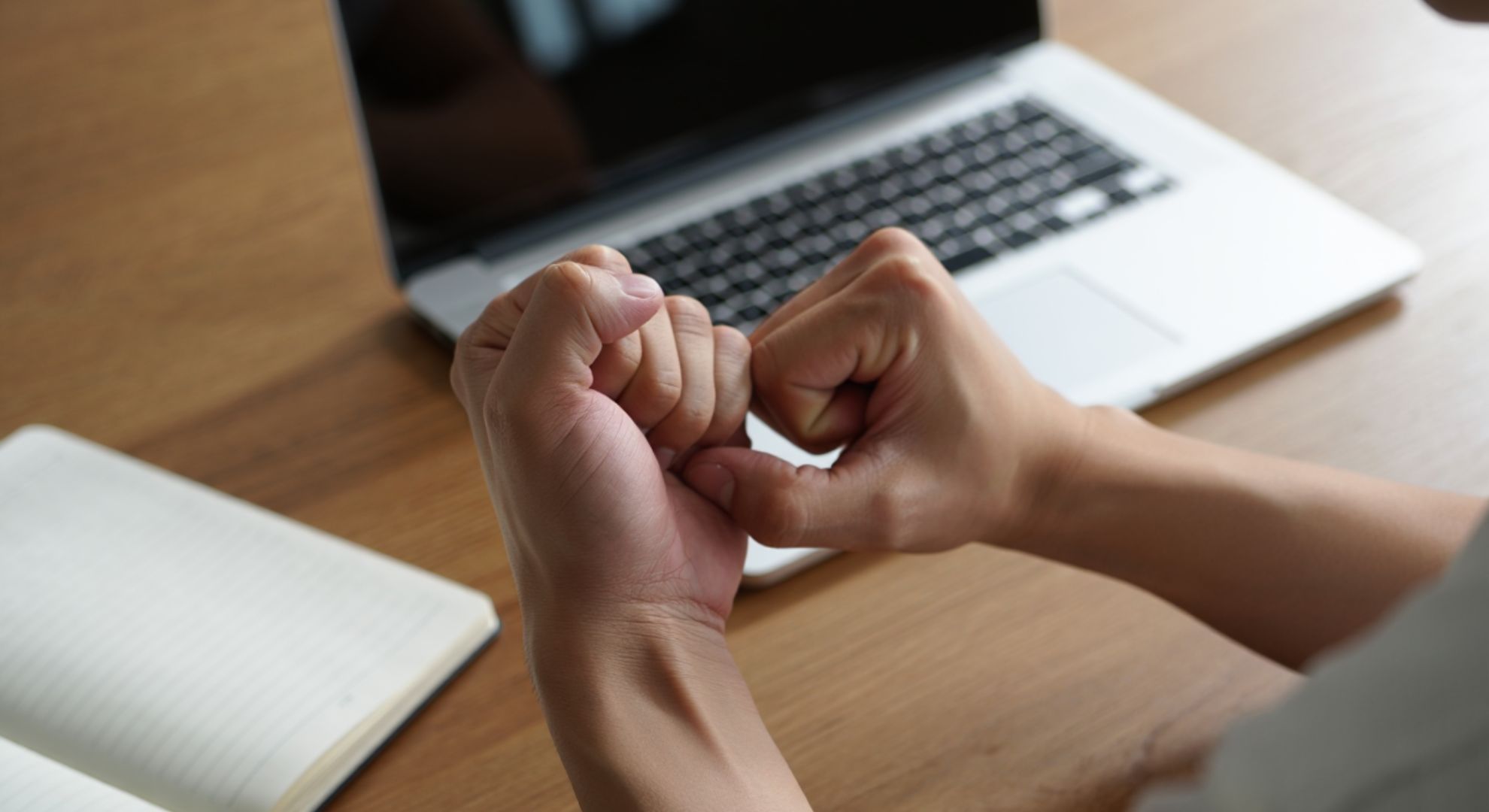
Some people flex their hands, inhale, and then—pop—there goes the familiar sound. That tiny ritual can feel oddly necessary, a switch that flips the brain into go-mode. Neuropsychology suggests this behavior is less about joints and more about regulation, attention, and a dose of learned comfort.
“Small acts can be big signals to the nervous system.” That’s how many clinicians frame everyday rituals, those micro-habits our brains adopt to mark beginnings and manage internal states.
The brain’s need for ritual
Rituals create predictability, and predictability lowers uncertainty. In the brain, reduced uncertainty means less noise and more focus. Cracking knuckles can become a personal anchor, a reliable cue that says, “Now we start.”
From a neuropsychological lens, this is “state priming.” The act itself becomes a conditioned signal that pairs with task engagement. Over time, the cue and the state fuse into a single package, so the body seeks the cue to unlock the state.
Sensory tuning and interoception
Knuckle popping delivers a neat sensory burst: pressure shift, quick sound, a tiny joint stretch. For some brains, that’s just-right stimulation to sharpen interoceptive awareness—the sense of what’s happening inside the body. “A crisp cue can reset a fuzzy signal,” as therapists sometimes say.
People who are naturally more sensation-seeking, or who manage fluctuating arousal, may rely on such tactile inputs. It’s a compact way to nudge the nervous system toward an optimal zone of alertness and control.
Attention, readiness, and predictive coding
The brain is a prediction machine. When you crack your knuckles, you generate a distinct event the brain can time and anticipate. That creates a clean “before/after” boundary that aids action initiation. The pop also functions like a quick “go” signal, enhancing motor readiness and narrowing attentional focus to the next step.
Think of it as a low-tech “implementation intention” in the body: “When I do X, I begin.” The action streamlines your transition from intention to actual behavior.
Habit loops and tiny dopamine rewards
Habits ride a cue–routine–reward loop. The cue (feeling about to start) triggers the routine (crack), which delivers a micro reward (relief, control, or just a satisfying sound). That reward confirms the loop in memory. Over time, the loop grows sticky, which is why the urge can feel compulsive even when you don’t strictly need it.
“In habit ecology, the smallest satisfaction can reinforce the largest behavior,” as behaviorists often note.
Anxiety, control, and superstition
When performance anxiety climbs, the brain hunts for control. A familiar ritual can downshift worry, offering the feeling that “I’ve done my prep.” Sometimes it veers into light superstition—not because you believe in magic, but because the ritual reliably soothes internal chaos.
This is not inherently pathological. It becomes concerning if the ritual expands, causes distress, or blocks timely action.
Clinical angles to consider
Frequent reliance on pre-task rituals can overlap with broader profiles—for example, ADHD (state regulation), autism spectrum (sensory seeking), tic disorders (motor urges), or OCD (compulsory relief). Context is key: Does it reduce function, raise distress, or consume significant time?
If yes, evidence-based supports include cognitive behavioral therapy, habit reversal training, stimulus control strategies, or sensory substitution tools.
Is it bad for your joints?
Research finds no solid link between knuckle cracking and arthritis. The sound comes from gas bubbles collapsing in synovial fluid, not from bones grinding. Some people report temporary soreness or mild swelling if they overdo it, but long-term joint damage isn’t well supported.
If there’s pain, reduced function, or persistent swelling, a medical check is wise—less for the cracking, more for underlying joint issues.
Small experiments to try
If the urge feels too strong, you can keep the ritual’s benefits while softening the grip it has on you:
- Swap the pop for a brief hand squeeze, a slow exhale, or a five-second pause.
- Time-box it: one gentle crack, then immediate action.
- Pair it with a verbal cue: “Now I begin,” to shift reliance from joint input to cognitive signal.
- Add a competing habit like finger tapping or wrist stretching that’s quieter and less compulsive.
What it usually means
Most often, it means your brain has found a compact way to manage arousal, mark a clean start, and boost a sense of readiness. It’s a bodily “bookmark” that tells attention where the next chapter begins. “Ritual is the mind’s handle on the moment,” and a knuckle pop is a very grabbable handle.
If it’s helping you feel steady, carry on with mindful limits. If it’s running the show, a few tweaks can return you to being the one in charge.