
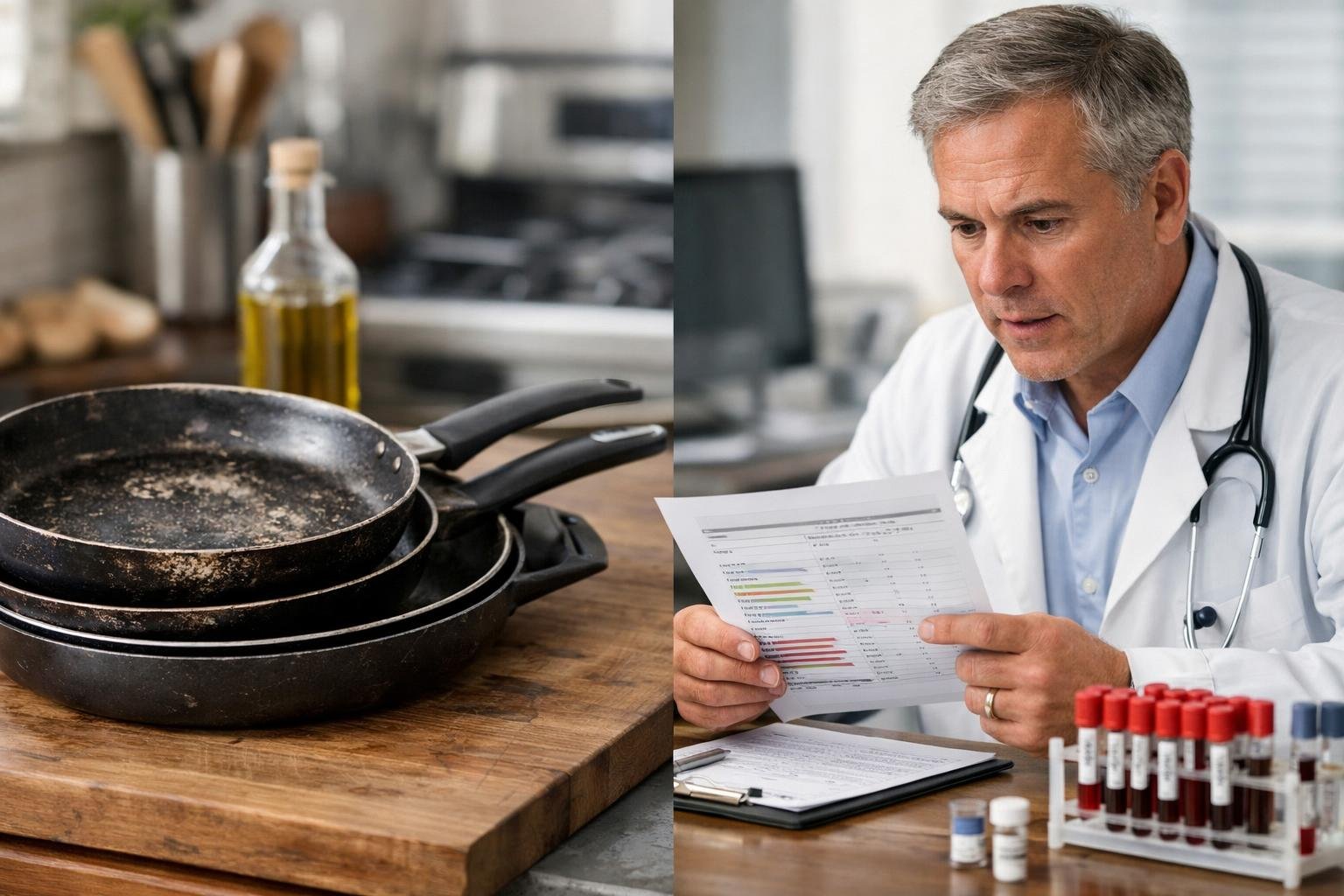
I made a quiet switch in my kitchen years ago, trading slick-coated skillets for stainless and cast-iron. The change felt small, but my latest blood tests startled my doctor. “Whatever you’re doing, keep doing it,” she said, studying a line on the lab report that usually climbs, not falls. A toxicologist later helped me understand why that result wasn’t a fluke—and why cookware can be a bigger deal than we think.
What I Swapped—and What I Noticed
I phased out my old pans, choosing uncoated steel for searing and enameled cast-iron for stews. Breakfast eggs moved to a well-seasoned carbon-steel skillet that turned slick with use. The shift wasn’t instant; there was a learning curve, and a few scorched omelets. But cleanup got easier, and food tasted cleaner, more honest.
A toxicologist I spoke with, Dr. L., told me, “Your cookware is a daily exposure choice, like water or air. Small habits become big numbers over years.”
How Nonstick Becomes a Health Story
Most classic nonstick pans rely on PTFE, a polymer known for slippery surfaces. Older manufacturing once used PFOA, a PFAS compound now largely phased out in many countries but still present in the environment. Modern PTFE pans are often labeled PFOA-free, yet many alternatives still fall under the broad PFAS umbrella—“forever chemicals” prized for durability and oil- and water-repellent traits.
“PFAS are incredibly persistent,” Dr. L. said. “They don’t break down easily, and some build up in blood over time.” Spill-resistant fabrics, certain food packaging, water-resistant cosmetics, and firefighting foams have also been major sources. That means cookware isn’t the only culprit, but it is one people touch every day.
Temperature and wear also matter. PTFE is stable at typical cooking temperatures, but when overheated it can release ultrafine particles and fumes that irritate lungs—a risk veterinarians warn about with pet birds. A badly scratched surface can shed flakes, especially if you use metal utensils or rapid thermal shocks.
What My Blood Work Suggested
PFAS can be measured in serum, with some compounds having half-lives of years, not days. My recent results showed lower levels than my last check, enough to make my physician pause and ask questions. I had also changed my water filter and food-storage containers, so no one could credit the pans alone.
“Biomonitoring is a moving target,” Dr. L. cautioned. “Still, if someone reduces multiple pathways—like cookware, water, and greasy-packaged foods—you often see a gentle downtrend over time.” She added, “Dose matters more than drama. The goal is steady, sane risk reduction.”
Keeping Perspective Without Shrugging It Off
It’s tempting to treat every kitchen swap as a miracle or a myth. The truth sits in the middle. Not all nonstick is equally risky, and not all alternatives are equally practical. Ceramic-coated pans avoid PTFE, but some coatings chip early, pushing you to replace them more often. Stainless lasts decades, but demands better heat management and a splash of fat. Cast-iron excels at heat retention, though it’s heavy and needs care.
“Risk isn’t binary,” Dr. L. said. “It’s a sequence of decisions. If you keep a PTFE pan for quick eggs, don’t overheat it, don’t scratch it, and replace it when the surface deteriorates. That’s meaningful risk control.”
If You Want to Lower Exposure
Here are simple steps that helped me reclaim control without losing my love of cooking:
- Choose durable, uncoated cookware for most tasks: stainless for searing, cast-iron for browning, carbon steel for quick, slick sautés. Keep one high-quality nonstick only for delicate foods, and use it at modest heat.
Smart Habits That Pay Off
If you do use nonstick, keep temps moderate, preheat with food or oil already in the pan, and avoid empty, high-heat blasting. Use silicone or wooden utensils, hand wash gently, and retire the pan if it’s deeply scratched or the coating turns dull.
Beyond cookware, scrutinize your water source and consider a certified filter for PFAS if your area reports concerns. Store food in glass or stainless containers when possible, and limit greasy takeout in paper-like wraps that may be treated.
What Surprised My Doctor
I wasn’t aiming for a radical detox, just better gear and fewer unknowns. Over years, those choices added up to numbers that moved in a healthier direction. My physician’s surprise wasn’t about a single hero product; it was about a pattern of small, repeatable actions.
“People wait for perfect evidence before they act,” Dr. L. told me. “But public health often favors early, low-cost changes—especially when alternatives are easy and durable.”
The Quiet Power of Everyday Tools
A pan is just a tool, but tools shape daily exposure. Swapping surfaces nudged me toward better technique, steadier heat, and food that tastes more alive. Most importantly, it reminded me that health is often a trajectory, not a single test.
If you’re curious, start with one swap, one filter, one habit you can keep. Let the data, your kitchen, and your own body tell you what matters. And if your next labs surprise your doctor, you’ll know that quiet choices can leave a loud trace.