
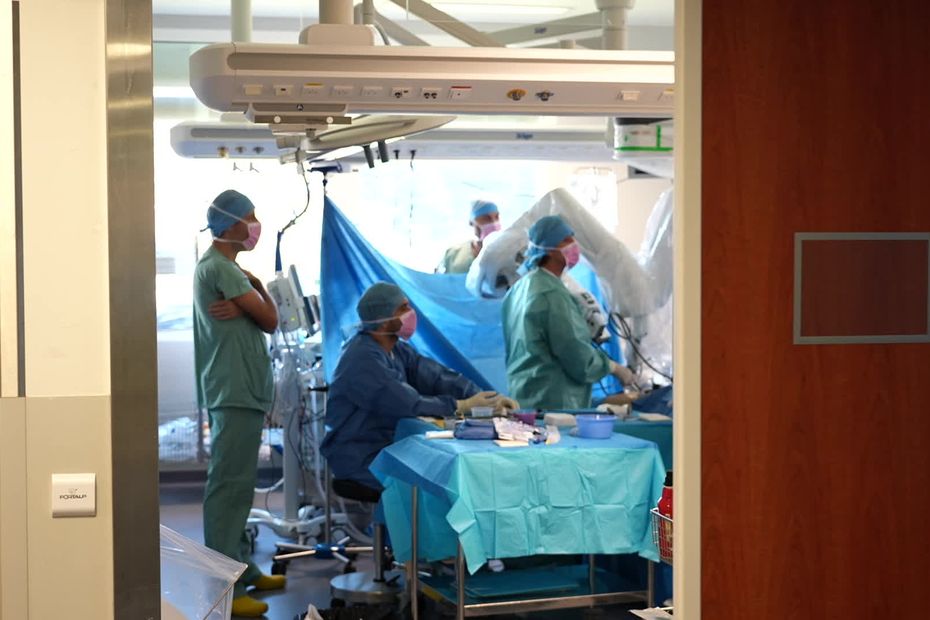
A leap forward in minimally invasive care
At the cancer center in Marseille, surgeons now perform complex procedures through a single incision, often leaving just one small scar. This breakthrough is enabled by the Da Vinci Single Port, a robotic platform designed to deliver greater precision while minimizing tissue trauma. For patients, that translates into less pain and a faster return to everyday life.
One incision, many advantages
Traditional laparoscopy typically requires multiple ports, each adding its own small scar and potential discomfort. With the single‑port system, three articulated instruments and a 3D camera pass through one compact entry point. The result is a smaller overall footprint inside the body and a gentler surgical journey.
Key anatomy can be better preserved with this approach, especially in narrow, deep spaces. In prostate surgery, that means improved protection of the sphincter and delicate neurovascular bundles. For many patients, these refinements support better continence and sexual function after surgery.
Precision you can see and feel
From a seated console, the surgeon pilots the robotic arms with intuitive joysticks that translate tiny hand motions into ultra‑steady movements. A high‑definition 3D view is often magnified, letting the operator distinguish very fine details with confidence. The system helps reduce natural hand tremor, supporting clean, deliberate dissection.
“Seeing more means touching less,” notes one senior surgeon, highlighting the link between visualization and tissue preservation. With enhanced depth perception and instrument articulation, the robot facilitates precise work in tight corridors that are difficult to reach by standard means.
Faster recovery, fewer complications
Patients typically experience less post‑operative pain and a lower risk of wound‑related issues with a single incision. Many go home sooner, often after just one night of observation. Smaller access can also mean fewer adhesions and less disruption to surrounding structures.
As one recent patient put it, “One scar and an easier recovery—that made all the difference.” For individuals navigating a cancer diagnosis, a smoother recovery can preserve momentum in their broader treatment plan.
What patients can expect
- A single, small incision instead of several ports
- Reduced post‑operative pain and swelling at the surgical site
- A shorter hospital stay and quicker return to daily activities
- High‑definition 3D visualization for surgical precision and tissue sparing
- Potentially better functional outcomes in urologic procedures, including continence
- Improved surgeon ergonomics, which can support consistent performance
Designed for the whole care team
The system offers ergonomic gains for the surgeon, who works seated with forearms supported and posture optimized throughout long cases. These comforts can help maintain steady focus and dexterity across demanding clinical days. Behind the console is a fully trained team, whose coordination ensures safe, efficient patient care.
Training covers the entire workflow, from patient positioning to port placement and docking, ensuring each step is consistent and reproducible. Standardized checklists and simulation‑based practice build team confidence while maintaining rigorous safety.
From urology to broader specialties
The single‑port platform is already transforming urology, particularly in procedures such as prostatectomy. Its benefits naturally extend to other fields where precision and limited access are critical. Next up are breast surgery (senology), gynecology, and select digestive procedures at the center in Marseille.
Each specialty will adapt the single‑port workflow to its unique anatomical challenges. As teams refine technique and protocols, more patients will become candidates for highly targeted, minimally invasive care. The goal is consistent: reduce trauma while maximizing outcomes.
An investment with impact
The cancer institute has invested around €2 million to bring this technology to its patients. It is among a small number of sites in France—and the first in its region—to deploy a single‑port robotic system. With each procedure, the center gathers outcomes data to document safety, effectiveness, and long‑term benefits.
In the years ahead, the combination of careful training, rigorous evaluation, and multidisciplinary adoption should broaden access to single‑port surgery. For patients, the promise is clear: one scar, less pain, faster healing, and a return to normal life with greater confidence.
