
A catastrophic takeoff
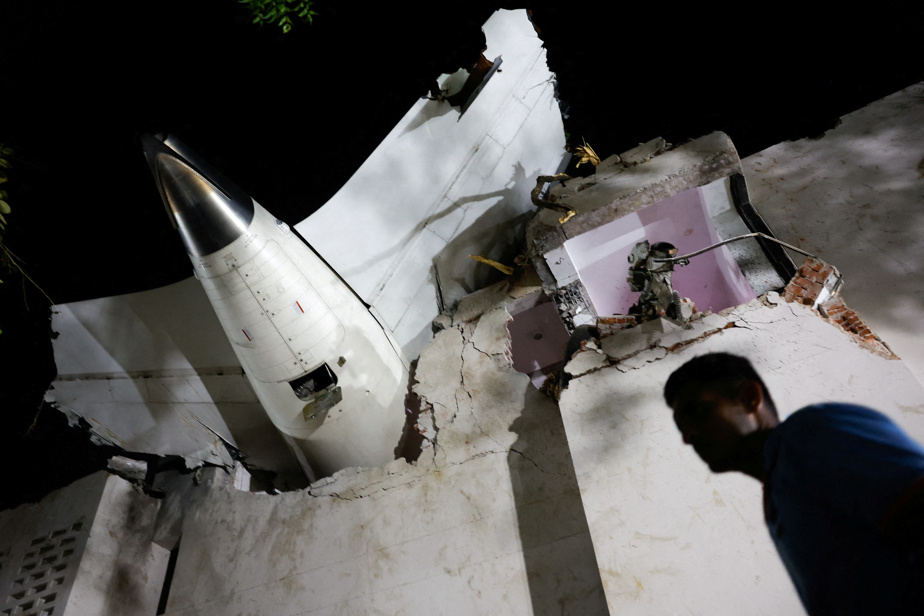
A Boeing 787-8 Dreamliner operated by Air India crashed shortly after takeoff from Ahmedabad, en route to London. The wide-body jet went down near the city’s public hospital, striking residential buildings before erupting in flames. At least 265 people are dead, including several on the ground, according to local police. Authorities confirmed a single survivor among the 242 occupants, as rescue crews worked through the night.
What happened in the minutes after departure
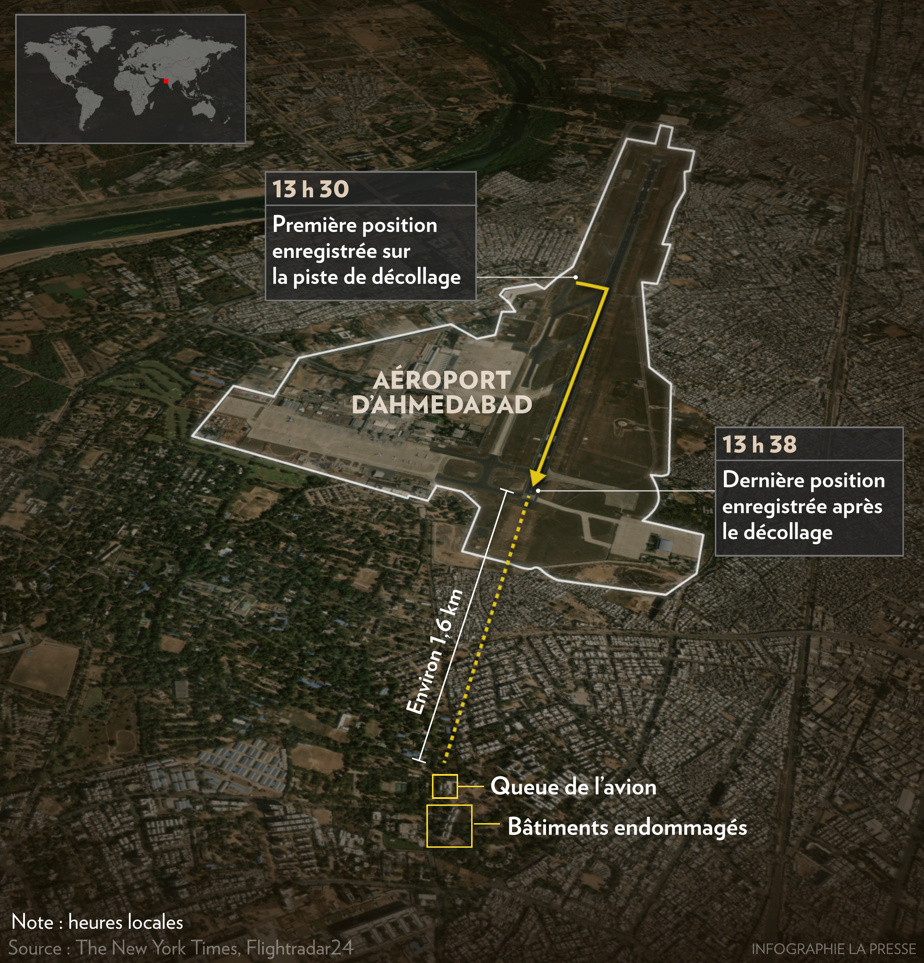
The flight, designated AI171, departed around 1:39 p.m. local time and almost immediately issued a distress call. Witness videos appear to show the aircraft struggling to climb, with engines sounding strained before a steady descent. The jet impacted structures near the Ghoda Camp district, in a densely populated area close to the airport. Emergency responders battled intense fires and cordoned off the crash site while searching for victims.
(Credit: SAM PANTHAKY, Agence France-Presse)
A lone survivor and the search for answers
Air India said the only identified survivor is a British national of Indian origin. Indian media reported he had been seated in 11A, though those details remain under verification by officials. Hospital staff described him as conscious and able to communicate, while investigators began planning interviews to establish a timeline. For families waiting on news, even a single survival offered a sliver of hope amid profound loss.
“I have no idea how I got out of that plane,” the survivor reportedly told his brother, who relayed the account to the British press.
Scenes of devastation in a crowded neighborhood
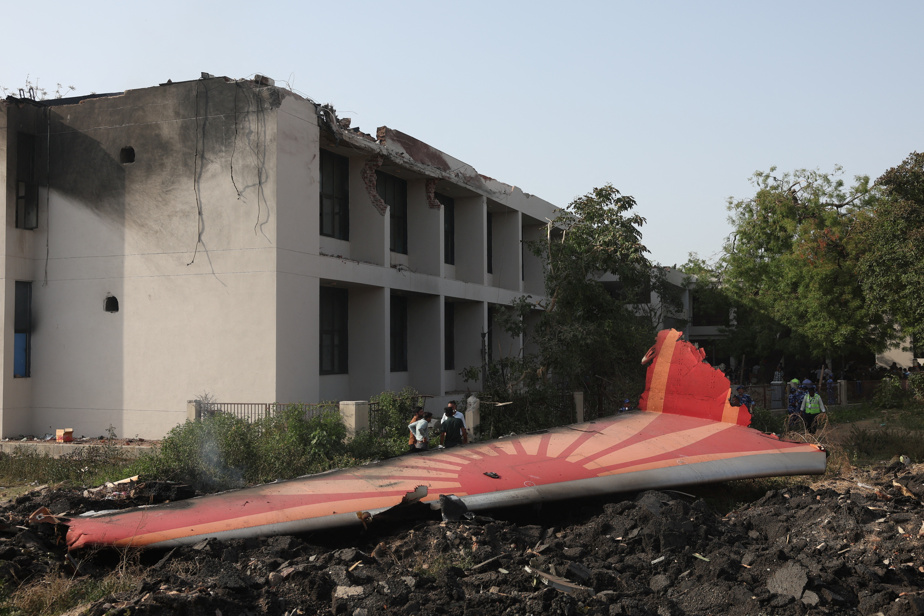
Firefighters worked through drifting smoke, helped by search dogs combing hot, twisted debris. Several adjacent buildings suffered structural damage, and residents described panic as people fled stairwells and crowded corridors. The airport temporarily suspended operations while crews cleared approach and departure paths. Ahmedabad, home to roughly eight million people, places its international airport within a tightly woven urban grid.
(Credit: AMIT DAVE, Reuters)
Early investigation and technical considerations
India’s Aircraft Accident Investigation Bureau (AAIB) has opened a formal inquiry. Investigators from the United Kingdom and the United States are expected to support the technical work, given the aircraft’s origin and certification. Experts caution it is far too early to determine a definitive cause, though analysts noted the 787 can fly on a single engine, raising questions about a potential dual-engine issue. Bird activity, fuel contamination, or control-system anomalies are among scenarios investigators will consider, pending data from the onboard recorders.
Key avenues of evidence likely to be examined:
- Flight Data Recorder for engine parameters and controls
- Cockpit Voice Recorder for crew actions and alerts
- Maintenance logs and recent inspections
- Air traffic control transcripts and radar tracks
- Wreckage analysis for bird-strike or ingestion signs
- Fuel quality and uplift records
Official responses and support for families
Indian Prime Minister Narendra Modi called the catastrophe heartbreaking and pledged full assistance to those affected. The United Kingdom’s leadership extended condolences to passengers and their families, while U.S. officials signaled readiness to provide technical aid. Air India established an emergency cell to assist relatives and coordinate information. State authorities requested DNA samples to help identify victims, a painstaking but essential step for loved ones seeking closure.
(Credit: Source via La Presse; photographer per original article)
The Tata Group, which owns Air India, announced financial support for bereaved families and committed to covering medical care for the injured. At London Gatwick, a reception center was opened to provide private spaces for grief and official updates. Counselors and consular teams are coordinating cross-border next-of-kin assistance, reflecting the flight’s international manifest.
A rare disaster for the Dreamliner
This appears to be the first total hull-loss involving a 787 since the type entered service in 2011. Aviation historians note that while no aircraft is immune to failure, the Dreamliner’s safety record has been comparatively strong. Shares of Boeing reportedly fell in New York trading after early news of the crash. Industry attention will now pivot to the upcoming Paris Air Show, where safety and program confidence will dominate questions for executives and regulators.
India’s aviation history bears several painful chapters, including a fatal 2010 accident on landing and a 1996 mid-air collision near New Delhi. Each tragedy sharpened procedures, training, and oversight, contributing to a steadily improving safety record. Investigators will aim to translate today’s hard lessons into future protections, ensuring risks are better understood and mitigated.
Grief, resilience, and the path forward
In Ahmedabad, families, neighbors, and responders share a moment of collective grief, shaped by loss and quiet heroism. Communities have mobilized food, shelter, and blood donations, underscoring the power of civic solidarity. As the AAIB analyzes recorders and reconstructs a minute-by-minute narrative, the goal is not only to explain what happened, but to prevent it from ever happening again. Out of wreckage and sorrow, aviation seeks the only acceptable answer: knowledge that saves future lives.