
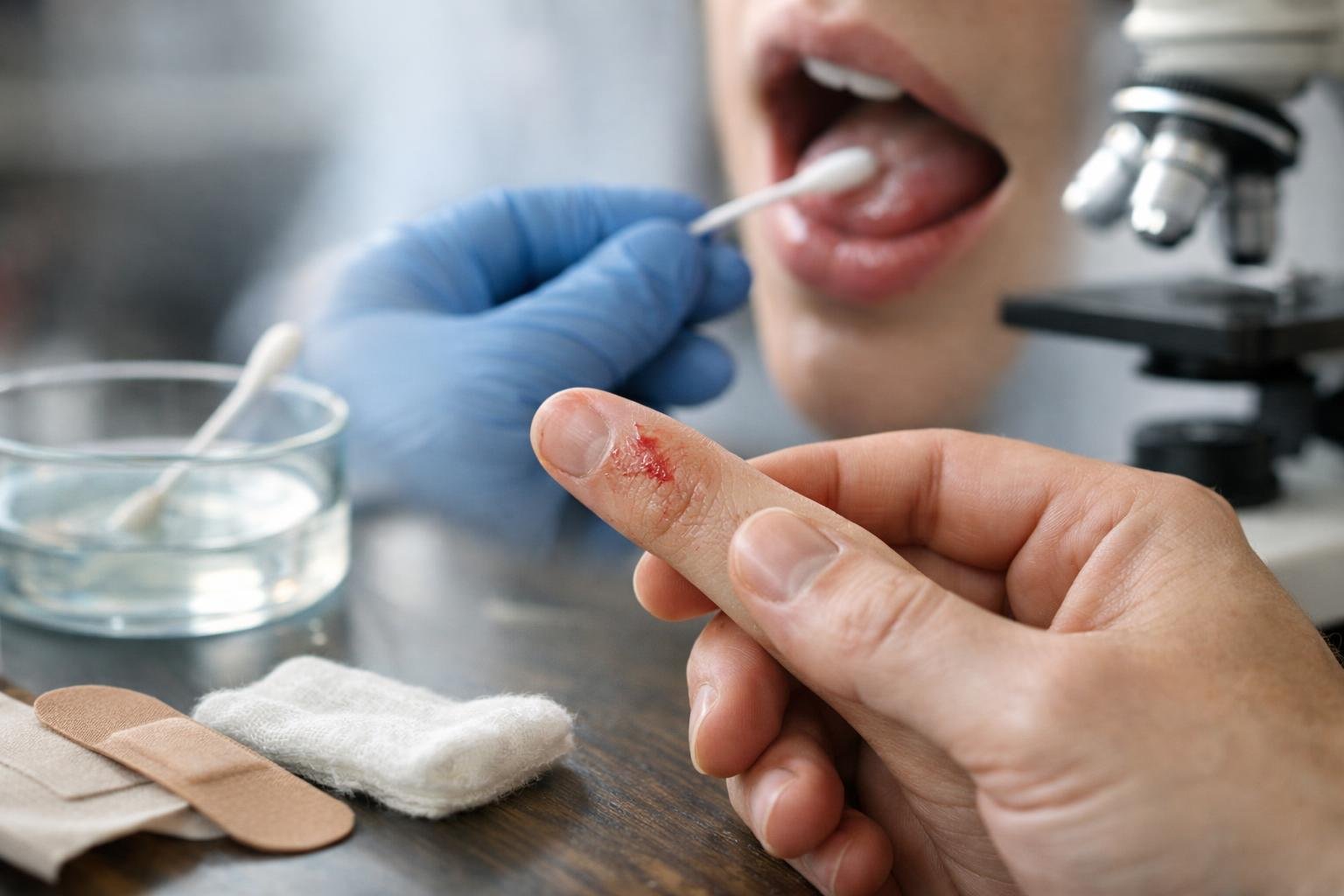
Most of us have noticed that a cut on the tongue or the cheek seems to close quickly, while a nick on the knuckle lingers for days. That isn’t just folklore. Hidden in the mix of saliva is a small but potent enzyme that may tip the balance toward rapid repair. As one researcher put it, “Saliva isn’t just spit; it’s a portable pharmacy.” The discovery is turning a messy, everyday fluid into a surprisingly elegant solution for tissue healing.
The quiet chemistry of saliva
Saliva is not merely water and mucus. It carries a roster of molecules—from antimicrobial enzymes to tiny growth‑promoting peptides—that collaborate in constant maintenance of the mouth’s fragile lining. Among these molecular players, scientists have homed in on kallikrein, a little‑known protease present in human saliva.
Kallikrein acts like a switch. By cleaving specific proteins, it releases signals that dial up blood flow, recruit immune cells, and nudge epithelial cells to migrate across a wound. “It’s a biochemical domino effect,” says one investigator. “A small cut triggers a disproportionately large response.”
How a protease can hurry repair
When kallikrein slices its targets, it generates bradykinin‑like molecules that widen tiny vessels and increase local perfusion. More oxygen, more nutrients, and more cellular traffic arrive at the damaged site. The same cascade can unmask bound growth factors in the extracellular matrix, effectively removing the brakes on cell division and migration.
The enzyme’s proteolytic activity also remodels the immediate scaffold around a wound, clearing debris and creating micro‑paths for epithelial sheets to close the gap. In lab models, oral‑mucosal repair can proceed several‑fold faster than comparable skin injuries, and kallikrein‑driven signaling appears to be one of the major reasons. As a senior author noted, “Speed isn’t just about cells moving; it’s about clearing space and sending the right messages.”
Why healing rates differ dramatically
Not all wounds, or all people, are the same. Levels of salivary kallikrein vary by genetics, overall health, hydration, and even circadian timing. A dry mouth, for instance, dilutes the enzyme’s advantage, while robust flow bathes tissues in a richer cocktail of protective factors.
Context matters, too. The mouth’s constant moisture, dense vasculature, and unique microbiome create an environment primed for repair. By contrast, exposed skin often contends with friction, intermittent dryness, and wider temperature swings, all of which can slow closure. “Think of oral tissue as a well‑staffed clinic, always open,” one clinician quips. “Skin is a pop‑up tent that sometimes runs out of supplies.”
From lab bench to bedside
The enzyme’s profile suggests clear applications. If kallikrein or its downstream signals can be packaged safely, we could imagine smart dressings or topical gels that accelerate closure in stubborn wounds—from diabetic ulcers to surgical incisions. Oral‑care rinses that gently boost physiological repair while keeping microbes in check are another logical target.
Caveats remain. Too much protease can tip into unwanted inflammation or degrade fresh tissue. Any therapeutic blend has to balance speed with structural quality, ensuring the new layer is not just fast, but strong. “We want a well‑organized patch, not a hurried scab,” cautions a wound‑biology expert.
What you can do now
While science turns enzyme insights into tools, a few evidence‑aligned habits can support faster, cleaner healing day to day:
- Keep wounds slightly moist with appropriate dressings; a hydrated surface helps cells migrate
- Avoid harsh, repeated antiseptics on healthy tissue; overuse can damage the healing edge
- Prioritize protein‑rich nutrition, vitamin C, and adequate sleep to fuel cellular repair
- Manage chronic conditions and avoid smoking, both known to impair blood flow and tissue quality
Nature’s hint, modern caution
Animals lick their wounds, and for good reasons—moisture, mechanical clearing, and bioactive molecules can all help. But human mouths carry complex bacteria, and direct licking of open skin can introduce avoidable risks. The wiser take‑home is not to copy the act, but to isolate the helpful ingredients—like kallikrein—and deliver them with clinical precision.
The broader message is unexpectedly optimistic. Our bodies already stock solutions to common problems; we often need only to locate the key molecule and amplify it the right way. A small, underestimated enzyme in an everyday fluid might soon inspire a new class of quiet, effective therapies—helping stubborn wounds close faster, with less pain, and with stronger final outcomes. As one scientist summed it up, “Sometimes the biggest advances begin where we least expect—in a drop of ordinary saliva.”
