

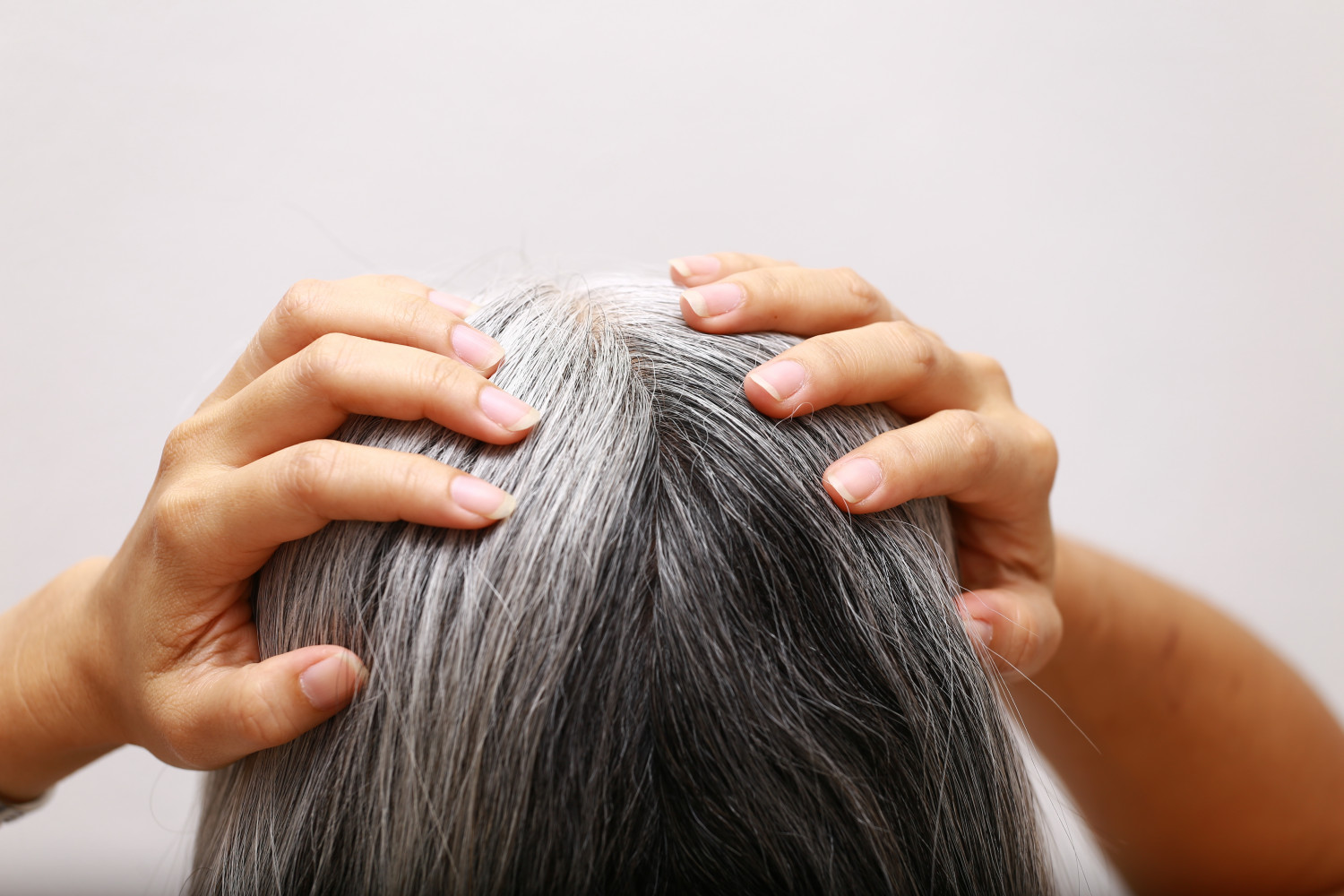
Strands of silver can tell a surprising story about the body’s inner defenses, hinting that cellular stress responses are hard at work. Rather than a simple badge of aging, gray hair can reflect how tissues respond to damage, shifting resources toward protection and away from pigment. That doesn’t make gray hair a diagnostic tool, but it does frame it as a visible trace of deeper biology.
What turns hair gray inside the follicle
Each hair’s color comes from melanin, crafted by pigment-producing melanocytes. These cells arise from melanocyte stem cells, a small, specialized pool that sits in the hair-follicle niche and renews with every growth cycle. When those stem cells sustain or sense damage, they can stop making pigment and push the follicle toward gray.
The trigger is often genotoxic or oxidative stress, the same broad category of insults—UV light, inflammation, or metabolic by-products—that challenges other tissues. In hair, a protective response can favor cellular safety over coloration, shifting stem cells away from pigment duty.
What scientists found about stress, gray hair, and cancer risk
In recent work from the University of Tokyo, researchers mapped how melanocyte stem cells react to distinct forms of stress. They observed two divergent fates: expansion, which can fuel malignant potential under the wrong signals, and “seno-differentiation,” a protective path that curbs proliferation and reduces pigment. The latter outcome looks, to the naked eye, like graying.
Crucially, the study does not claim gray hair prevents cancer, nor that every gray strand flags a specific threat. Instead, it shows that certain stress-responsive pathways favor defense-first choices, trading hue for cellular security. In the hair follicle, that trade can be a visible by-product of a deeper safeguard.
“Gray hair doesn’t predict illness; it often reflects the body’s choice to prioritize safety over pigment,” a perspective that captures the study’s core message without turning hair into a medical meter.
Why the immune system and oxidative stress matter
Hair follicles are tightly wired to local immunity, which senses danger and coordinates repair. When signals like reactive oxygen species climb, melanocyte stem cells may dial down pigment work, limit risky division, and adopt a quieter state. That pivot resembles other protective responses across organs, where survival sometimes means sacrificing nonessential functions.
This overlap helps explain why stress, inflammation, and aging connect graying and disease at the cellular level. The same molecular cues that guard genomic integrity can lighten a strand, reminding us that visible aging and internal defense are often linked.
What gray hair can and cannot tell you
Gray hair is common, normal, and influenced by genes, age, and lifestyle. It cannot diagnose a specific disease, and it does not measure how “healthy” your body is. But it can mirror how your tissues handle stress, offering a visible cue that defense pathways are active.
Consider a few grounded takeaways:
- Gray hair is a normal outcome of stem-cell aging and stress-response trade-offs, not a direct alarm.
- One person’s rapid graying could reflect genetics, nutrient status, or environmental factors like smoking.
- If gray hair appears alongside other changes—weight loss, extreme fatigue, new skin lesions—seek professional evaluation.
- Managing sleep, diet, and stress supports broader cellular health, whether or not hair stays pigmented.
How to think about prevention and care
No topical can reliably “reverse” true graying, because the shift often reflects a stem-cell fate change. Cosmetic dyes restore visible color, but they do not alter the underlying biology of follicle aging. The most meaningful steps live upstream, where systemic habits shape oxidative and inflammatory load.
Evidence-backed basics—regular exercise, a plant-forward diet, sun protection, tobacco avoidance, moderate alcohol, and good sleep—tend to lower stress signals that push cells toward risky paths. They won’t guarantee darker hair, but they support the same networks that guard DNA and tissue function.
The bottom line
Gray hair is not a verdict on health, but a readable trace of how cells navigate hazards. When the follicle senses damage, it may choose caution, tamping down pigment to favor stability. That choice can leave silver at the surface, even as it helps maintain order below the skin.
Seen this way, graying is less a failure of youth and more a record of biological wisdom—the body’s preference for safety over show. The shine of silver strands, then, can be a reminder that resilience often looks quiet, practical, and sometimes beautiful.