
Inside the teardown
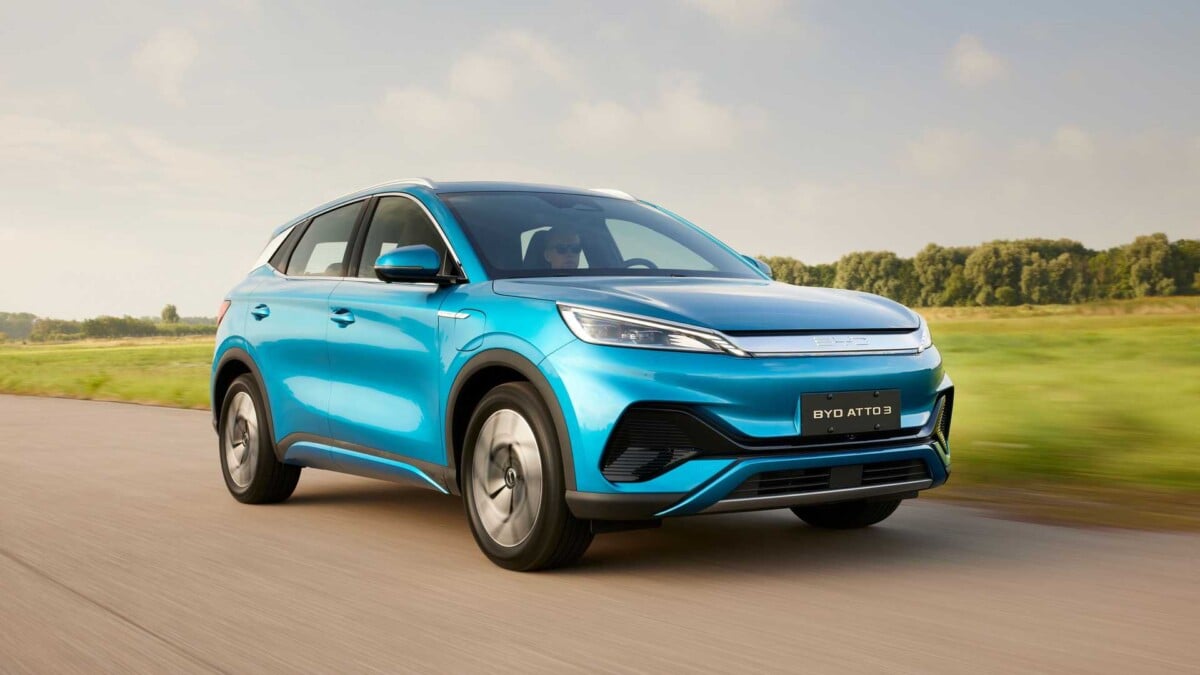
A group of Japanese engineers stripped a BYD Atto 3 down to its bones to understand the brand’s unusually low pricing. What they found was a remarkably integrated approach to manufacturing and an obsession with shaving costs without sacrificing core capability. The car’s architecture felt purpose-built for scale, with components designed to be assembled quickly and maintained with minimal complexity.
The team observed that almost every major part was made in-house, a decision that keeps margins tight and supplier exposure low. Apart from glass and tires, very little came from outside partners—a striking contrast with traditional automotive ecosystems that rely on sprawling supplier networks.
What they found, at a glance
- Extensive in-house component production that limits markups and shortens lead times.
- Consolidation of parts into modular assemblies, reducing complexity and assembly steps.
- A highly integrated e-Axle that merges motor, inverter, and gearbox into one compact unit.
- Standardized fasteners and connectors that speed up factory workflows.
- Tight electronics packaging with simplified wiring harnesses and fewer control modules.
- Aggressive cost control on interior materials while keeping perceived quality competitive.
- Strategic battery leadership, with BYD’s Blade technology central to cost and safety claims.
Vertical integration as a cost weapon
BYD’s strategy leans on vertical integration to a degree rarely seen in modern carmaking. By producing batteries, power electronics, motors, and even control software in-house, the company reduces the cumulative markup that occurs when multiple suppliers take their cut. That approach also accelerates iteration, allowing rapid updates across hardware and software.
Industry data places BYD near the top of global battery manufacturing, a domain that represents roughly a third of an EV’s total cost. Owning that technology stack gives the company precise control over chemistry, packaging, and supply security—advantages that directly translate into pricing power.
The e-Axle advantage
One standout is the compact e-Axle, a tightly integrated drive assembly that replaces discrete components with a unified module. Fewer parts mean fewer interfaces, fewer failure points, and a simpler production flow. The engineers noted lean thermal management and efficient power electronics that reduce wiring mass and simplify cooling paths.
This kind of integration also helps with weight and space, improving packaging for cabin and cargo without inflating the bill of materials. For a volume EV, those millimeters and grams become real money as they multiply across hundreds of thousands of units.
Logistics built for scale
Beyond the factory floor, BYD has optimized logistics with a surprisingly hands-on approach. The company even operates its own maritime fleet to move vehicles, bringing outbound shipping into its integrated model. That reduces dependency on volatile carrier markets and adds predictability to delivery timelines.
In Europe, the brand is pushing local production in Hungary to tame tariffs and shorten supply lines. Regional manufacturing makes pricing more resilient and can adapt products faster to local regulations and consumer expectations around safety and features.
A different cost philosophy
The teardown underscored a design language that prizes manufacturability and repeatability. Parts were shaped for robotic assembly, with alignment features and finishes that favor speed over ornament. Where it mattered—battery integration, drivetrain efficiency, and control systems—the choices felt deliberately premium for performance-per-dollar.
One participant summarized the ethos succinctly: “We kept expecting a hidden compromise, but the real surprise was how many small efficiencies had been stacked into big savings.”
Implications for competitors
For established automakers, the lesson is about ownership of the value chain and the discipline to cut interfaces. BYD’s model shrinks supplier complexity and transforms procurement from a negotiation sport into a design problem solved upstream. That’s a harder pivot for companies tuned to multi-supplier architectures and long change-control cycles.
Still, the approach is not without trade-offs. Deep integration increases fixed costs and raises the stakes when a subsystem needs a major rework. It also demands world-class coordination across battery science, semiconductors, software, and heavy industry—a portfolio few manufacturers currently command.
The road ahead
As EV adoption accelerates, BYD’s playbook looks durable: control the battery, integrate the drive unit, simplify the interiors, and master logistics end to end. That formula enables compelling prices while preserving performance essentials that matter to drivers. If others can’t replicate the stack, the cost gap may become a structural advantage rather than a momentary edge.
From the Japanese engineers’ bench to the global market, the message is clear: the future of affordable EVs belongs to those who collapse complexity and keep the value chain under one coordinated roof.