
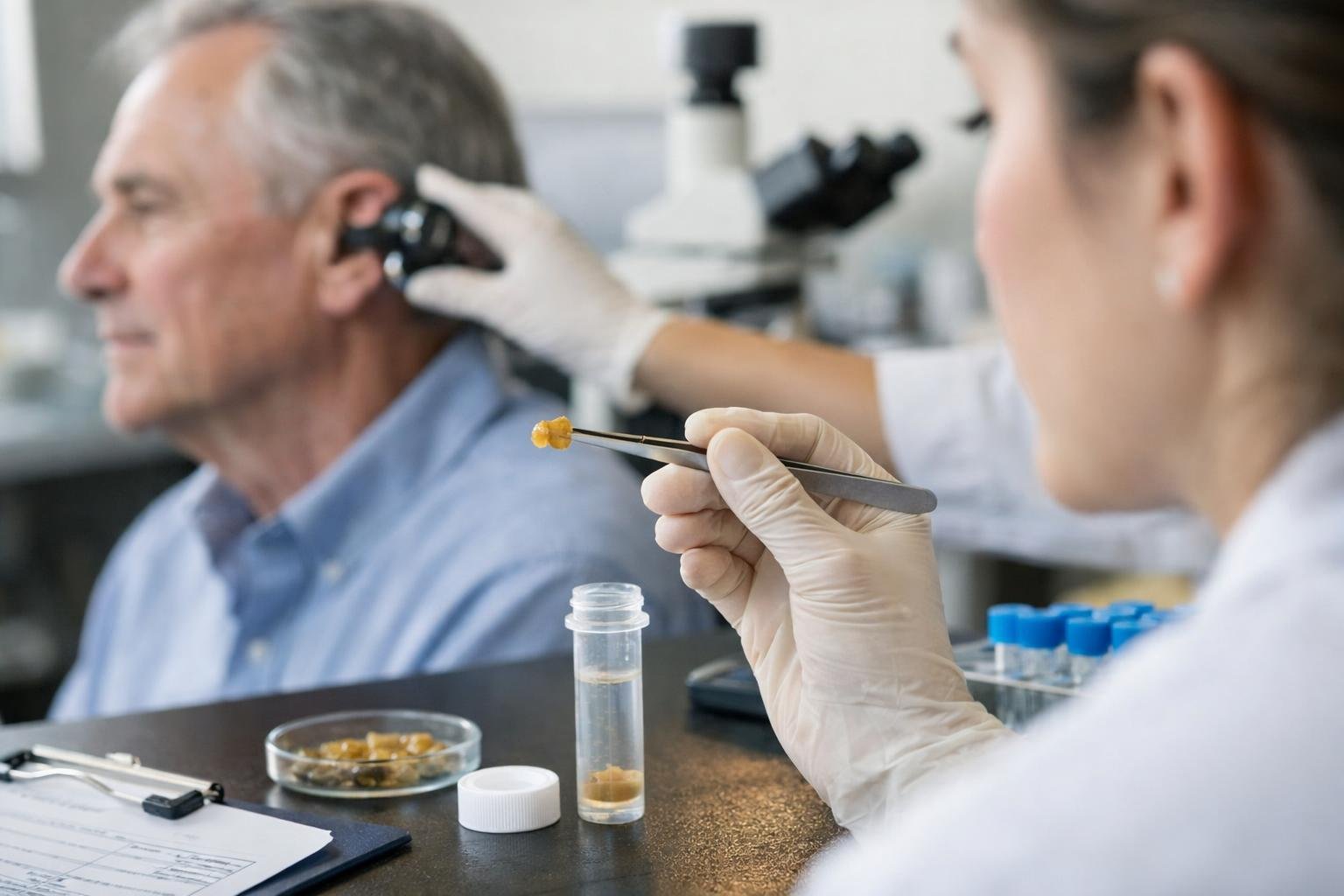
The humble substance most of us try to clean away could soon become a powerful health messenger. A growing body of research suggests that the waxy material lining our ear canals preserves a slow-drip record of the body’s chemistry, potentially revealing early warning signs before symptoms appear. Think of it as a small, sticky archive—quietly collecting clues about inflammation, hormones, and metabolic stress while daily life goes on.
Why scientists are looking to the ear
Unlike blood, which reflects a moment, or saliva, which can be swayed by immediate stress, earwax accumulates over weeks and even months. Its dense, hydrophobic matrix acts like a seal, protecting fragile molecules from air, light, and rapid degradation. That makes it ideal for tracking longer-term trends, not just a single snapshot.
Researchers describe earwax as a “biological logbook” that’s surprisingly resistant to contamination. Sweat and skin oils may change by the hour, but cerumen preserves a more stable chemical average. “The ear remembers,” as one scientist put it, capturing molecular echoes of what the body has been through.
What’s hiding in the wax
The cargo inside earwax is diverse. Studies have detected steroid hormones like cortisol, a marker intertwined with chronic stress and mood disorders. Lipids and their oxidized byproducts can flag metabolic and inflammatory shifts tied to cardiovascular and endocrine risk. Proteins, volatile compounds, and trace metals round out an analyte mix, offering multiple windows into systemic health.
Modern analytical tools—think mass spectrometry, proteomics, and metabolomics—can turn a tiny wax sample into a high-resolution profile. Importantly, collection can be noninvasive, using gentle swabs or purpose-built samplers that avoid pushing debris deeper into the ear canal. “Earwax is a ‘slow-release time capsule,’” another expert says, “capturing patterns other samples might miss.”
The serious conditions on the radar
While this field is early, scientists are exploring whether earwax signatures could help detect or stratify several conditions well before they fully manifest. These include cardio-metabolic disorders, neurodegenerative diseases, chronic stress–linked syndromes, and persistent inflammation. The promise is not about instant diagnosis, but about risk flags that trigger earlier, smarter testing.
- Potential signals include shifts in cortisol variability, oxidized lipid markers, abnormal metal ions, and microbial signatures linked to chronic inflammation.
“Early detection is about patterns, not single numbers,” says a researcher who studies biological timelines. “If earwax shows a sustained drift in key molecules, that may be the body’s quiet request for closer attention.”
Why it could change screening
Three features make the ear compelling for screening. First, it’s noninvasive and easy to sample, reducing barriers that keep people from routine checks. Second, it captures a longer window of biology, buffering the noise of daily swings in diet, stress, or sleep. Third, it’s stable, allowing for shipping and delayed analysis without the strict cold-chain demands of blood.
For population-level health, those traits are not just convenient—they’re transformative. Imagine at-home wax sampling kits that log monthly trends, with algorithms highlighting subtle shifts that warrant a primary care visit. “Screen early, screen lightly, and intervene only when the signal is trustworthy,” says one public health voice. “That’s the future we should aim for.”
The caveats that matter
Excitement aside, this is still frontier science. Many datasets are small, and findings require replication across diverse ages, lifestyles, and ethnicities. Standardizing how earwax is collected, stored, and analyzed is essential to avoid misleading results. Without rigorous protocols, differences in technique can look like differences in biology.
There are practical risks too. DIY ear digging can injure the canal, compact wax, or trigger infection. If sampling is needed, it should be done with safe tools—or by a trained professional—to protect the delicate skin and the tympanic membrane. And as with any biological data, privacy and misuse concerns must be addressed before widespread adoption.
How it might look in practice
In the near term, expect pilot programs in clinics and research centers. A clinician might order earwax analysis alongside standard labs when a patient presents with nonspecific fatigue, sleep disruption, or subtle metabolic changes. The wax profile wouldn’t replace blood work; it would add longer-horizon context that helps decide whether to escalate or monitor over time.
If results point toward chronic inflammation or HPA-axis dysregulation, targeted follow-ups—like fasting glucose, lipid panels, or ambulatory blood pressure—could be prioritized earlier. Over months, repeating wax sampling could map whether a lifestyle intervention or medication is nudging key markers in a healthier direction.
What to watch next
Over the next 12 to 24 months, look for larger validation studies, multicenter cohorts, and benchmarks that link earwax signatures to gold-standard clinical outcomes. Toolmakers are racing to build gentle, standardized samplers and streamlined lab workflows. On the analytics side, machine learning will likely sift through multianalyte patterns to improve sensitivity without sacrificing specificity.
“Trust, but verify,” as the saying goes. Earwax may never be a standalone diagnostic, and that’s okay. Its power lies in being an accessible, longitudinal signal—one that, paired with established tests, could help clinicians find trouble earlier and act more precisely. The quietest part of the checkup might soon be one of the most informative.