
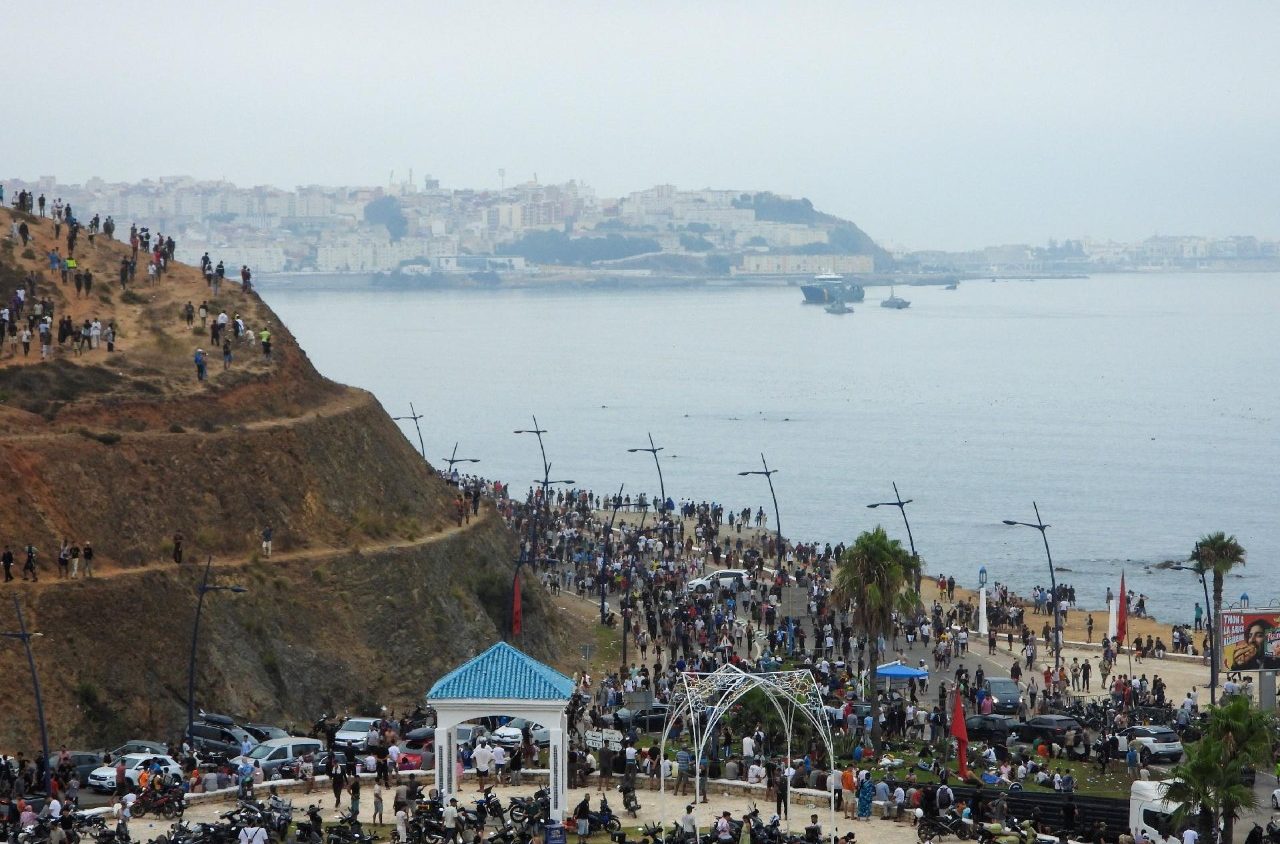
Ceuta.— This autonomous city is undergoing an episode of extreme migratory pressure following the arrival of thousands of people from Morocco who swim along the border breakwaters at Benzú and Tarajal.
This massive flow has overwhelmed local reception capacities and keeps both Spanish security forces and EU bodies on alert.
The maritime route around the breakwaters has become the main channel of irregular entry due to the strict land-based control and fortification of the border fences.
Thousands of young people, mainly men of Moroccan and Algerian origin, though also families with minors, plunge into the sea from the Moroccan town of Castillejos (Fnideq). Many undertake the crossing for hours, equipped only with wetsuits, fins or improvised flotation devices, exposing themselves to strong sea currents that have caused dozens of drownings.
This increase results from a combination of socio-economic factors in North Africa, the impact of viral rumors on social networks about supposed access facilities, and recent judicial rulings in Spain that limit immediate returns at sea, which motivates many to risk their lives to reach European soil.
The repercussions of the massive crossing are felt most acutely in the daily life and infrastructure of Ceuta. The Temporary Stay Center for Immigrants (CETI), designed for around 500 places, has far exceeded its maximum capacity by hundreds of people, forcing authorities to rapidly set up emergency facilities and provisional camps.
In the absence of adequate shelter, hundreds of migrants sleep on the streets, in central squares and along the city’s seaside promenades, while local beaches have recorded a constant arrival of swimmers visible to beachgoers.
Internationally, this crisis has generated serious diplomatic and institutional consequences. The European Union, through the European Border and Coast Guard Agency (Frontex) and the European Commission, has described the situation as a direct challenge to the integrity of the bloc’s external borders.
Brussels has activated emergency financial and technical support mechanisms to assist Spain, while reiterating the obligation to manage flows in an orderly manner and respecting asylum treaties.
Meanwhile, the contingency has strained the delicate diplomatic balance among Madrid, Rabat and the EU. Spain has intensified high-level contacts with the Moroccan government to demand greater police containment at origin, recalling that cooperation on migratory control is tied to multimillion-euro European fund agreements and regional security alliances.
For its part, international organizations such as the United Nations High Commissioner for Refugees (UNHCR) and various human rights NGOs have called for close monitoring of border returns to ensure that vulnerable people or those fleeing conflicts have effective access to international protection.