
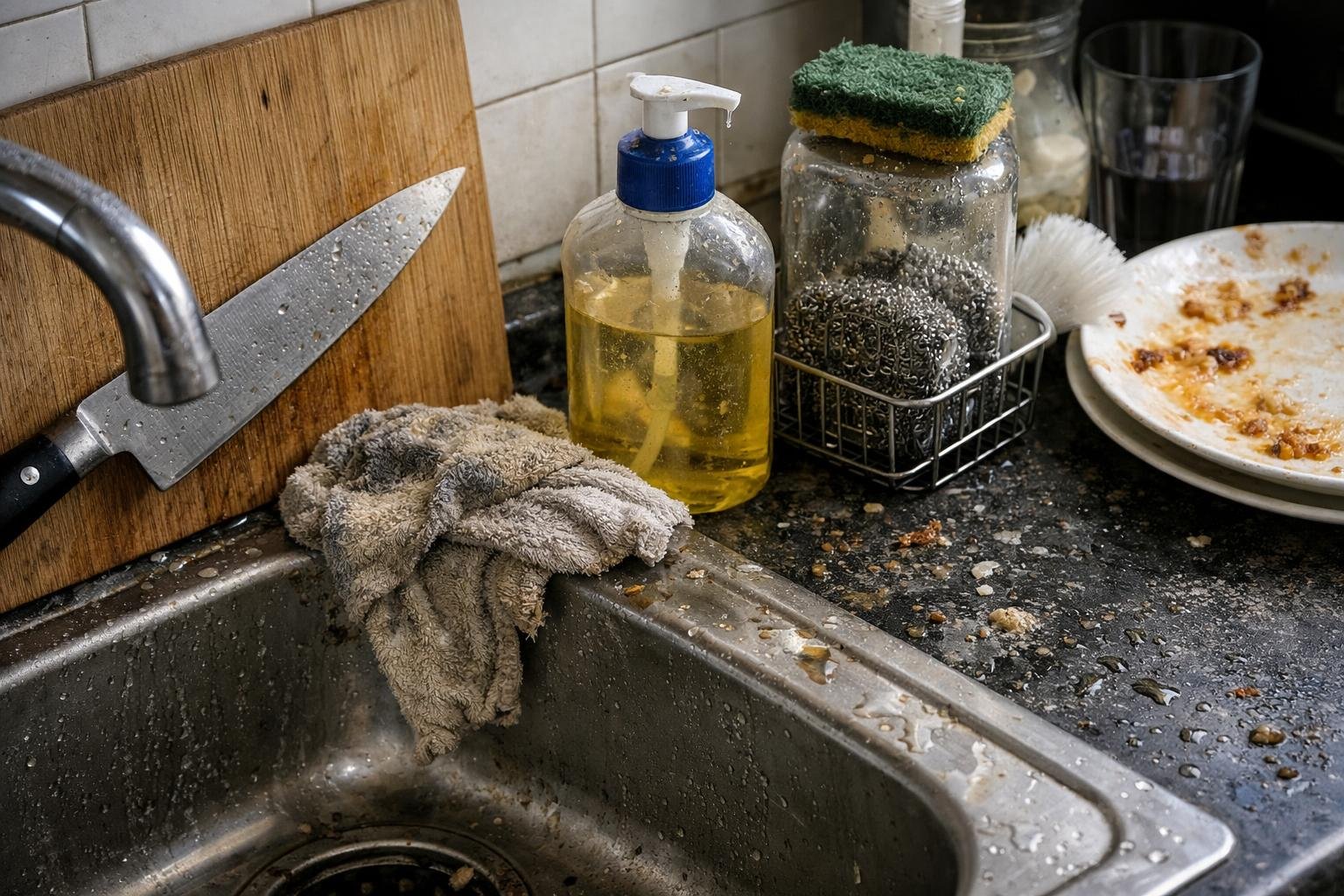
You probably wipe your counters, scrub the cutting board, and call it clean. Yet the real microbial carnival hides in plain sight: the damp, shadowed sink corner where the sponge, the caddy, and the drain rim meet. That pocket stays wet, gathers crumbs, and rarely gets a focused clean, turning into a perfect incubator right when winter shuts your windows and slows your ventilation.
“Moist plus nutrients plus time equals microbes,” says one microbiologist. “And the sink checks all three boxes, especially in cold months.”
The underestimated hot spot
That slick film on the caddy, the slime under the sponge, and the grime along the sink-lip? It’s a matrix called biofilm. Think of it as a sticky city where bacteria anchor, share resources, and resist cleaners.
In lab surveys, kitchen sponges and dish cloths routinely outrank bathroom fixtures for microbial load. The reason is simple: constant moisture, frequent food contact, and sporadic disinfection. The corner caddy often stays damp for hours, letting microbes rebuild between quick rinses.
Why winter turns the dial up
Shorter days mean less UV hitting your sink, and closed windows cut airflow that would help things dry. Indoor heat keeps water tepid, which many bacteria find comfortable. You cook more stews, handle more raw proteins, and make more tea—all channeling nutrient-rich drips into that crevice.
Cold-and-flu season also boosts shedding from hands, so what you touch transfers to what you rinse. As one food-safety pro quips, “In winter, your sink catches everything your house breathes.”
What’s actually living there
Expect a wild mix: harmless skin bacteria, environmental species, plus potential troublemakers like fecal coliforms from rinsed produce, raw poultry residue, and hardy pseudomonads that adore wet surfaces. Most won’t make you sick outright, but they raise the odds of cross-contamination—from sponge to faucet, from faucet to hands, and back to food.
“Think of the sponge as a bacterium’s beachfront condo,” says another expert. “It’s porous, full of nutrients, and rarely vacant.”
Habits that quietly feed the bloom
We love the quick rinse, the once-a-day wipe, the “I’ll replace it soon” promise. We store sponges flat, ring them lukewarm, and let the caddy stay gloopy. We disinfect the sink bowl but forget the drain gasket, the caddy underside, and the silicone seam where water pools.
Tiny misses become big reservoirs. Biofilm doesn’t just sit—it recruits, making each cleaning pass a little less effective.
Fix it fast: a realistic winter routine
You don’t need hazmat gear. You need small, repeatable moves that deprive microbes of moisture and food:
- Daily: Rinse caddy and sponge with hot water, wring to nearly dry, and stand vertically for airflow. End-of-day: spritz the sink corner (caddy, drain rim, seal) with a food-safe disinfectant or a diluted bleach solution (1 tablespoon per quart), let sit 5 minutes, then rinse. Twice weekly: heat-disinfect the sponge (dishwasher top rack with heated dry, or microwave damp for 60–90 seconds—watch closely). Weekly: scrub biofilm-prone seams with a small brush, including the caddy underside and the faucet base.
What to keep, what to ditch
If your sponge smells musty, feels slimy, or shows tears, it’s time. In heavy winter use, plan to replace every 1–2 weeks. Consider quick-drying alternatives: silicone scrubbers (low absorption), cellulose sponges with antimicrobial treatment, or washable microfiber cloths you launder on hot and tumble dry.
Choose a caddy with wide slots, raised feet, and detachable parts so you can reach every edge. The goal is rapid drainage and zero puddles.
Smarter sink choreography
Design your task flow to minimize cross-traffic. Raw-meat juices get rinsed last, never first. Soap the faucet handle after handling raw proteins. Use separate cloths: one for high-risk splashes, one for final polish. Handwash before handling ready-to-eat foods, not after “just a quick rinse.”
Adopt a “wet-work window”: do all high-mess tasks together, then disinfect the entire corner in one sweep. Fewer cycles, fewer microbial comebacks.
Quick myth-check
- Hot tap water is not hot enough to sanitize; aim for chemical disinfection or heat-assisted drying.
- “Natural” doesn’t automatically mean safer. Diluted bleach or EPA-listed disinfectants used as directed are more reliable than a random vinegar spritz.
- Stainless steel doesn’t stay self-cleaning. Biofilm clings to micro-scratches you can’t see.
A cleaner kitchen rarely hinges on dramatic products; it’s about breaking the moisture-nutrient cycle in the one nook that never fully dries. Give that sink-side corner 90 extra seconds each night, and you’ll erase the tiny reservoir that quietly fuels winter’s biggest germ party.
