
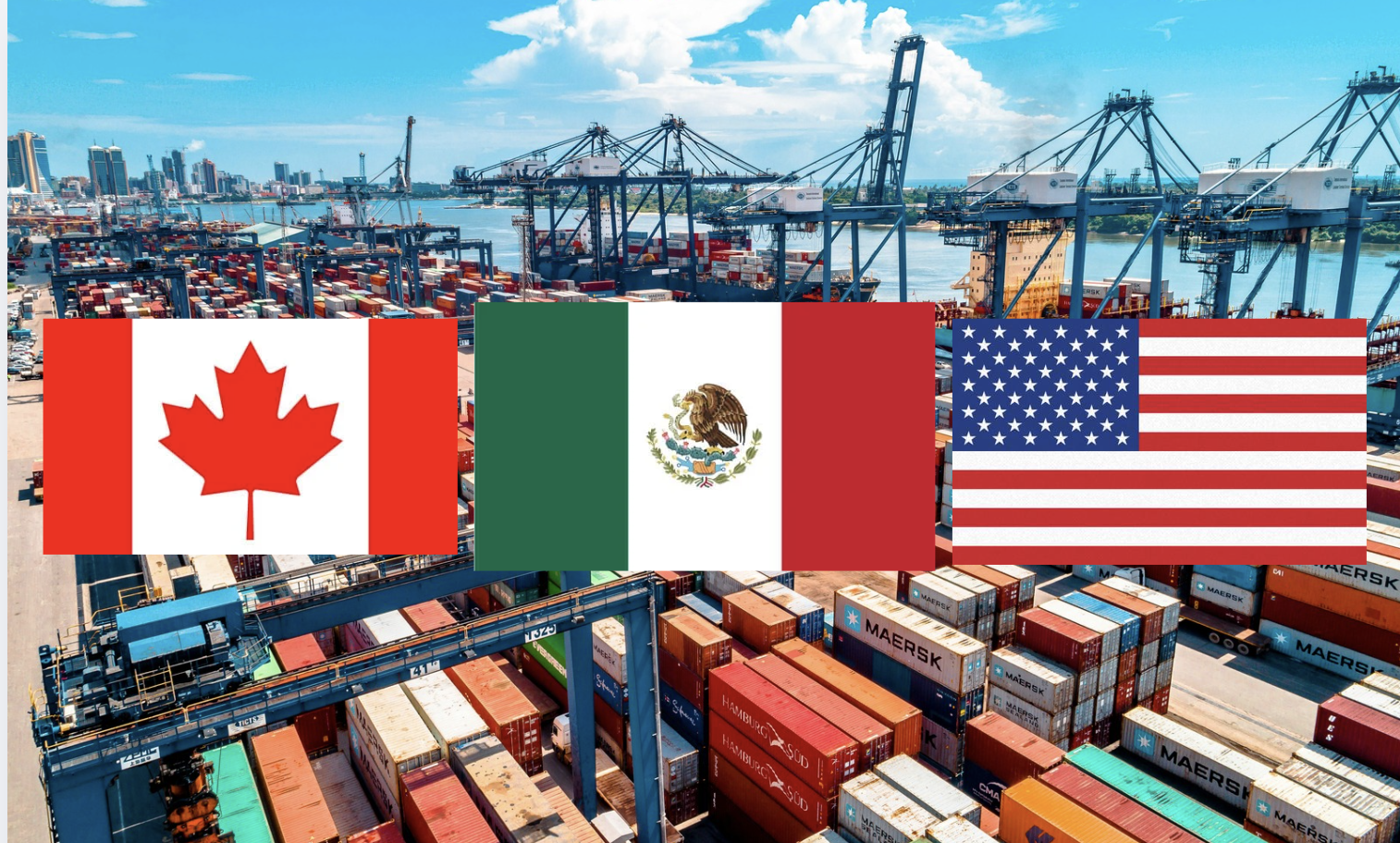
The decision does not immediately terminate the trade agreement with Mexico and Canada, but it opens a period of annual review and negotiations that could create uncertainty for Texas.
The United States did not agree to renew the United States-Mexico-Canada Agreement (USMCA) in its current form, after the six-year review of the trade pact among the United States, Mexico, and Canada.
The decision keeps the agreement in force for another 10 years, but triggers annual reviews before its potential expiration if the three countries do not agree to changes. The USMCA, known in Mexico as the T-MEC, governs a central part of North American trade and sustains an integrated regional economy with around $1.6 trillion in trilateral annual trade.
The agreement will remain in force while revisions continue
The United States Trade Representative, Jamieson Greer, stated that the country did not accept renewing the USMCA in its current form.
The Trump administration seeks changes to reduce the United States’ trade deficits with Mexico and Canada, as well as to promote the return of manufacturing jobs to the country. The decision does not cancel the agreement immediately, but places the pact in a stage of ongoing review.
The USMCA took effect on July 1, 2020, replacing the North American Free Trade Agreement (NAFTA). The treaty itself provides for a formal six-year review and a sunset mechanism if the countries do not agree to extend it.
If there is no renewal with changes, the agreement could expire in 2036. Until then, the pact will remain active, with annual reviews and new negotiations among the three countries.
The United States and Mexico will have new talks in July
The United States will continue with a bilateral negotiating round with Mexico during the week of July 20.
The talks will focus on rules of origin for autos and other industrial goods. The U.S. administration also seeks to strengthen economic security criteria to prevent products from other countries, including China, from gaining benefits through access under the USMCA.
One of the most contentious points is in the automotive industry. The Trump administration has asked that vehicles manufactured in North America include 50% U.S.-sourced content and that the total regional content rise to 82%.
Mexico has said it is willing to address United States concerns about jobs and trade deficits, but also seeks to protect its automotive industry. Mexico’s Secretary of Economy, Marcelo Ebrard, indicated that he does not see insurmountable differences to be resolved among the three countries, though he acknowledged that the automotive rules remain a central point of discussion.
Galveston County approves new precinct map despite criticisms
USMCA uncertainty could affect prices, jobs, and supply chains
The future of the USMCA could affect sectors that rely on integrated supply chains among the United States, Mexico, and Canada.
Among the most sensitive sectors are autos, auto parts, agriculture, energy, manufacturing, transportation, and logistics. For Texas, the issue is relevant due to its trade with Mexico, its border activity, and the weight of manufacturing, transportation, and energy in the state economy.
The main concern is not only whether the agreement remains active, but under what rules companies will operate in the coming years. Stricter requirements for U.S.-origin content in autos could modify production costs and prices for consumers.
Nissan’s CEO, Ivan Espinosa, warned that higher requirements for U.S.-origin content could worsen the accessibility problem for car buyers in the United States. The company manufactures in Mexico models such as Versa and Sentra for the U.S. market, vehicles that are already subject to a 25% tariff.
Farmers and businesses call to keep trilateral trade
Industrial and agricultural groups have urged maintaining the USMCA as a trilateral agreement with tariff-free trade.
For the agricultural sector, Mexico and Canada are major markets. Farm organizations have noted that both countries buy more than a third of United States agricultural exports, in addition to supplying inputs used in agricultural operations within the country.
The uncertainty also reaches companies that rely on stable trade rules to plan investments, production, and hiring. If the annual reviews continue without clear agreements, some companies could delay expansion decisions or adjust their supply chains.
Canada has said it will continue working to address U.S. tariff disputes on steel, aluminum, cars, and wood. Officials from the three countries participated in virtual talks this week, as negotiations on the pact’s future remain open.
USMCA enters a stage of political and economic pressure
The United States’ decision comes after new tariffs imposed by the Trump administration on Mexican and Canadian cars, metals, and wood. Those measures had already altered the trading relationship within the agreement.
The United States’ goods deficit with Mexico reached $197.0 billion in 2025, while the deficit with Canada reached $48.3 billion that year. Part of the deficit with Canada is related to oil imports, while the deficit with Mexico grew as companies moved supply chains out of China due to U.S. tariffs on Chinese products.
The next formal step will be the round of talks between the United States and Mexico during the week of July 20. In the meantime, the USMCA remains in force and the three countries continue negotiating potential changes ahead of the next annual reviews.
🗣️.