

A sleek symbol of modern motoring may be nearing its sunset in the world’s largest car market. China is moving to ban fully retractable, flush door handles as early as 2027, turning a once-futuristic flourish into a regulatory red flag. Popularized by Tesla and embraced by premium marques, these disappearing grips promised cleaner lines and better aerodynamics. Yet a growing stack of data on cost, reliability, and—most critically—safety has triggered a policy rethink that could ripple far beyond China’s borders.
Why the sleek idea is under fire
The headline promise—better efficiency—looks underwhelming in the cold light of numbers. Engineers estimate a mere 0.005 to 0.01 improvement in drag coefficient, translating to roughly 0.6 kWh saved per 100 km. That’s pocket-change energy in daily use, while the downsides add up quickly. Fully retractable units can add 7–8 kg of motors and wiring, raising bill-of-materials and warranty exposure. They often cost around three times more than a traditional handle and exhibit failure rates reported to be up to eight times higher, accounting for as much as 12% of some brands’ repair tickets.
Beyond the balance sheet, owners encounter practical frustrations: frozen actuators in winter, dead-12V lockouts, or software hiccups that turn a simple door pull into a roadside puzzle. What reads as minimalist design can become maximum friction the moment electronics don’t cooperate.
Safety first: when style turns risky
Crash scenarios reveal the starkest concerns. If a collision severs power or a mechanism jams, occupants and rescuers may struggle to gain entry. Chinese case reports from 2024 detail cars stranded in floods, passengers delayed by iced-over or unresponsive handles—precious seconds lost in moments that demand speed. Independent testing underscores the gap: certain electronic-only handle systems have shown a 67% success rate in side-impact access, versus 98% for purely mechanical solutions. Meanwhile, complaints tied to children’s fingers getting pinched have surged, with incidents of fractures reminding brands that tactile feedback matters as much as techno-chic surfaces.
“As safety margins narrow, style can no longer outrun physics.”
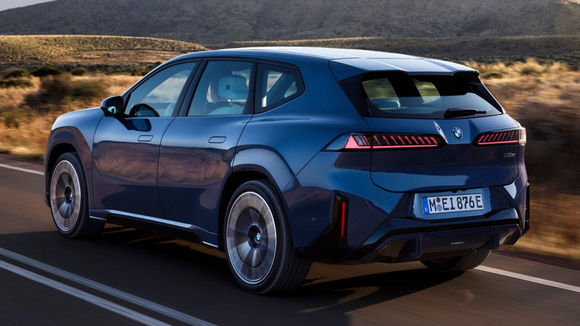
What the draft rule would allow
Regulators appear set to draw a bright line between form and fail-safe. Mechanical redundancy is the new mantra, with straightforward access prioritized for both users and first-responders.
- Fully retractable, electronic-only handles: likely prohibited
- Conventional or semi-flush handles: conditionally allowed
- Mandatory mechanical emergency release: strongly favored
- Implementation timeline: targeted for mid-2027
This approach preserves much of the visual cleanliness designers want, while enforcing a physical backup that works under all conditions—battery disconnected, actuator seized, or software crashed.
The global ripple effect
Because China is the world’s largest auto market, rules set in Beijing rarely stay local. Global platforms are engineered for scale, and few brands will maintain China-only hardware. Expect a shift toward semi-flush solutions with visible seams, integrated pull points, and discreet mechanical cables. Brands like Volkswagen and Audi already lean into such compromises, building in manual escape paths beneath the sleek skin.
Industry leaders in China have voiced skepticism too, with Great Wall Motor’s Wei Jianjun publicly critiquing retractable handles as needless risk. Europe is tightening the screws in parallel: starting in 2026, Euro NCAP will withhold five-star ratings from cars that bury vital functions behind touch-only interfaces—a signal that tactile, reliable controls are regaining regulatory favor. China has likewise pushed for physical buttons for key features and is even weighing restrictions on “one-pedal” braking to ensure predictable behavior in emergencies.
“When China redraws the spec sheet, the world rewrites its cars.”
What drivers should expect next
For buyers, the change may feel more like evolution than revolution. Semi-flush handles will still look modern, preserving aero intent without locking out humans when electrons go missing. Service costs could stabilize as complex motorized assemblies retreat, and wintertime usability should improve. Automakers will pivot to smarter ergonomics, designing for gloved hands, quick rescuer access, and clear mechanical cues that prevent pinches and panic under stress.
The likely outcome isn’t the death of innovation, but a recalibration of priorities. Elegant surfaces will share space with robust redundancies, and software flourish will give way to hardware certainty where it matters most. In that balance, cars may become a touch less sci‑fi—and a lot more human‑proof.