
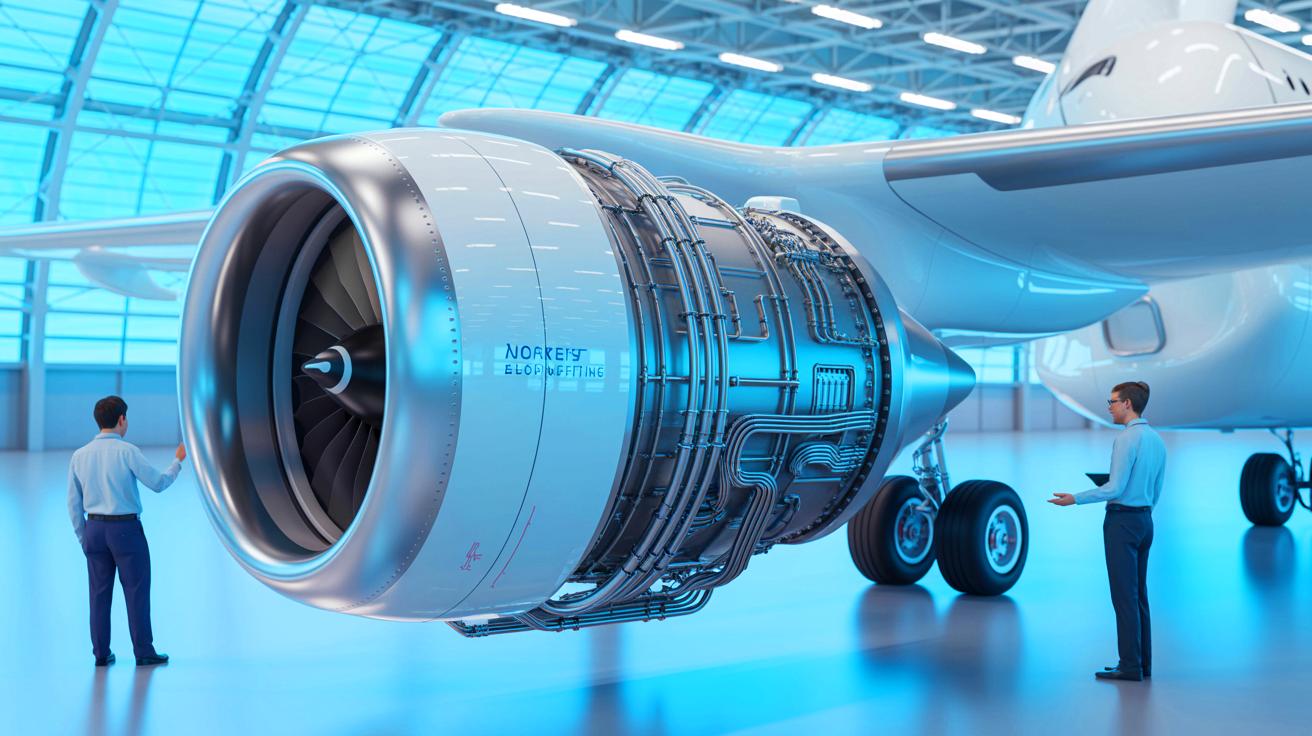
A quiet revolution is humming through aviation as a new class of electric propulsion proves it can meet real-world requirements. With the Engineus 100 now certified by Europe’s EASA, a critical threshold has been crossed: fully electric power is moving from prototypes to products, from isolated demos to deployments.
“The certification of a truly electric aircraft engine is more than a milestone; it’s a market signal,” noted one industry observer. “It tells manufacturers, regulators, and investors that the technology has reached a threshold of trust.”
Certified power in a featherweight package
At the heart of this shift sits Safran’s Engineus 100, a compact machine that delivers a remarkable 125 kW while weighing just about 40 kg. That pairing of high output and low mass defines the new performance envelope for electrified flight, where every kilogram saved translates to range, payload, or added safety margin.
The EASA approval didn’t come easy; it required new standards to be written and battery-adjacent risks to be analyzed. Engineers ran arc‑fault campaigns, environmental stress tests, and endurance trials that helped crystallize test methods for future programs. The result is a modernized framework that others can now follow, accelerating the pace of innovation.
What it enables today
The near-term impact is clearest in short-hop aviation, from training to regional mobility. The Engineus 100 targets small airframes—typically two to four seats—flying up to roughly 100 km on battery power. That’s ideal for pilot schools, utility missions, tourist flights, and urban/regional shuttles where noise, emissions, and operating costs are under tight scrutiny.
Early adopters include upstart airframers and established OEMs working on light aircraft, hybrid demonstrators, and modular testbeds. By cutting local emissions and dramatically reducing mechanical complexity, electric power promises lower maintenance and higher availability—critical levers for new route economics.
- Key advantages include:
- Lower on-condition maintenance and fewer rotating parts
- High torque at low RPM for efficient propellers
- Reduced noise for airport and community acceptance
- Zero in-flight CO₂ at the point of use
- Digital integration for predictive health monitoring
Industrialization at scale
Momentum only matters if you can build at scale. Safran plans dual production sites in France and the UK, aiming for roughly 1,000 units per year by the end of 2026 through automated lines. That capacity signals a shift from bespoke workshops to repeatable, aerospace‑grade manufacturing.
A stable supply chain for magnets, windings, thermal management, and power electronics is equally vital. Industrial partners are standardizing interfaces—mounts, cooling, inverters, and controls—so aircraft integration can proceed with fewer unknowns. The benefit: faster design cycles and cleaner certification paths for future variants and airframes.
Beyond small airframes: the hybrid horizon
Pure-battery flight faces energy-density limits, but hybrids can multiply mission range. Safran’s roadmap includes a higher‑power Engineus XL around 750 kW, positioned for distributed propulsion on 19‑seat regionals or hybrid-electric demonstrators. In these setups, batteries handle peak loads while a turbogenerator sustains cruise, reducing fuel burn and cutting noise around airports.
Hybrid architectures also spread risk. They allow incremental certification, modular testing, and stepwise infrastructure build‑out—charging where feasible, liquid fuels where mission demands are stiff. This pragmatic path is how fleet operators can decarbonize without grounding economics.
Infrastructure, batteries, and the reality check
The road ahead isn’t frictionless. Airport charging requires grid upgrades, smart buffers, and standardized connectors across OEMs and regions. Battery lifecycle—chemistry, safety, second‑life use, and recycling—must be managed end‑to‑end to lock in true sustainability.
Thermal management remains a core discipline. High power densities produce concentrated heat, demanding robust liquid cooling, fault isolation, and tightly monitored controls. Certification will keep evolving as authorities collect data from operational fleets and refine hazard models.
Yet the forces pushing forward are now structural. Cities want quieter skies. Airlines want resilient economics. Pilots want cleaner, simpler machines. And investors want scalable, regulated platforms rather than endless prototypes.
Why this decade matters
The next few years will determine where electric propulsion finds its first enduring beaches. Expect training, utility, and short regional links to mature quickly, followed by hybrid-electric cabins that cut fuel and noise on thin routes. As production ramps and component costs decline, more operators will pilot limited deployments, then expand across networks.
Crucially, certification changes the conversation from “if” to “how fast.” With an approved engine, early customers can lock architectures, plan infrastructure, and train crews around real hardware. Every flight hour then feeds a virtuous cycle of better software, improved components, and faster regulatory learning.
The industry has waited decades for a practical, certifiable electric engine that fits real aircraft and real budgets. Now it has one. The result won’t be an overnight transformation, but a steady, compounding shift toward quieter, cleaner, and more accessible flight—exactly the kind of progress that reshapes an industry before most people realize it already happened.