
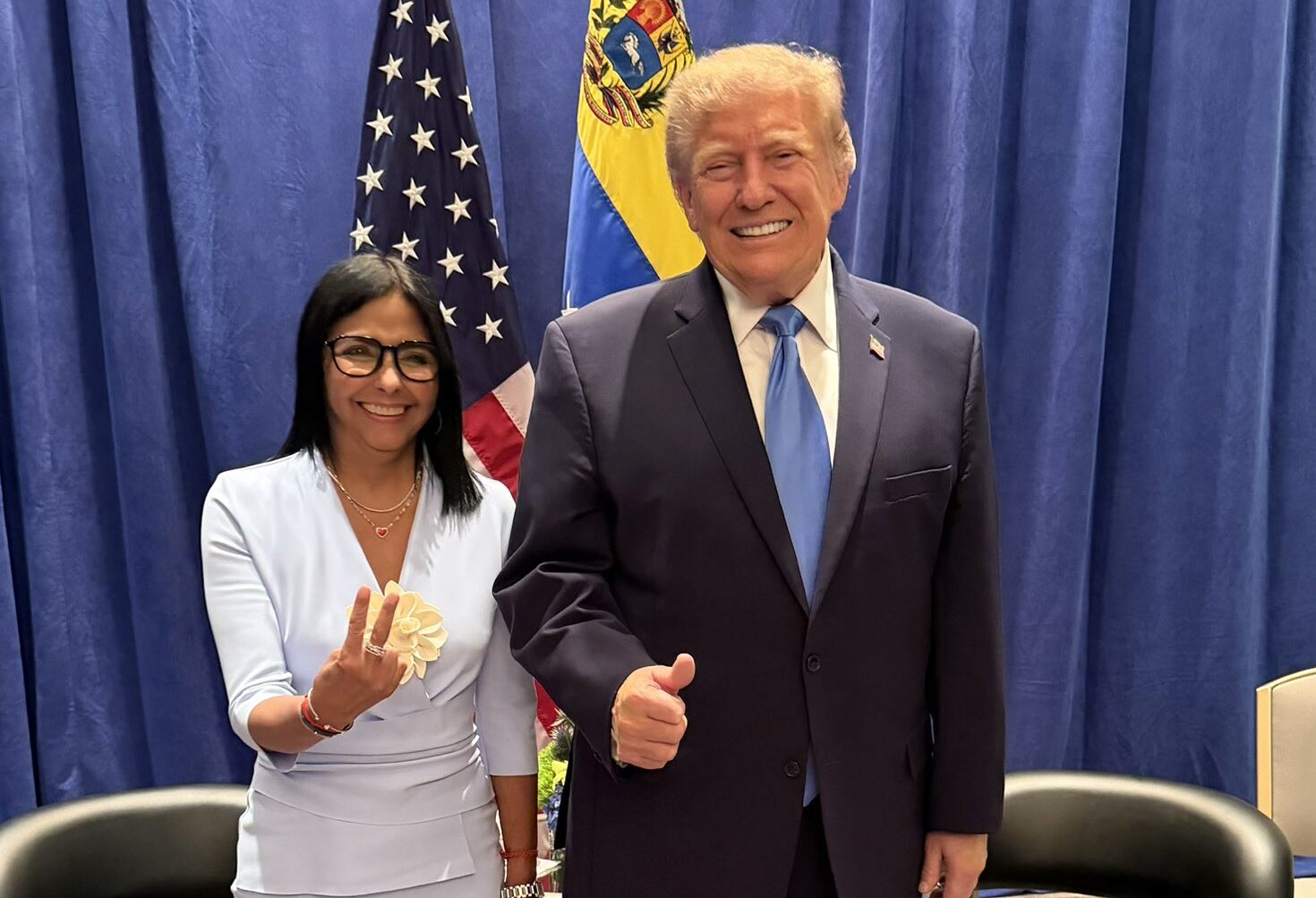
New York — The bilateral meeting between the President of the United States, Donald Trump, and Venezuela’s acting president, Delcy Rodríguez, within the framework of the 81st United Nations General Assembly, marks an unprecedented milestone that redefines the geopolitical map of the Western Hemisphere.
The summit represents the first face-to-face encounter between the heads of state of both nations in more than eleven years, a diplomatic gap that had remained insurmountable since April 2015, when then-President Barack Obama held a brief and tense informal conversation with Nicolás Maduro during the Summit of the Americas held in Panama.
Unlike that fleeting informal crossing on Panamanian soil, marked by mutual distrust and the subsequent imposition of severe sanctions against the Venezuelan state apparatus, the current meeting in New York responds to a pragmatic shift driven by the strategic interests of both administrations.
This historic rapprochement symbolizes the culmination of months of discreet negotiations that accelerated after the recent energy agreements and the reconfiguration of political leadership in Caracas, consolidating a direct channel of communication between the White House and the Miraflores Palace. From the perspective of American foreign policy, the high-level dialogue reflects a radical shift away from the doctrine of diplomatic isolation previously practiced.
We held a historic meeting with the President of the United States, Donald Trump, in which we discussed strengthening the bilateral relationship between our countries and advancing a cooperation agenda in strategic areas such as energy, mining, security pic.twitter.com/pyJ6FnQkBH
— Delcy Rodríguez (@delcyrodriguezv) September 23, 2026
For Washington, direct engagement with Rodríguez aims to stabilize global oil markets and guarantee priority access to the planet’s largest crude reserves.
The pragmatic turn evidences the preference of the U.S. government to secure areas of influence in the region’s energy sector through formal cooperation mechanisms, relegating to the background the strategy of maximum pressure that characterized the previous years of bilateral confrontation.
For the Venezuelan Executive, the bilateral summit provides a decisive institutional backing and an unprecedented international validation.
The formal reception of the acting president at the UN headquarters not only dismantles the diplomatic blockade imposed by Western powers for years, but also legitimizes the internal transition process and Caracas’s authority to sign binding commercial and infrastructural agreements.
Moreover, the meeting facilitates the country’s gradual return to multilateral financial dynamics, offering a more predictable regulatory framework to attract foreign capital and reactivate the national economy.
This scenario is reinforced by the renewed economic and institutional dynamism surrounding the negotiations in New York.
The bilateral talks have been accompanied by energy cooperation agreements involving international firms, as well as a gradual restoration of dialogue with international financial bodies such as the International Monetary Fund and the World Bank.
For the Venezuelan interim administration, securing this level of direct engagement with the White House allows diversifying its paths to economic recovery, strengthening monetary stability, and positioning the country again as a key actor in the provision of global strategic resources.
However, the impact of the meeting extends to Venezuelan domestic politics and the international perception of the crisis.
